Montana / West
Kootenai River
A Kootenai River report for anglers checking Libby Dam flow, below-dam access, trophy rainbow rules, bull-trout safeguards, and weather.
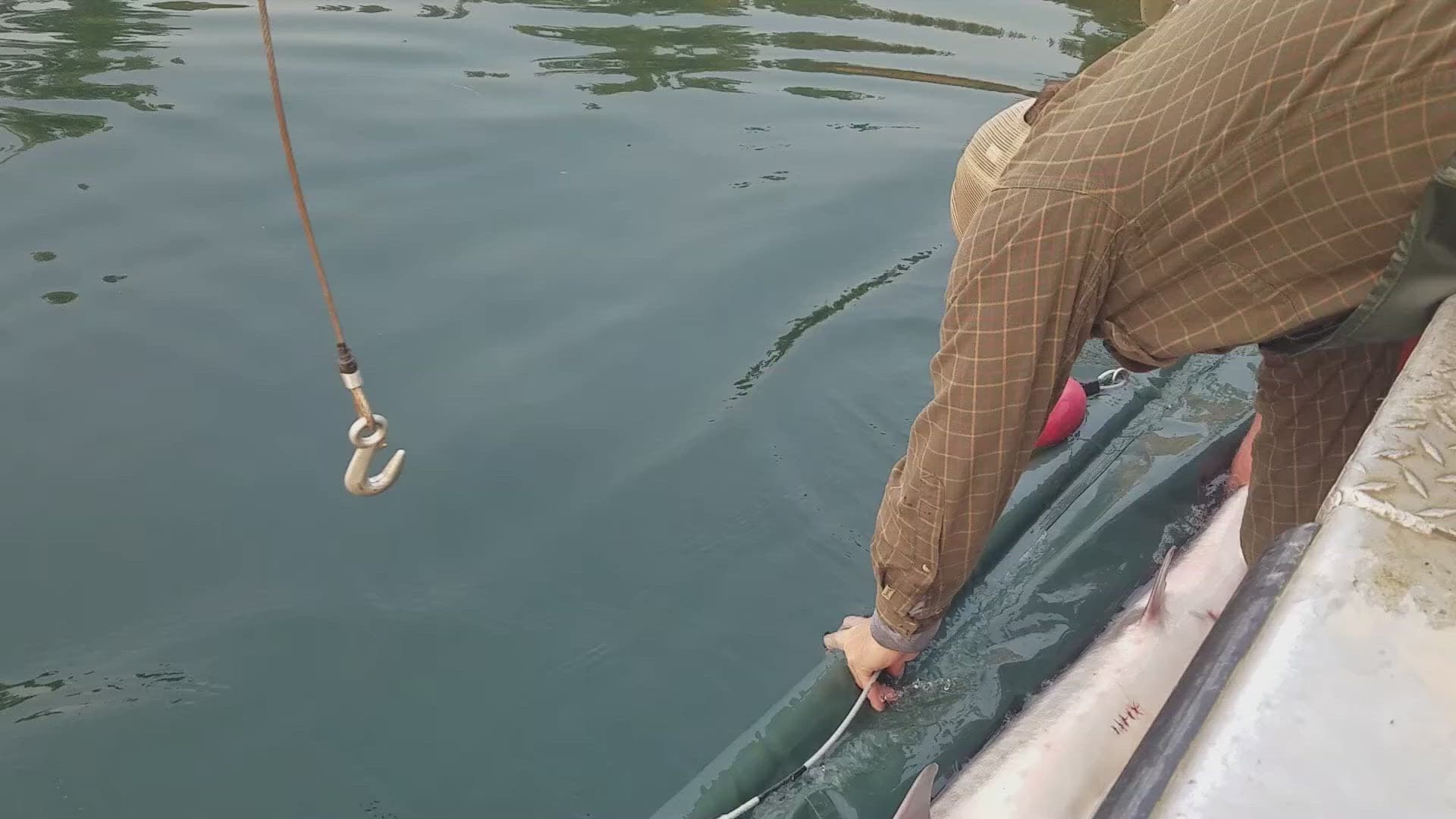
Image: Kootenai River white sturgeon released (52611075716) / Public domain / USFWS PacificFishability now: Kootenai River fishability today
GreatData confidence: High96/100
Fishable now because the live gauge is stable, weather is mild, and no public alert is active.
Flow observed
5:00 PM UTC
Weather observed
5:00 PM UTC
Score calculated
5:25 PM UTC
Why this rating
Flow
Weather
Public alerts
Next 6-12 hours
Hold
Stable live data supports staying with the plan, but recheck the gauge and forecast before leaving.
USGS flow
24,900 cfs
Current trend: flow stable, so weather, temperature, and access checks drive the next change.
More planning details: flies, flow bands, and live source checks
Fish it today
Start here
Start with the below-dam gauge, current restrictions, and one defined Libby-to-Troy access plan. Then choose whether the day is a nymphing, dry-fly pod, or streamer plan instead of trying to cover every broad run.
Best flow clue
Use RiverReports and USGS 12301933 together, then check Libby Dam information before committing. Stable releases are the cleanest fishing window; fast changes should move the plan toward protected edges, a shorter float, or another river.
Skip trigger
Skip or pivot when releases are changing quickly, wind makes boat control poor, access would require unsafe bank travel, bull-trout handling risk is high, or current restrictions change the legal plan.
Flow decision bands
Moderate steady release
Moderate stable releases keep the Kootenai fishable, but depth, cold current, and launch realism still matter more than forcing bank miles.
Best stable tailwater window
Steady below-Libby flow with manageable wind is the cleanest signal for nymphing, podded dry-fly shots, and a controlled boat or edge-fishing day.
Pushy or unsafe
Fast release changes, heavy wind, or any plan that depends on uncertain banks and exits should move the day to safer edges or another river.
Dam release and protected-fish caution
A good-looking graph does not override bull-trout protection, current restrictions, or a dam-driven flow change that turns big water unfriendly fast.
USGS flow
24,900 cfs
Current trend: flow stable, so weather, temperature, and access checks drive the next change.
Live USGS flow
24,900 cfs / stable
Live NWS forecast
63F / Sunny
Water temperature not verified
Heat guidance uses weather and river type unless an official water-temperature value is available.
No NWS alert flag
No active NWS alert was returned for this forecast point.
Use the below-Libby Dam gauge and USACE dam information before wading or floating.
FWP rules below Libby Dam include reach-specific trout limits and single-point hook context.
Bull trout are protected; release any incidental fish immediately and do not target them.
Because the river is wide and powerful, choose access and boat plans conservatively.
Editorial review
How this report is maintained
This Kootenai River report is maintained from RiverReports and USGS below-Libby flow data, U.S. Army Corps of Engineers dam context, Montana FWP fishing regulations, current closure and restriction sources, Kootenai National Forest access information, weather, media-credit, and northwest Montana tailwater planning sources.
Byline
BlueStreamFly editorial team
Reviewed by
BlueStreamFly source review
Maintained by
Mountain Brook Run LLC
Last material review
2026-05-31
Report confidence
High confidence
90/100
High confidence: RiverReports, USGS flow support, Montana FWP regulations, current restrictions, Libby Dam context, Kootenai National Forest access information, weather, and image credit are present. Confidence is moderated by dam-release changes, big cold water, remote banks, and protected-fish handling details.
Regulations
Montana FWP regulations and current restriction pages are linked, with protected bull-trout cautions in the report.
Flow support
RiverReports Kootenai below Libby Dam is backed by USGS 12301933.
Access support
Kootenai National Forest and dam context support public planning, but safe launches, banks, and exits remain reach-specific.
Weather and safety
The National Weather Service point resolved and the page calls out changing releases, cold water, wind, strong current, and remote access.
Angler usefulness
The page separates dam operations, big-water tactics, protected species, boat planning, and backup-water choices.
Editorial review
A public correction path, source standards page, image credit, and public review history are included.
Fishability source review
2026-05-31 / material content or source review
RiverReports below-Libby flow support, USGS 12301933, Montana FWP fishing regulations, current restriction pages, U.S. Army Corps of Engineers Libby Dam information, Kootenai National Forest Libby-area access context, the National Weather Service point, and image credit were rechecked before adding the Pine Creek-standard current-fishability layer.
2026-05-31
Upgraded the page to the Pine Creek fishability standard with tailwater decision bands, access cards, backup logic, and a reviewed route profile.
2026-05-28
Added dam-release trip fit, wade-versus-boat framing, bull-trout and big-water skip cues, Forest Service access nuance, backup-water suggestions, editorial review signals, and a page-specific report-confidence meter after source review.
2026-05-25
Initial source-reviewed report published with flows, weather, hatches, flies, tactics, access, regulations, and FAQs.
Angler planning edge
Local details that change the plan
Best for
Northwest Montana anglers planning a below-Libby Dam tailwater day where release timing, wind, and big-water safety matter before fly choice, Boat or conservative bank trips for rainbow trout when RiverReports, USGS, and dam context line up, Anglers who need clear bull-trout protection reminders and reach-specific rule checks before fishing, Trips where the Kootenai is being compared with Flathead freestones or the Bighorn as a different Montana tailwater plan
Wade or float
Treat the Kootenai below Libby Dam as a boat-and-big-water report first. Some edge fishing can be reasonable, but release changes, depth, cold current, and limited exits should decide whether you wade, float, or stay on safer banks.
Best flows
Use RiverReports and USGS 12301933 together, then check Libby Dam information before committing. Stable releases are the cleanest fishing window; fast changes should move the plan toward protected edges, a shorter float, or another river.
When to skip
Skip or pivot when releases are changing quickly, wind makes boat control poor, access would require unsafe bank travel, bull-trout handling risk is high, or current restrictions change the legal plan.
Local plan
Start with the below-dam gauge, current restrictions, and one defined Libby-to-Troy access plan. Then choose whether the day is a nymphing, dry-fly pod, or streamer plan instead of trying to cover every broad run.
Pressure
Pressure can build around obvious ramps, good weather, and stable releases. Clean boat spacing, safe wading restraint, and a backup reach matter more than constant fly changes.
Access nuance
Kootenai National Forest and dam sources support the planning framework, but launch choice, private banks, changing releases, and remote shoreline exits still need day-of confirmation.
Backup water
If the Kootenai is too high, windy, or release-sensitive, compare the North Fork Flathead for remote freestone fishing, the Middle Fork Flathead for a Glacier-area plan, or the Bighorn for another technical tailwater.
About the river
Setting, character, and why it fishes the way it does.
The Kootenai River below Libby Dam is one of Montana's largest coldwater tailwater systems. Dam operations shape flow, depth, bank access, and the way trout use the river.
Anglers fish for strong rainbows and redband-influenced trout in a broad river with long glides, side channels, riffles, and powerful main current.
A helpful Kootenai report must focus on dam release awareness, legal rules, access, and big-water safety before hatch talk.
Target species
Rainbow trout
The main fly target below Libby Dam, with special size and reach rules in key water.
Brown trout
Subject to reach-specific FWP rules; check current regulations before harvest.
Mountain whitefish
Common in productive nymph water and a useful winter or shoulder-season target.
Bull trout
Protected. Do not target or retain bull trout, and release incidental fish quickly.
Reading the water
Stable release
Fish seams, inside shelves, and riffles with nymphs or dries depending on activity.
Rising release
Move away from low bars and watch for bank access getting cut off.
Clear low flow
Use long leaders, small nymphs, and cautious approaches to pods.
Cloudy or windy
Streamers can cover bank edges, side channels, and deeper current breaks.
Best seasons
Spring
Midges, BWOs, and nymphing can work around dam-release schedules.
Summer
Caddis, PMDs, and terrestrial edges matter, with release checks.
Fall
Streamers, BWOs, and cooling water can improve larger-trout windows.
Winter
Midges, slow nymphs, and safety-first wading are the practical plan.
Preferred flow source
Kootenai River below Libby Dam
RiverReports is the preferred chart source when coverage exists. When a matching USGS gauge exists, keep it open as the official backstop for station data and current hydrograph context.
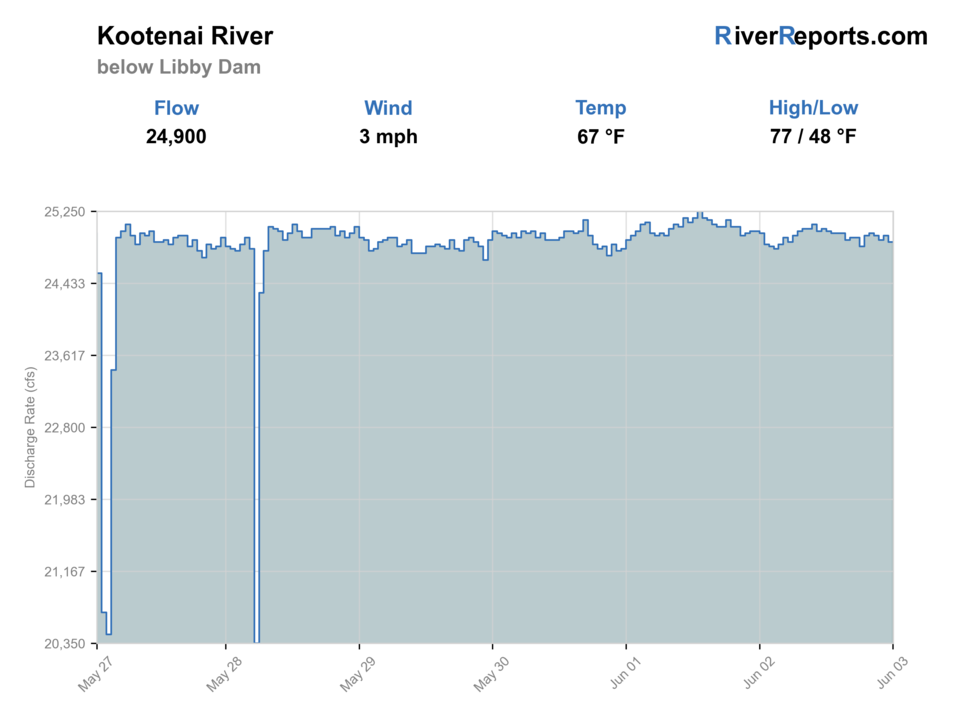
USGS data chart
Official USGS trend
Streamflow over the latest USGS reporting window.
Latest
24,900 cfs
Jun 3, 5 PM UTC
Weather
River weather report
Weather can change wading safety, road access, water temperature, hatches, and the best time of day to fish.
Live forecast loads as you reach this section
This keeps the report fast while still using the official National Weather Service forecast point.
Hatches and flies
Hatch chart and fly picks
Winter to early spring
Midges, scuds, sowbugs, slow nymphs, and occasional olives
Zebra midge, scud, sowbug, Ray Charles, small leech
May to July
PMDs, caddis, midges, yellow sallies, and worms during bumps
PMD emerger, sparkle caddis, midge pupa, soft hackle, small worm
August to October
Tricos, pseudos, caddis, hoppers, ants, and small baitfish
Trico spinner, small BWO, X-caddis, hopper-dropper, sculpin
Late fall
Midges, BWOs, scuds, sowbugs, and streamer windows
Midge cluster, BWO emerger, scud, sowbug, black leech
Tailwater nymphs
Scuds, sowbugs, zebra midges, PMD nymphs, small worms
Use for steady-flow tailwater fishing when trout feed near the bottom.
Dry flies
Midge cluster, PMD cripple, caddis, trico, small BWO
Use when pods feed in slicks, flats, foam lines, or soft bank seams.
Streamers
Sculpin, leech, sparkle minnow, small articulated streamer
Use during flow changes, clouds, wind, or when larger trout move.
Attractors
Soft hackle, hot bead sowbug, small worm, egg only where legal
Use after flow bumps, during stain, or when exact hatch matching is not needed.
Tactics
How to fish it
Check dam release and gauge trend before stepping onto bars or launching.
Nymph deep seams and inside shelves first when no fish are rising.
Look for dry-fly pods in softer slicks, foam lanes, and side-channel edges.
Use streamers from a boat or safe bank angle rather than wading heavy current.
Handle all fish quickly and avoid any intentional bull-trout targeting.
Rigging
Rod, leader, and setup notes
A 6-weight is a practical all-around Kootenai rod for wind, indicators, and streamers.
Carry long leaders for clear-water dries and stronger leaders for streamer work.
Use enough weight to reach bottom, but avoid unsafe wading to save a snagged rig.
Bring a PFD for boats and a wading staff for slick or changing edges.
Pack layers because tailwater wind and cold water can make warm days feel cold.
Access
Access and planning notes
Below-Libby gauge check
Primary release decisionWade / float / trail
Gauge / boat / bank
When to pick it
Start here when release stability decides whether the Kootenai is worth a boat day, a conservative bank plan, or a full pivot.
Caution
The gauge does not settle wind, launch spacing, or remote shoreline exits.
Libby Dam corridor
Big-water planning anchorWade / float / trail
Dam context / bank scout / boat setup
When to pick it
Use it when dam information and the immediate below-dam reach set the tone for the rest of the day.
Caution
Cold current, private banks, and changing releases still limit how much water is truly safe to fish.
Libby-to-Troy drift choice
Boat-first reach planningWade / float / trail
Launch / drift / take-out
When to pick it
Pick this when stable releases and one defined shuttle make more sense than exploratory bank hopping.
Caution
Do not force a long float if wind, exits, or the exact launch and take-out plan are not fully settled.
Dam releases can change wading safety and boat logistics. Check before and during the day.
Use official ramps and public sites. The river is too large for improvised access from steep or private banks.
Reach-specific rules and protected species make regulation checks essential.
Regulations
Check before fishing
Montana FWP regulations include detailed Kootenai reach rules below Libby Dam and downstream. Check the current regulations and restrictions before fishing.
Primary base
Libby, Troy, or Rexford
Best day style
Big-river wading, boat ramps, dam-release planning, and public-site access
Check first
Libby Dam releases, USGS flow, FWP rules, access sites, and weather
Safety
Dam-controlled flow changes, big cold water, strong current, protected species, and remote banks
Gear
Helpful gear for this water
5-weight rod
Good for nymphs, dry flies, and most technical tailwater trout fishing.
6-weight rod
Useful for wind, heavier indicator rigs, and streamers from boats or banks.
Long leaders
Carry 9- to 12-foot leaders for flats, dry flies, and clear-water nymphing.
Split shot and indicators
Tailwater depth changes quickly, so carry several sizes and adjust often.
Nearby water
Other water to research
Backup logic
High release
Shorten the reach, stay on safer edges, or compare the Bighorn or another steadier option if release changes keep stacking risk.
Wind
Treat wind as a boat-control and safety limiter, not just a casting problem, and abandon the float if control is not there.
Protected-fish concern
Keep bull-trout handling and current restrictions ahead of convenience and pivot if the reach or target mix is not clearly legal and responsible.
Access issue
Use only confirmed launch, bank, and take-out choices and pivot if private land or remote exits make the route uncertain.
North Fork Flathead River
A remote freestone option with different access and protected native-trout planning.
Middle Fork Flathead River
A Glacier-area freestone comparison with cold runoff and cutthroat focus.
Bighorn River
Another Montana tailwater where flow and hatches drive the day.
FAQ
Fast answers
Is Kootenai River fishable today?
Kootenai River looks very fishable right now. The live score is 96/100, based on current flow, weather, public alerts, and the report's planning context. Recheck the linked gauge and forecast before leaving because conditions can change quickly after rain, heat, access changes, or flow swings.
What flow is best for Kootenai River?
Use RiverReports and USGS 12301933 together, then check Libby Dam information before committing. Stable releases are the cleanest fishing window; fast changes should move the plan toward protected edges, a shorter float, or another river.
When should I skip Kootenai River?
Skip or pivot when releases are changing quickly, wind makes boat control poor, access would require unsafe bank travel, bull-trout handling risk is high, or current restrictions change the legal plan.
Is Kootenai River safe to wade right now?
The fishability score is not a wading guarantee. Wade only where your chosen access has safe edges, clear footing, legal entry, and no forced crossings; high, rising, stained, or storm-affected water should be treated conservatively.
What should I check first before fishing the Kootenai River?
Check Libby Dam release information, the USGS gauge, FWP regulations, access sites, and wind forecast.
Are there special regulations on the Kootenai River?
Yes. The Kootenai has detailed reach-specific rules below Libby Dam and protected species concerns.
What flies should I bring for the Kootenai River?
Bring the hatch-chart flies, a few confidence nymphs, and a streamer box. Then adjust for water temperature, clarity, and the insects you actually see.
Can I wade the Kootenai River?
Some areas are wadeable at safe flows, but this is big cold water. Use official access and avoid heavy current.
When should I skip the Kootenai River?
Skip it when flows are unsafe, temperatures stress trout, wildfire or emergency closures are active, or legal access for the reach is not clear.
Sources
Source set for this report
Reviewed 2026-05-31