West Virginia / Southeast
Bluestone River
A Pipestem and Bluestone National Scenic River report built around flow checks, warmwater access, and realistic gorge-country safety calls.
Image: Generated southern West Virginia planning image for Bluestone River / BlueStreamFly generated; not exact location / BlueStreamFlyFishability now: Bluestone River fishability today
GreatData confidence: High96/100
Fishable now because the live gauge is falling, weather is mild, and no public alert is active.
Flow observed
5:00 PM UTC
Weather observed
5:00 PM UTC
Score calculated
5:24 PM UTC
Why this rating
Flow
Water temperature
Public alerts
Next 6-12 hours
Improving / hold
A falling gauge and usable weather should keep the next 6-12 hours in play unless tributaries stain or heat builds.
USGS flow
132 cfs
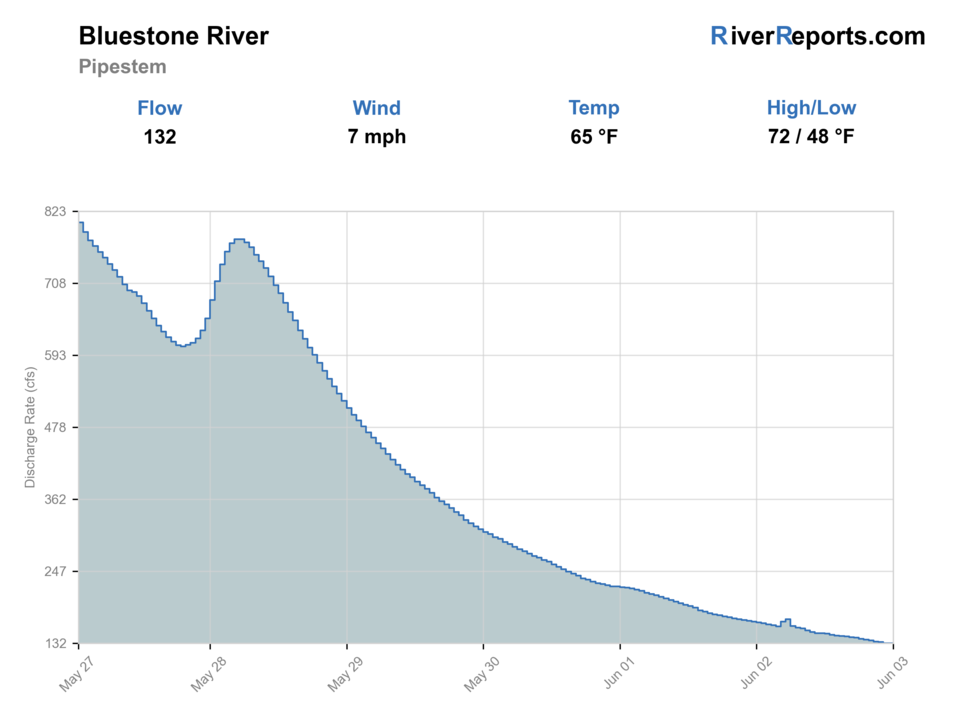
Current trend: flow falling, rating likely holding strong unless weather or clarity changes.
More planning details: flies, flow bands, and live source checks
Fish it today
Start here
Fish one section near your chosen access and give it time before relocating; the Bluestone rewards patience more than mileage.
Best flow clue
Best when the graph is steady enough to expose ledges and soft bank lanes without turning entries into a scramble.
Skip trigger
Skip muddy spikes, blazing hot middays with flat low flow, and any day when the trail access feels harder than the fishing payoff.
Flow decision bands
Stable moderate Pipestem flow
This is the best smallmouth signal when ledges, current tongues, and shaded banks are readable and reachable.
Low summer flow
Fish early or late around shade and depth changes, and expect fish to concentrate into fewer lanes.
Fresh rise with color
Treat it as borderline at best; current, bank angle, and launch quality matter more than whether the river still looks fishable.
Fast or muddy gorge water
A clear skip signal for trail-access wading and small-float plans.
USGS flow
132 cfs
Current trend: flow falling, rating likely holding strong unless weather or clarity changes.
Live USGS flow
132 cfs / falling about 37%
Live NWS forecast
71F / Sunny
Live water temperature
68F from USGS
No NWS alert flag
No active NWS alert was returned for this forecast point.
NPS fishing guidance confirms the Bluestone's core gamefish mix and points anglers back to West Virginia rules rather than vague local assumptions.
NPS paddling guidance is useful even if you are wading, because it tells you when access and current become the real problem.
USGS 03179000 is the official sanity check for the Pipestem-area water you are trying to fish.
Stable moderate flow is the target. Fast spikes or muddy water erase the river's best smallmouth structure quickly.
Editorial review
How this report is maintained
This report starts with official regulation, access, flow, weather, and public-water sources, then adds practical planning guidance for fly anglers.
Byline
BlueStreamFly editorial desk
Reviewed by
BlueStreamFly source review
Maintained by
BlueStreamFly
Last material review
2026-06-03
Report confidence
Good confidence
88/100
Good confidence: RiverReports, USGS 03179000 near Pipestem, West Virginia regulation sources, National Park Service Bluestone fishing and paddling guidance, weather data, and route-specific warmwater guidance support the page. Confidence is moderated by steep gorge access, float-level suitability, summer heat, storm color, and exact take-out conditions.
Regulations
West Virginia fishing regulations and NPS guidance support the current legal and safety check path.
Access
NPS Bluestone fishing and paddling sources support access planning, while trail, bank, tram, launch, and take-out details remain current checks.
Flow and weather
RiverReports, USGS 03179000 near Pipestem, and the National Weather Service point support live flow and weather decisions.
Fishing usefulness
The page now separates Pipestem flow, warmwater structure, NPS access, float suitability, muddy-water skips, heat timing, and southern West Virginia backup choices.
Fishability dashboard and source review
2026-06-03 / material content or source review
RiverReports, USGS 03179000 near Pipestem, West Virginia regulations, National Park Service Bluestone fishing and paddling guidance, National Weather Service point data, and route-specific scenic-river safety sources were checked before updating the current-fishability decision layer.
2026-06-03
Updated Bluestone River to the current fishability-page standard with Pipestem flow bands, NPS access and paddling cards, storm and heat backup cues, stable fishability SEO, and confidence signals.
2026-05-27
Published a new Bluestone River page with warmwater species guidance, NPS access context, and RiverReports plus USGS flow support.
Angler planning edge
Local details that change the plan
Best for
Smallmouth streamer days, Low-light warmwater sessions, Scenic access walks with one clear river plan
Wade or float
Wade when levels are stable and access is simple; float only when you already have a clean launch and take-out plan.
Best flows
Best when the graph is steady enough to expose ledges and soft bank lanes without turning entries into a scramble.
When to skip
Skip muddy spikes, blazing hot middays with flat low flow, and any day when the trail access feels harder than the fishing payoff.
Local plan
Fish one section near your chosen access and give it time before relocating; the Bluestone rewards patience more than mileage.
Pressure
Pressure spreads out, but the easiest scenic access zones still attract summer recreation and casual anglers.
Access nuance
The river can feel more remote and steeper-banked than its broad runs suggest, so judge every exit before you need it.
Backup water
Move to a more straightforward valley river if weather or bank angle turns the day into an access problem instead of a fishing problem.
About the river
Setting, character, and why it fishes the way it does.
The Bluestone is a scenic southern West Virginia warmwater river with a much stronger gorge personality than many first-time visitors expect. That is why this page is built around the Pipestem and national-scenic-river corridor rather than pretending every bend is equally accessible.
NPS material frames the river around fishing and paddling, which is useful because both depend on the same question: can you get in and out cleanly at today's level? A good day starts with that answer before flies ever matter.
This is not a trout-first river. It is a warmwater planning problem where bass, panfish, current speed, and shaded holding lanes decide whether the day is worth it.
Target species
Smallmouth bass
The headline fly target whenever the river has enough shape to define ledges, seams, and bank shade.
Bluegill and rock bass
Reliable support species around slower edges and summer warmwater pockets.
Other warmwater fish
The NPS fish list also points to a broader warmwater mix, so streamer and bug choices should stay versatile.
Reading the water
Stable moderate flow
The best all-around level for wading selected edges and working smallmouth structure cleanly.
Low summer flow
Fish early and late, stay near shade and depth changes, and expect fish to bunch into fewer obvious lanes.
Fresh rise with color
A borderline window at best; current and launch quality matter more than whether you can still see a foot down.
Fast or muddy
A clear skip signal on trail-access and small-float plans.
Best seasons
Spring
Often the strongest mix of current, active bass, and comfortable weather if storms stay manageable.
Summer
Good in low-light windows, especially when shade and ledges concentrate fish.
Fall
Strong streamer and craw windows with cooler water and less pressure.
Winter
Possible but slower, with more emphasis on deep current breaks than covering water.
Preferred flow source
BLUESTONE RIVER NEAR PIPESTEM, WV
RiverReports is the preferred chart source when coverage exists. When a matching USGS gauge exists, keep it open as the official backstop for station data and current hydrograph context.
USGS data chart
Official USGS trend
Streamflow over the latest USGS reporting window.
Latest
132 cfs
Jun 3, 5 PM UTC
Weather
River weather report
Weather can change wading safety, road access, water temperature, hatches, and the best time of day to fish.
Live forecast loads as you reach this section
This keeps the report fast while still using the official National Weather Service forecast point.
Hatches and flies
Hatch chart and fly picks
Spring
Minnow movement, crayfish, caddis, and the first dependable smallmouth windows
Clouser, crayfish, olive bugger, soft hackle, popper-dropper
Summer
Terrestrials, low-light topwater, caddis around riffles, and baitfish traffic
Popper, slider, foam beetle, caddis, baitfish streamer
Fall
Crayfish and baitfish-driven feeding with steady streamer windows
Crayfish, bugger, Game Changer, jig streamer, hellgrammite
Winter
Sparse insect activity and slower deep-hold feeding windows
Small streamer, jig bug, midge, dark leech, slow-swung baitfish fly
Topwater
Popper, slider, sneaky Pete, beetle, cicada
Best in low light or under summer shade lines when bass push shallow.
Subsurface
Clouser, crayfish, Game Changer, olive bugger, hellgrammite
The highest-percentage choice around ledges, riffle tails, bridge shade, and deeper slots.
Trout crossover bugs
Stonefly nymph, caddis pupa, egg, zebra midge
Useful on tailwater-influenced or stocked reaches where trout and bass planning overlap.
Tactics
How to fish it
Pick one launch or trail-access section and fish it thoroughly because the river rewards structure reading more than constant moving.
On stable flow, throw streamers and craw patterns first through ledges, current tongues, and deep bank shade.
Shift to poppers and sliders only after you find fish willing to move into shallower light conditions.
If the same flow that looked reasonable on the graph feels aggressive at the bank, trust the bank and scale the day back.
Rigging
Rod, leader, and setup notes
A 5- or 6-weight with floating line handles most Bluestone bass work, with a short sinking leader for deeper ledges.
Use 0X to 3X for streamers and topwater bugs around rock and wood.
Keep one compact box of baitfish, craw, and topwater flies instead of overbuilding a hatch-matching system.
A staff or solid wading footwear matters more than ultralight gear here.
Access
Access and planning notes
Bluestone National Scenic River corridor
Primary public frameworkWade / float / trail
NPS corridor / trail / bank
When to pick it
Start here when flow, weather, and a safe return route make one defined section realistic.
Caution
Scenic access can still mean steep banks and difficult exits.
Pipestem-area river access
Gauge-reach condition checkWade / float / trail
Trail / bank / selective wade
When to pick it
Use it when the Pipestem trend and bank-level read both support warmwater fishing.
Caution
If the bank feels bigger than the chart suggested, scale back immediately.
Short float or paddling plan
Water-level dependent mobilityWade / float / trail
Float / paddle / take-out check
When to pick it
Pick it only when NPS paddling context, level, launch, and take-out are all confirmed.
Caution
Low water, tram or take-out constraints, and storm rises can stop a float before flies matter.
NPS access is helpful, but a scenic trailhead does not guarantee an easy put-in or a safe take-out at today's flow.
Wading value falls fast when the banks get steep or the water starts pushing through the ledges instead of around them.
This is a better river for one deliberate section than for a rushed multi-stop sampler day.
Regulations
Check before fishing
Check West Virginia fishing regulations before fishing the Bluestone River, and treat NPS river access and safety guidance as part of the legal planning process, not optional reading.
Primary base
Pipestem, Hinton, and the Bluestone National Scenic River corridor
Best day style
Trail-based bank access, river-level dependent wading, and selective warmwater floats
Check first
West Virginia regulations, the 03179000 trend, NPS fishing and paddling guidance, recent storms, and whether your entry is realistic for the current level
Safety
Steep banks, changing launch conditions, wood, summer heat, and overcommitting to a float after a flow spike
Gear
Helpful gear for this water
5- or 6-weight rod
A 6-weight handles streamers, poppers, and wind better on broad smallmouth rivers.
Wading sandals or shoes with traction
Warmweather trips still demand solid footing on slick ledges and mossy shelves.
PFD for floats
Wear one any time your plan depends on current, deeper pools, or boat access.
Sun and storm kit
Broad valleys and gorge water can turn into a weather-management problem before the bite dies.
Nearby water
Other water to research
Backup logic
Muddy spike
Compare the New, Greenbrier, or South Branch Potomac instead of forcing hidden ledges.
Low hot midday
Fish low light or switch to a better-timed warmwater session.
Access or exit uncertainty
Stay with one confirmed section or change rivers before committing to a gorge plan.
Float level mismatch
Use NPS paddling guidance and the Pipestem gauge before launching, or keep the day bank-focused.
New River
A bigger southern Appalachian warmwater option with more float history.
Greenbrier River
A good alternative when you want a different access pattern and softer valley water.
South Branch Potomac River
A mixed trout-to-smallmouth plan if you want more WVDNR access structure.
FAQ
Fast answers
Is Bluestone River fishable today?
Bluestone River looks very fishable right now. The live score is 96/100, based on current flow, weather, public alerts, and the report's planning context. Recheck the linked gauge and forecast before leaving because conditions can change quickly after rain, heat, access changes, or flow swings.
What flow is best for Bluestone River?
Best when the graph is steady enough to expose ledges and soft bank lanes without turning entries into a scramble.
When should I skip Bluestone River?
Skip muddy spikes, blazing hot middays with flat low flow, and any day when the trail access feels harder than the fishing payoff.
Is Bluestone River safe to wade right now?
The fishability score is not a wading guarantee. Wade only where your chosen access has safe edges, clear footing, legal entry, and no forced crossings; high, rising, stained, or storm-affected water should be treated conservatively.
What should I check before fishing the Bluestone River?
Check the West Virginia regulations, then compare RiverReports with USGS 03179000 and the NPS fishing and paddling guidance to make sure your chosen access still fits the day's level.
Is the Bluestone River better for wading or floating?
It depends on level, but this page assumes selective wading or short simple float plans. If the banks or current make the access feel bigger than expected, downshift to a shorter wade day.
What flies should I start with on the Bluestone River?
Start with baitfish and craw patterns for smallmouth, then switch to poppers or sliders during low-light windows when fish slide shallow.
When should I skip the Bluestone River?
Skip it after fast rain spikes, when muddy flow hides structure, or when launch and trail conditions make a safe return uncertain.
Sources
Source set for this report
Reviewed 2026-06-03