
Virginia / Southeast
New River
A New River report for Virginia smallmouth, muskie, and float planning with live flow checks, public launches, and dam-aware day selection.
Image: Generated Virginia planning image for New River / BlueStreamFly generated; not exact location / BlueStreamFlyFishability now: New River fishability today
GoodData confidence: High70/100
Fishable now because Radford gauge is rising, weather is mild, and no public alert is active.
Flow observed
2:15 PM UTC
Weather observed
3:00 PM UTC
Score calculated
3:22 PM UTC
Why this rating
Flow
Weather
Public alerts
Next 6-12 hours
Watch
Recheck within the next few hours; rising water or active weather can change clarity and wading quickly.
USGS flow
1,810 cfs
Current trend: flow rising, rating can drop quickly if clarity or wading safety deteriorates.
More planning details: flies, flow bands, and live source checks
Fish it today
Start here
Start with the Radford gauge, then choose Fries, Radford-to-Whitethorne, Pembroke, or another DWR-supported access chain by reach and flow.
Best flow clue
Use the Radford gauge with reach-specific access and dam-separated context. Stable or falling water is the best large-river signal.
Skip trigger
Skip when releases, storms, high wind, broad ledges, pushy current, low scraping flow, unsafe heat, or shuttle uncertainty make the plan hard to control.
Flow decision bands
Stable Radford flow
Stable or slowly falling USGS Radford flow is the best broad signal for smallmouth, ledges, banks, and float planning.
Best reach-planning window
Mild weather, manageable wind, confirmed DWR launches, and reliable takeouts make the river most useful.
Release, storm, or wind problem
Dam-separated changes, rising storm water, or hard wind can make a reach poor even if the main gauge looks fishable.
Too low, too hot, or shuttle-limited
Scraping flows, unsafe heat, long exposed floats, or uncertain takeouts should shorten the day or move it elsewhere.
USGS flow
1,810 cfs
Current trend: flow rising, rating can drop quickly if clarity or wading safety deteriorates.
Live USGS flow
2,890 cfs / rising about 44%
Live NWS forecast
65F / Sunny
Water temperature not verified
Heat guidance uses weather and river type unless an official water-temperature value is available.
No NWS alert flag
No active NWS alert was returned for this forecast point.
Virginia DWR describes the New as one of the state's premier non-tidal fisheries and provides reach-by-reach float guidance because access spacing and dam context matter.
Several dams interrupt the river in Virginia, and DWR notes that some can be portaged while others require full shuttle moves instead of casual bank carries.
The river supports outstanding smallmouth fishing, but water generation and broad exposed current make a safe plan more important than a heroic run-and-gun mindset.
North Carolina licenses are honored on a mainstream border section near the headwaters, which matters if you are fishing near the state line rather than farther north.
Editorial review
How this report is maintained
This report starts with official regulation, access, flow, weather, and public-water sources, then adds practical planning guidance for fly anglers.
Byline
BlueStreamFly editorial desk
Reviewed by
BlueStreamFly source review
Maintained by
BlueStreamFly
Last material review
2026-06-02
Report confidence
High confidence
90/100
High confidence: RiverReports, USGS Radford flow, Virginia DWR New River and boating-access sources, DWR regulation and advisory sources, weather and river-forecast coverage, image disclosure, and route-specific large-river warmwater guidance support the page. Confidence is moderated by dam-separated reach behavior, wind, shuttle logistics, broad ledges, storms, and summer heat.
Regulations
Virginia DWR regulation and fish-consumption advisory sources support the rule and safety-check path.
Access
Virginia DWR New River and boating-access sources strongly support reach-specific public launch and takeout planning.
Flow and weather
RiverReports coverage is backed by USGS 03171000 at Radford, and National Weather Service river and point data support storm, wind, and heat decisions.
Fishing usefulness
The page now separates Radford flow, DWR access chains, dam-separated reach planning, ledge and wind hazards, shuttle risk, and backup-water choices.
Fishability dashboard and source review
2026-06-02 / material content or source review
RiverReports, USGS 03171000 at Radford, Virginia DWR New River and boating-access sources, DWR warmwater regulation and fish-consumption advisory sources, National Weather Service river and point-weather sources, and image-disclosure sources were checked before updating the current-fishability decision layer.
2026-06-02
Updated New River to the current fishability-page standard with Radford trend bands, DWR access cards, dam-separated reach and ledge-safety skip cues, backup logic, stable fishability SEO, and confidence signals.
2026-05-27
Published a new Virginia New River report with dam-aware float guidance, flow support, and practical smallmouth trip planning.
Angler planning edge
Local details that change the plan
Best for
large-river smallmouth, muskie and mixed warmwater scouting, float, bank, and ledge-water planning
Wade or float
Float or bank fish by reach, with selective wading around ledges only when flow, footing, and exits are clearly manageable.
Best flows
Use the Radford gauge with reach-specific access and dam-separated context. Stable or falling water is the best large-river signal.
When to skip
Skip when releases, storms, high wind, broad ledges, pushy current, low scraping flow, unsafe heat, or shuttle uncertainty make the plan hard to control.
Local plan
Start with the Radford gauge, then choose Fries, Radford-to-Whitethorne, Pembroke, or another DWR-supported access chain by reach and flow.
Pressure
Popular launches and long floats can stack up on good weather days, but the bigger risk is overcommitting to the wrong reach.
Access nuance
Virginia DWR sources support a strong public-access framework, but dams, takeouts, and long shuttles make reach planning essential.
Backup water
Compare the South Fork Holston, Maury River, or Upper James when the New is high, windy, release-affected, too hot, or shuttle-limited.
About the river
Setting, character, and why it fishes the way it does.
The New is a big, old river with real western-scale decision points hidden inside an Appalachian setting. It holds enough bass water to absorb pressure, but it still rewards anglers who narrow the day to one style of current instead of chasing every visible seam.
For BlueStreamFly purposes, the New is primarily a warmwater fly-fishing and float-planning river. Trout are part of the story around colder tributary influence and some tailwater-adjacent zones, but the main planning value is smallmouth, muskie context, and dam-aware river travel.
What anglers need here is practical selectivity: where to launch, when a popper day makes sense, when a streamer and crayfish plan is better, and when the river is simply too pushy or too low for the trip you imagined.
Target species
Smallmouth bass
The core fly target on Virginia's New River and the main reason to keep your float plan current-driven.
Muskellunge
A real trophy possibility, but one that belongs to heavier tackle and lower-percentage expectations.
Rock bass and sunfish
Common around slower edges and useful when you want steady action on family-style float days.
Walleye and catfish context
Important to the river's broader fishery identity even if most fly plans stay bass-first.
Reading the water
Low summer flow
Use lighter boats or shorter reaches, fish early and late, and expect more dragging around shallow ledges.
Stable medium flow
The best all-around smallmouth window for poppers, baitfish flies, and seam-oriented streamer work.
High or fast generation flow
Treat the day as a boat-control and safety problem first and avoid casual wading.
Post-storm stain
Fish larger streamers tight to banks and eddies only if the river is no longer rising.
Best seasons
Late spring
Excellent for moving-water bass once flows settle and fish spread through ledges and pockets.
Summer
Peak popper season, but only if water level and heat still support the reach you want to float.
Fall
A strong streamer and baitfish window with cooler water and less recreational traffic.
Winter
More specialized, slower, and safer from a boat or a very selective wade plan than from broad exploration.
Preferred flow source
New River at Radford
RiverReports is the preferred chart source when coverage exists. When a matching USGS gauge exists, keep it open as the official backstop for station data and current hydrograph context.
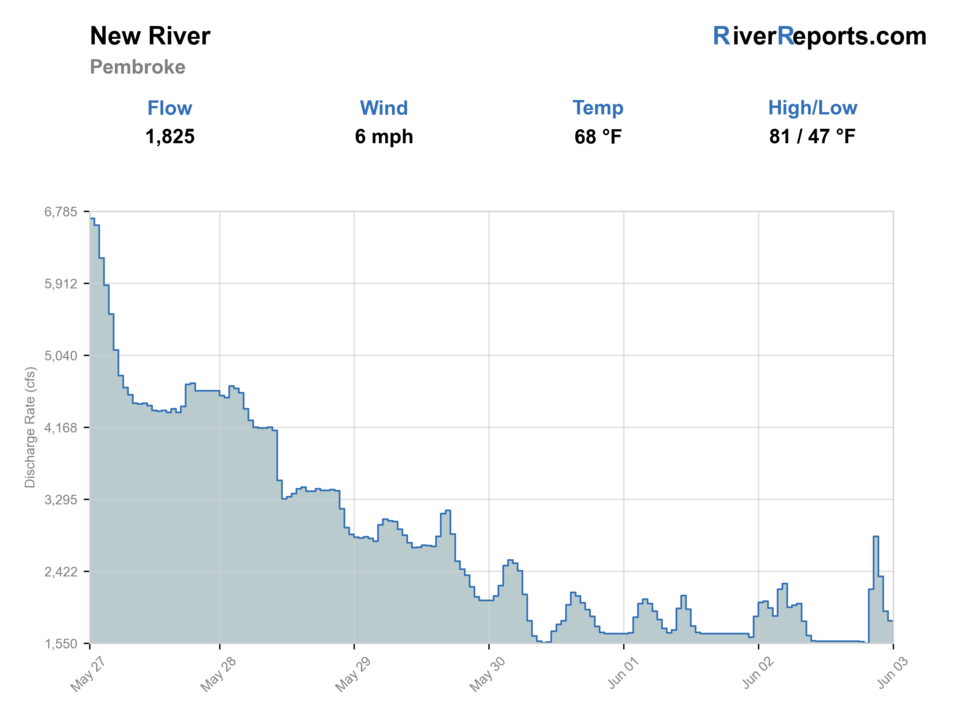
USGS data chart
Official USGS trend
Streamflow over the latest USGS reporting window.
Latest
1,810 cfs
Jun 3, 5 PM UTC
Weather
River weather report
Weather can change wading safety, road access, water temperature, hatches, and the best time of day to fish.
Live forecast loads as you reach this section
This keeps the report fast while still using the official National Weather Service forecast point.
Hatches and flies
Hatch chart and fly picks
Spring
Crayfish movement, baitfish activity, and sporadic mayfly/caddis windows around riffles
Olive bugger, crayfish, Clouser, soft hackle, foam bug
Summer
Cicadas in some years, terrestrials, caddis, and low-light baitfish feeding
Poppers, sliders, foam beetle, sneaky Pete, baitfish streamer
Fall
Baitfish and crayfish-driven feeding with some late caddis around moving water
Crayfish, Game Changer, woolly bugger, deer-hair diver, popper-dropper
Winter
Minimal surface activity and slower cold-water feeding windows
Small streamer, jig bug, craw trailer, slow-swung baitfish fly
Topwater
Poppers, sliders, sneaky Pete, deer-hair bug
Best at first light, last light, and on shaded summer banks where bass move shallow.
Subsurface bass flies
Clouser, woolly bugger, Game Changer, crayfish jig fly
The safest all-day choice when current seams, ledges, and rock gardens matter more than surface eats.
Trout crossover box
Stonefly nymph, caddis pupa, egg, zebra midge
Useful on tailwater-influenced reaches or when Virginia stocked-trout sections overlap your float plan.
Tactics
How to fish it
Start with topwater during low light, then slide to crayfish and baitfish flies once the sun pushes bass tighter to ledges and shade.
On stable flows, fish islands, ledge corners, and downstream current tongues before you spend time on long featureless banks.
Respect dam-separated reaches and plan around one shuttle, not around a chain of optimistic maybes.
When the river is low, simplify to shorter floats and deeper targets instead of insisting on a full-day mileage plan.
Rigging
Rod, leader, and setup notes
A 6-weight floating line is the standard setup for most New River bass fishing.
Carry a sink-tip or lightly weighted leader system for deeper ledges and cooler shoulder-season flows.
If you want muskie odds, bring a heavier rod and separate it mentally from your everyday smallmouth program.
Access
Access and planning notes
Radford gauge
Primary large-river trendWade / float / trail
RiverReports / USGS gauge / smallmouth
When to pick it
Start here when flow direction, flood risk, and broad wade or float safety decide the day.
Caution
The gauge does not replace reach-specific launch checks, dam context, wind assessment, or shuttle planning.
Fries and upper access chain
Upper public planningWade / float / trail
DWR access / float / bank
When to pick it
Use this chain when upper-river flow and launches match a planned float or bank session.
Caution
Confirm takeouts, releases, mileage, and whether low water will scrape the route.
Radford, Whitethorne, Pembroke, and Giles access
Middle-river planningWade / float / trail
DWR access / float / ledge water
When to pick it
Pick these when stable flow and manageable wind support smallmouth ledges, banks, and floats.
Caution
Broad ledges, wind, storms, and long shuttles can make the wrong reach hard to recover from.
DWR's river page and float descriptions are more useful than generic map pins because they explain where dams interrupt the plan.
Do not assume every dam has a simple portage or safe bank landing.
The New's size makes weather and wind matter even when the gauge looks friendly.
Regulations
Check before fishing
Check Virginia DWR freshwater rules for current limits and note any reach-specific exceptions before keeping bass, muskie, or trout.
Primary base
Radford, Pembroke, Fries, or Pulaski, Virginia
Best day style
Long float water with many public launches, dam-separated reaches, and broad river ledges that punish casual planning
Check first
Flow trend at Radford, dam-release impacts on your reach, DWR float map notes, weather, and any advisory affecting kept fish
Safety
Dam releases, broad ledges, sudden depth changes, wind on wide pools, and long shuttles that turn simple mistakes into long days
Gear
Helpful gear for this water
6-weight rod
A 6-weight covers smallmouth poppers, streamers, and the wind that often shows up on broader Virginia rivers.
Wading shoes or river sandals with caution
Warmwater trips invite casual footwear, but rock ledges and mossy shelves still demand traction.
PFD and shuttle kit
A realistic float day on the New or Maury depends more on access logistics than on one extra fly pattern.
Sun and heat protection
Long valley floats are exposed and can become a heat-management problem before the fishing slows down.
Nearby water
Other water to research
Backup logic
Storms or rising river
Compare the Maury or Upper James before forcing a large-river plan.
Release or dam-separated uncertainty
Pick a reach with clearer current behavior or wait for a better source read.
Wind or long shuttle issue
Shorten the float, bank fish a known access, or move to a smaller river.
Unsafe heat
Fish early, choose shaded bank water, or reschedule the float.
South Fork Holston River
A trout-first option when you want cooler water and more technical presentations.
Maury River
A smaller-scale Virginia float when you want more compact shuttle choices.
Upper James River
Another strong Virginia smallmouth backup with a different access rhythm.
FAQ
Fast answers
Is New River fishable today?
New River looks fishable right now. The live score is 70/100, based on current flow, weather, public alerts, and the report's planning context. Recheck the linked gauge and forecast before leaving because conditions can change quickly after rain, heat, access changes, or flow swings.
What flow is best for New River?
Use the Radford gauge with reach-specific access and dam-separated context. Stable or falling water is the best large-river signal.
When should I skip New River?
Skip when releases, storms, high wind, broad ledges, pushy current, low scraping flow, unsafe heat, or shuttle uncertainty make the plan hard to control.
Is New River safe to wade right now?
The fishability score is not a wading guarantee. Wade only where your chosen access has safe edges, clear footing, legal entry, and no forced crossings; high, rising, stained, or storm-affected water should be treated conservatively.
Is the New River better for wading or floating?
Most Virginia New River fly days are better from a boat or raft because the river is broad, ledgy, and tied to spaced-out public launches. Wade only where the level and bank access clearly support it.
What should I check before fishing the New River in Virginia?
Check RiverReports, USGS 03171000, your exact launch and take-out pair, current weather, and whether any dam or generation issue affects that reach.
When is the New River best for fly fishing?
Usually on stable spring through fall flows, with topwater strongest in summer and baitfish or crayfish flies gaining value in cooler shoulder seasons.
Sources
Source set for this report
Reviewed 2026-06-02