Utah / West
Green River
A Green River report for the Flaming Gorge tailwater and Greendale gauge, with sections, flows, hatches, boat logistics, and source checks.
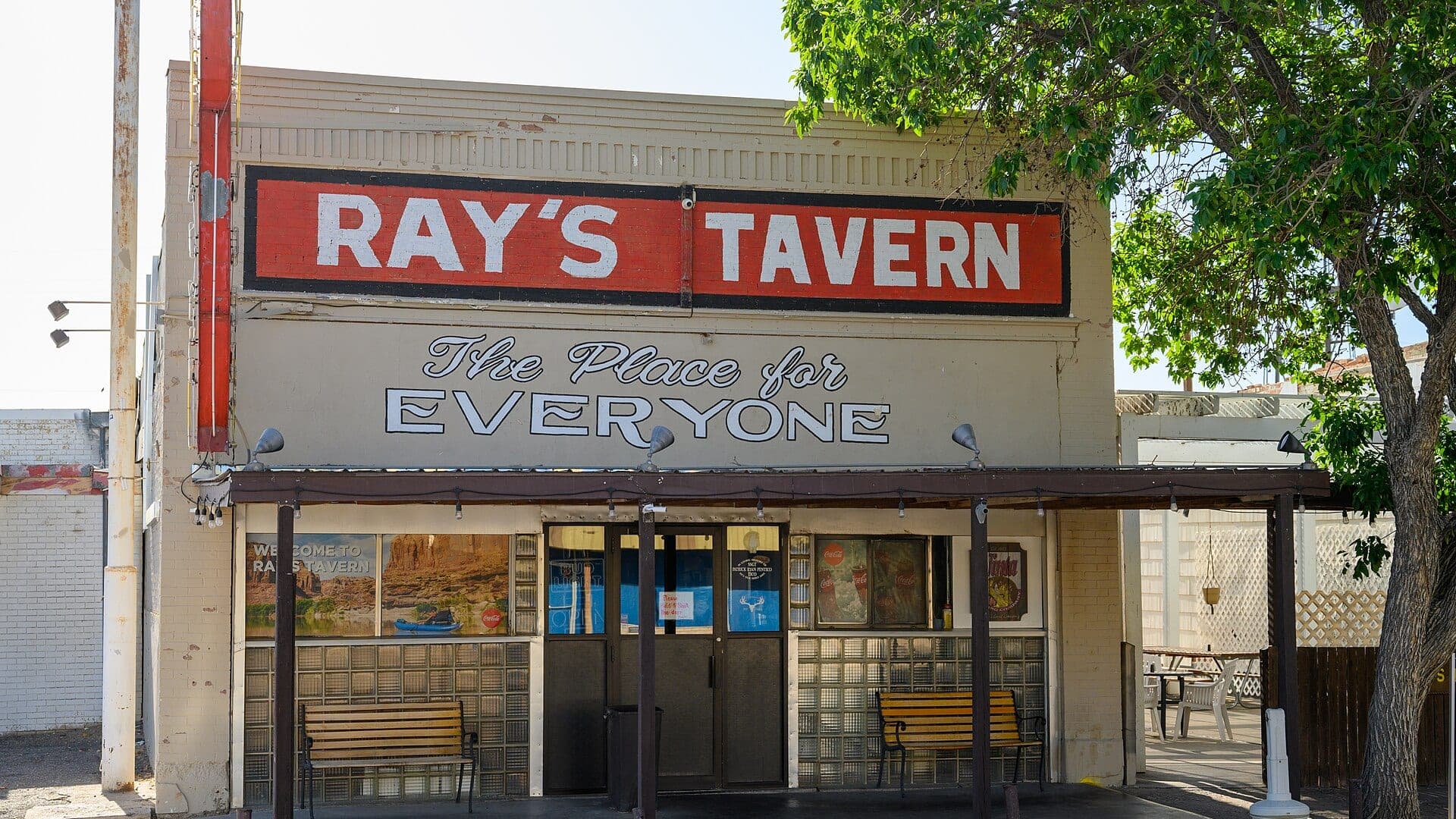
Image: 2022-05-22 04 Ray's Tavern in Green River, Utah USA / CC BY-SA 4.0 / Gordon LeggettFishability now: Green River fishability today
GreatData confidence: High96/100
Fishable now because the live gauge is stable, weather is mild, and no public alert is active.
Flow observed
4:30 PM UTC
Weather observed
5:00 PM UTC
Score calculated
5:23 PM UTC
Why this rating
Flow
Water temperature
Public alerts
Next 6-12 hours
Hold
Stable live data supports staying with the plan, but recheck the gauge and forecast before leaving.
USGS flow
970 cfs
Current trend: flow stable, so weather, temperature, and access checks drive the next change.
More planning details: flies, flow bands, and live source checks
Fish it today
Start here
Start by matching section to day length: A Section for shorter wade-focused trips, Little Hole as a key access and takeout checkpoint, and B or C only when the weather, crew, and shuttle all support a longer canyon commitment.
Best flow clue
Use the Greendale trend more than a single magic number. Stable releases are the best all-around trout window; higher or changing releases usually push the plan toward banks, streamer lanes, or a float with solid shuttle logistics.
Skip trigger
Skip the day when canyon wind ruins line control, when flows and boat traffic make your chosen section crowded or unsafe, when shuttle or takeout logistics are uncertain, or when you would be forcing a long float without a clean exit plan.
Flow decision bands
Stable tailwater release
Stable Greendale flow is the cleanest signal for the Flaming Gorge tailwater, especially when wind and boat traffic are manageable.
Best section window
A readable release, checked Utah rules, confirmed shuttle or access, and a clear A, B, or C section plan make the river most fishable.
Changing or windy
Release changes, strong wind, unsafe boating conditions, or poor shuttle logistics should shorten the plan or move it elsewhere.
Crowded or access-limited
Boat pressure, launch congestion, section-specific logistics, or uncertain access can make a famous tailwater fish poorly.
USGS flow
970 cfs
Current trend: flow stable, so weather, temperature, and access checks drive the next change.
Live USGS flow
970 cfs / stable
Live NWS forecast
71F / Mostly Sunny
Live water temperature
52F from USGS
No NWS alert flag
No active NWS alert was returned for this forecast point.
RiverReports and USGS Greendale flow are the live checks for this report.
A Section can be technical and crowded; B and C sections add distance and logistics.
Midges, BWOs, scuds, PMDs, cicadas, caddis, and terrestrials all have windows.
Use Utah rules and access sources before building a harvest, shuttle, or camping plan.
Editorial review
How this report is maintained
This report starts with official regulation, access, flow, weather, and public-river sources, then adds practical planning guidance for anglers.
Byline
BlueStreamFly editorial desk
Reviewed by
BlueStreamFly source review
Maintained by
BlueStreamFly
Last material review
2026-06-01
Report confidence
High confidence
91/100
High confidence: Utah regulation, stream-access, Fish Utah, RiverReports plus USGS Greendale flow, weather coverage, and route-specific Flaming Gorge section guidance support the page. Confidence is moderated by boat traffic, shuttle logistics, wind exposure, and section-specific access details.
Regulations
Utah DWR fishing and guidebook sources support the current tailwater rule-check path.
Access
Utah stream-access guidance and Fish Utah support the public framework, but shuttle, launch, and exact section logistics need trip-specific confirmation.
Flow and weather
RiverReports coverage is backed by USGS 09234500 near Greendale, and the National Weather Service point supports live flow, weather, wind, and safety decisions.
Fishing usefulness
The page now separates A-versus-B-and-C section choices, release stability, wind, crowding, wade-versus-float choices, and backup-water decisions.
Fishability dashboard and source review
2026-06-01 / material content or source review
Utah DWR fishing, guidebook, stream-access, and Fish Utah sources, RiverReports flow support, USGS 09234500 near Greendale, and the National Weather Service point were checked before updating the current-fishability decision layer.
2026-06-01
Updated Green River to the current fishability-page standard with Greendale flow bands, Flaming Gorge section cards, backup cues, stable fishability SEO, and confidence signals.
2026-05-28
Added a page-specific report-confidence meter after rechecking Flaming Gorge tailwater rule sources, section-planning guidance, Greendale flow support, and the access limits that still depend on section-by-section logistics.
2026-05-25
Initial source-reviewed report published with flows, weather, hatches, flies, tactics, access, regulations, and FAQs.
Angler planning edge
Local details that change the plan
Best for
Anglers who want a premium clear tailwater day and will plan around one defined section, Dry-fly, nymph, and emerger fishing during stable release windows below Flaming Gorge, Trips where boat logistics or a known A Section wade plan are settled before you leave Dutch John, People willing to back off when wind, crowding, or release context makes the famous water fish poorly
Wade or float
Treat the Green as a section-choice page first. A Section is the cleanest wade-and-short-drift fit for many visitors, while B and C sections lean harder toward boat, shuttle, and weather planning. Pick the section before you pick the rig.
Best flows
Use the Greendale trend more than a single magic number. Stable releases are the best all-around trout window; higher or changing releases usually push the plan toward banks, streamer lanes, or a float with solid shuttle logistics.
When to skip
Skip the day when canyon wind ruins line control, when flows and boat traffic make your chosen section crowded or unsafe, when shuttle or takeout logistics are uncertain, or when you would be forcing a long float without a clean exit plan.
Local plan
Start by matching section to day length: A Section for shorter wade-focused trips, Little Hole as a key access and takeout checkpoint, and B or C only when the weather, crew, and shuttle all support a longer canyon commitment.
Pressure
The best-known tailwater in Utah attracts constant attention. A famous hatch does not guarantee space, and anglers who start early, fish weekdays, or commit to one less-obvious shelf or bank lane often do better than those drifting past crowded pods.
Access nuance
Public access is strong, but canyon logistics still control the day. A legal put-in or parking area does not solve the takeout, weather, or stream-access details that matter once you are committed to a section.
Backup water
If Green River wind, crowding, or shuttle logistics look wrong, pivot to the Duchesne for a freestone-style trout day or to the Provo when you want a different Utah technical-trout plan closer to Wasatch services.
About the river
Setting, character, and why it fishes the way it does.
The Green River below Flaming Gorge Dam is one of Utah's most recognizable trout fisheries. Cold, clear releases, canyon scenery, and strong insect life create a river where fly choice matters, but drift and positioning matter more.
The report is scoped to the tailwater below Flaming Gorge, with the Greendale gauge as the live condition anchor. It is not a lower Green River desert smallmouth report.
Because this river attracts wade anglers, drift boats, guides, and travelers, a useful page needs more than a hatch chart. It needs flow, section, weather, shuttle, and etiquette planning.
Target species
Brown trout
A major target around structure, shelves, hatches, and streamer windows.
Rainbow trout
Common tailwater fish that respond to small nymphs, dries, and emergers.
Cutthroat trout
Possible in the system; handle carefully and verify current rules.
Native fish context
The broader Green River basin has important native-fish conservation value downstream.
Reading the water
Stable low to moderate flow
Use long leaders, small nymphs, dries, and sight-fishing discipline.
Higher release
Focus on banks, soft edges, streamer lines, and boat-based tactics.
Windy days
Shorten casts, use heavier dry-dropper rigs, or pick protected sections.
Clear sun
Expect spooky fish and strong sight-fishing pressure.
Best seasons
Winter
Midges and scuds dominate, with fewer crowds and colder logistics.
Spring
BWOs, midges, and pre-summer dry-fly windows can be excellent.
Summer
Cicadas, caddis, PMDs, terrestrials, and boat traffic all matter.
Fall
BWOs, midges, streamer windows, and cooler weather improve quality.
Preferred flow source
Green River near Greendale
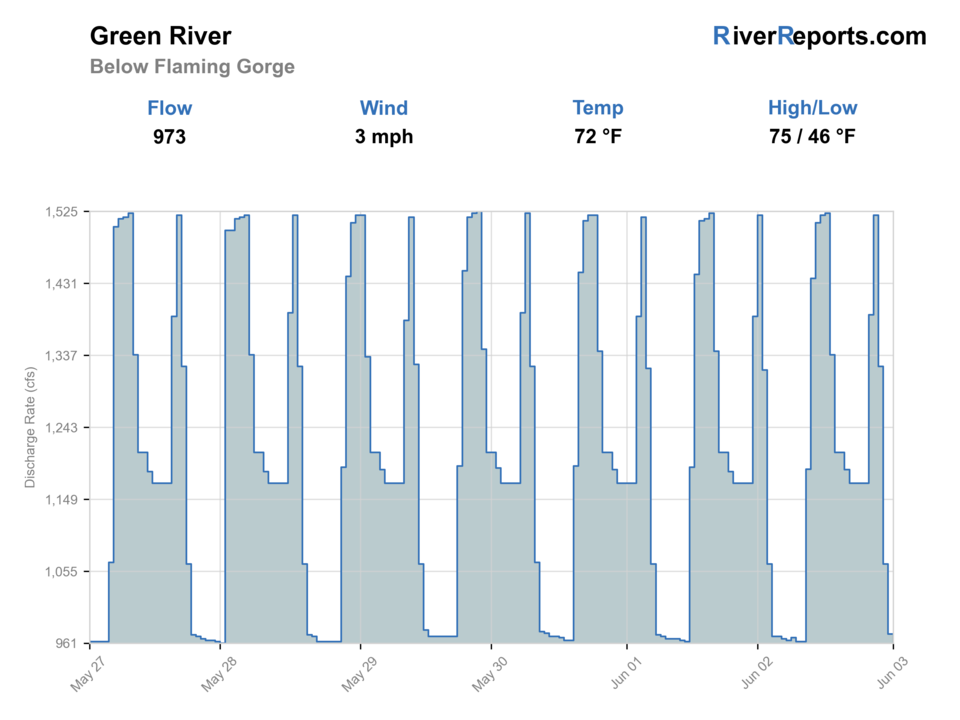
RiverReports is the preferred chart source when coverage exists. When a matching USGS gauge exists, keep it open as the official backstop for station data and current hydrograph context.
USGS data chart
Official USGS trend
Streamflow over the latest USGS reporting window.
Latest
970 cfs
Jun 3, 4 PM UTC
Weather
River weather report
Weather can change wading safety, road access, water temperature, hatches, and the best time of day to fish.
Live forecast loads as you reach this section
This keeps the report fast while still using the official National Weather Service forecast point.
Hatches and flies
Hatch chart and fly picks
Winter
Midges, scuds, sowbugs, tiny mayflies, and slow tailwater trout
Zebra midge, scud, sowbug, BWO nymph, small leech
March to May
BWOs, midges, caddis, worms after bumps, and early streamer windows
BWO emerger, midge cluster, caddis pupa, San Juan worm, sculpin
June to August
Cicadas where present, caddis, PMDs, terrestrials, and evening dry-fly windows
Cicada, PMD emerger, elk hair caddis, ant, hopper, small streamer
September to November
BWOs, midges, October caddis, terrestrials, and streamer days
BWO emerger, zebra midge, October caddis, beetle, sculpin
Small nymphs
Zebra midge, scud, sowbug, BWO nymph, pheasant tail, caddis pupa
Use during low, clear tailwater windows when trout feed close to the bottom.
Dries and emergers
Sulphur emerger, BWO, midge cluster, caddis, soft hackle
Use for hatch windows, flat glides, and sipping fish that will not move far.
Streamers
Sculpin, leech, olive bugger, white streamer, small baitfish
Use on generation, stained water, or cloudy days when bigger fish leave cover.
Tactics
How to fish it
Build the day around the section, not just the fly pattern.
Use small nymphs and scuds below an indicator when fish are not rising.
Switch to dry flies only after you confirm active surface feeding.
Use streamers on cloudy days, higher water, and banks with depth.
Respect boat lanes, wade anglers, and limited canyon exit points.
Rigging
Rod, leader, and setup notes
A 9-foot 4 or 5-weight handles most nymphing and dry-fly fishing.
Carry 5X to 7X for clear-water dries and emergers.
A 6-weight helps with wind, cicadas, streamers, and boat fishing.
Bring sun protection, layers, and enough water for canyon exposure.
Access
Access and planning notes
Greendale gauge
Primary flow decisionWade / float / trail
RiverReports / USGS gauge / tailwater
When to pick it
Start here when release stability and safe section choice decide the day.
Caution
The gauge does not replace wind, shuttle, launch, or section-specific access checks.
A section below Flaming Gorge
Classic tailwater focusWade / float / trail
Wade / float / boat
When to pick it
Pick this when flow, traffic, and access support a technical high-confidence trout plan.
Caution
Crowds, boat traffic, and exact rules still need current checks.
B and C section logistics
Longer float or shuttle planWade / float / trail
Float / shuttle / access
When to pick it
Use this style when boat control, shuttle timing, and section choice are already solved.
Caution
Wind, takeouts, and river-travel logistics can be the limiting factor.
Wind and remote canyon logistics can make a good flow day hard.
Boat traffic, wading pressure, and guide use are normal on this river.
Verify permits, launches, shuttles, and current Utah rules before the trip.
Regulations
Check before fishing
Check Utah DWR rules, Fish Utah, current emergency changes, and any Flaming Gorge or Green River section-specific rules before fishing.
Primary base
Dutch John, Vernal, or Flaming Gorge
Best day style
Clear canyon tailwater, drift boats, wade pockets, permits, and shuttle logistics
Check first
USGS/RiverReports flow, dam release context, Utah rules, weather, shuttle status, and wind
Safety
Cold water, boats, remote canyon exits, wind, sun, and fast-changing weather
Gear
Helpful gear for this water
Four or five-weight rod
Covers most dry-fly, nymph, and dry-dropper work.
Six-weight or streamer rod
Useful for wind, higher water, and larger flies.
Thermometer
Use it before catch-and-release trout fishing in warm weather.
Wading staff
Helpful on freestone rocks, tailwater ledges, and pushy runs.
Barbless-hook box
Speeds handling on wild trout and special-regulation water.
Nearby water
Other water to research
Backup logic
Wind or boat safety
Delay, shorten the section, or compare Provo River, Weber River, or Duchesne River.
Crowded launches
Shift timing, choose a different legal section, or pick another Utah trout river.
Release change
Wait for the flow to settle or choose a river with a cleaner wade plan.
Shuttle or access issue
Do not start a longer float until takeout, timing, and section rules are confirmed.
Duchesne River
A mountain freestone option with access planning.
Provo River
A Wasatch tailwater and freestone-style trout plan.
Weber River
Another Utah trout river where stream access matters.
FAQ
Fast answers
Is Green River fishable today?
Green River looks very fishable right now. The live score is 96/100, based on current flow, weather, public alerts, and the report's planning context. Recheck the linked gauge and forecast before leaving because conditions can change quickly after rain, heat, access changes, or flow swings.
What flow is best for Green River?
Use the Greendale trend more than a single magic number. Stable releases are the best all-around trout window; higher or changing releases usually push the plan toward banks, streamer lanes, or a float with solid shuttle logistics.
When should I skip Green River?
Skip the day when canyon wind ruins line control, when flows and boat traffic make your chosen section crowded or unsafe, when shuttle or takeout logistics are uncertain, or when you would be forcing a long float without a clean exit plan.
Is Green River safe to wade right now?
The fishability score is not a wading guarantee. Wade only where your chosen access has safe edges, clear footing, legal entry, and no forced crossings; high, rising, stained, or storm-affected water should be treated conservatively.
What should I check first before fishing Green River?
Check RiverReports or USGS 09234500, dam release context, weather, wind, Utah rules, and shuttle status.
Where should a first-time visitor start on Green River?
First-time visitors usually orient around the Flaming Gorge tailwater and A Section, then decide whether to wade or float.
Can I wade Green River?
Yes in some areas, especially at manageable flows, but many anglers use boats and shuttles.
What flies should I bring for Green River?
Bring the seasonal fly box, then adjust size, weight, and color to the water level, clarity, temperature, and fishing pressure you find.
Sources
Source set for this report
Reviewed 2026-06-01