
Oregon / West
Wilson River
A Wilson River report for Tillamook Coast Range planning, with year-round steelhead context, Highway 6 bank access, drift-friendly lower-river structure, and current rule checks.
Image: Generated regional planning image for Wilson River / BlueStreamFly generated; not exact location / BlueStreamFlyFishability now: Wilson River fishability today
GreatData confidence: High96/100
Fishable now because the live gauge is falling, weather is mild, and no public alert is active.
Flow observed
4:30 PM UTC
Weather observed
5:00 PM UTC
Score calculated
5:23 PM UTC
Why this rating
Flow
Weather
Public alerts
Next 6-12 hours
Improving / hold
A falling gauge and usable weather should keep the next 6-12 hours in play unless tributaries stain or heat builds.
USGS flow
183 cfs
Current trend: flow falling, rating likely holding strong unless weather or clarity changes.
More planning details: flies, flow bands, and live source checks
Fish it today
Start here
Base out of Tillamook or run in on Highway 6, pick two or three access points, and fish them well instead of racing from pull-off to pull-off.
Best flow clue
Stable or dropping green flow that keeps fish moving without turning every seam into a heavy push. The Wilson does not reward guessing in blown-out water.
Skip trigger
Skip the day when rain is still lifting the graph, the river is fully dirty, or crowding pushes you toward bad footing or rushed decisions.
Flow decision bands
Dropping green Wilson flow
This is the best steelhead signal: enough shape to move fish, enough clarity to read lanes, and safer banks for short sessions.
Fresh coast-range rise
A fast lift, brown water, or heavy rain should move the day to waiting or a short access scout.
Low clear summer water
Fish first light, scale down, and treat cutthroat or precise steelhead work as more realistic than covering broad water.
Roadside pressure or unsafe bank
A good-looking gauge can still be a weak trip when the easiest Highway 6 pull-offs are crowded or footing pushes you into bad decisions.
USGS flow
183 cfs
Current trend: flow falling, rating likely holding strong unless weather or clarity changes.
Live USGS flow
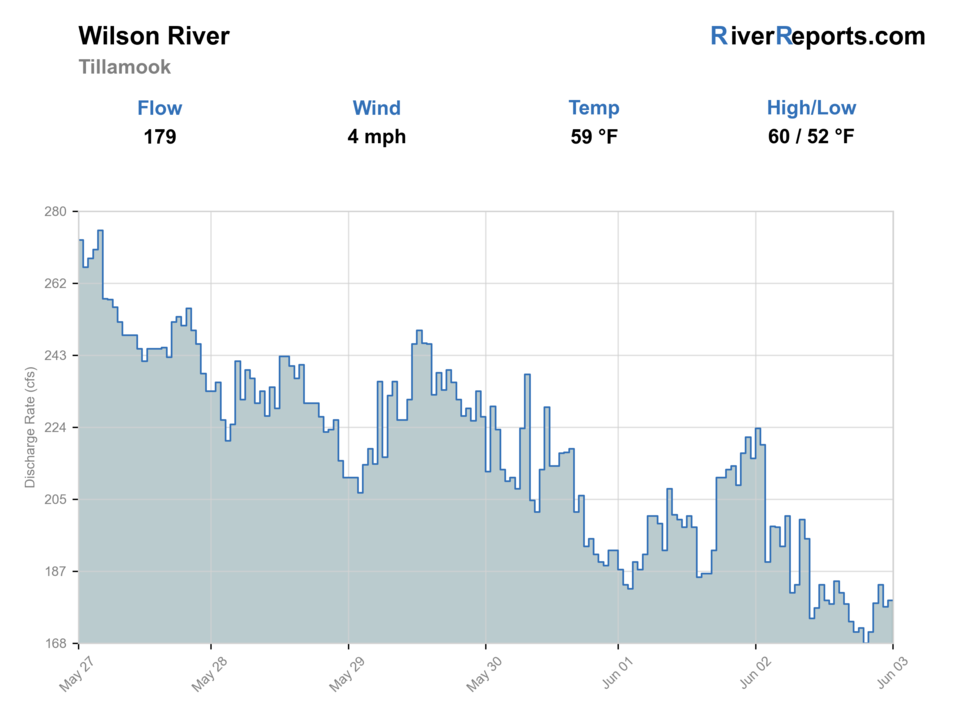
179 cfs / falling about 10%
Live NWS forecast
57F / Chance Light Rain
Water temperature not verified
Heat guidance uses weather and river type unless an official water-temperature value is available.
No NWS alert flag
No active NWS alert was returned for this forecast point.
The Wilson is one of the cleaner bank-access steelhead decisions on the north coast when the hydrograph cooperates.
There are no hatchery spring Chinook releases on the Wilson, so do not build the day around the wrong species story.
Year-round steelhead context matters more here than chasing one tiny hatch window.
Lower-river drifts are beginner-friendlier than many coastal rivers, but footing and weather still need respect.
Editorial review
How this report is maintained
This report starts with official regulation, access, flow, weather, and public-land sources, then adds practical planning guidance for fly anglers.
Byline
BlueStreamFly editorial desk
Reviewed by
BlueStreamFly source review
Maintained by
BlueStreamFly
Last material review
2026-06-03
Report confidence
High confidence
90/100
High confidence: RiverReports, USGS 14301500 near Tillamook, ODFW Northwest Zone updates, Oregon regulation sources, Tillamook State Forest access context, weather data, and route-specific Wilson steelhead guidance support the page. Confidence is moderated by coast-range storm response, crowding, low-clear pressure, and fish-timing variability.
Regulations
ODFW Northwest Zone and Oregon coastal regulation sources support current trout and steelhead checks.
Access
Tillamook State Forest and Highway 6 access context support public planning, with pull-off safety and crowding still requiring day-of judgment.
Flow and weather
RiverReports, USGS 14301500 near Tillamook, and the National Weather Service point support live flow and weather decisions.
Fishing usefulness
The page now separates green-water timing, Highway 6 access, lower-river drifts, storm skips, low-clear tactics, and coast-range backup choices.
Fishability dashboard and source review
2026-06-03 / material content or source review
RiverReports, USGS 14301500 near Tillamook, ODFW Northwest Zone updates, Oregon coastal regulations, Tillamook State Forest access context, National Weather Service point data, and route-specific coast-range steelhead sources were checked before updating the current-fishability decision layer.
2026-06-03
Updated Wilson River to the current fishability-page standard with Tillamook flow bands, Highway 6 and lower-river access cards, coast-storm backup cues, stable fishability SEO, and confidence signals.
2026-05-26
Published a new Wilson River report with current steelhead timing, Highway 6 and Tillamook State Forest access guidance, lower-river drift context, and clearer skip-day flow advice.
Angler planning edge
Local details that change the plan
Best for
Reliable coast-range steelhead planning, Bank-access Oregon river days, Lower-river drifts and short roadside sessions
Wade or float
Best as a bank-and-short-drift river. You can wade useful water, but the Wilson is more forgiving when you fish edges and obvious lanes instead of trying to own the middle.
Best flows
Stable or dropping green flow that keeps fish moving without turning every seam into a heavy push. The Wilson does not reward guessing in blown-out water.
When to skip
Skip the day when rain is still lifting the graph, the river is fully dirty, or crowding pushes you toward bad footing or rushed decisions.
Local plan
Base out of Tillamook or run in on Highway 6, pick two or three access points, and fish them well instead of racing from pull-off to pull-off.
Pressure
The Wilson spreads anglers better than some famous Oregon steelhead rivers, but the easy bank-access corridor along Highway 6 still concentrates people quickly.
Access nuance
Public access is one of the Wilson's strengths, but the same visibility means the obvious spots get pounded first and the river can feel smaller than the map suggests.
Backup water
The Nehalem is the softer nearby backup, while the Sandy or Deschutes are better pivots if you want a different style of Oregon steelhead day.
About the river
Setting, character, and why it fishes the way it does.
The Wilson is one of the first Oregon coastal rivers many fly anglers hear about for good reason. It offers legitimate steelhead water, obvious public access, and enough road-following structure to let a visiting angler build a practical day without local-only guesswork.
This page is scoped to the mainstem Wilson that most anglers mean when they reference Highway 6, the Tillamook State Forest corridor, and lower-river drifts. That keeps the gauge, access notes, and species timing aligned with the fishery ODFW is actively updating.
ODFW's easy-angling guidance points to broad bank access and beginner-friendly lower-river floats, while the current Northwest report confirms that summer steelhead are already part of the conversation. Together, those two sources make the Wilson a better planning river than a lot of coast-range water that looks good on a map but fishes hard without exact local knowledge.
Target species
Summer steelhead
A key late-spring through fall reason to watch the Wilson closely.
Winter steelhead
The cold-season identity of the river and still the classic Wilson draw.
Cutthroat trout
A realistic spring, summer, and fall backup when you shorten the steelhead plan.
Fall Chinook
Part of the broader seasonal picture, but not the primary fly-fishing identity of this route.
Reading the water
Dropping green flow
The strongest Wilson window for steelhead travel lanes and safe bank movement.
High dirty water
Usually a wait-it-out signal rather than a heroic grind.
Low clear summer flow
Scale down, cover water quietly, and lean on cutthroat or precise steelhead swings.
Warm-season crowding
Fish early or late and move away from the easiest pull-offs if the first water is packed.
Best seasons
Winter
Classic Wilson steelhead season when the river is in shape.
Spring
Transition season when trout reopen and early summer steelhead talk starts building.
Summer
A real steelhead and cutthroat season, especially when the river stays green enough to move fish.
Fall
A solid shoulder season for cutthroat, Chinook context, and the next steelhead reset.
Preferred flow source
Wilson River near Tillamook
RiverReports is the preferred chart source when coverage exists. When a matching USGS gauge exists, keep it open as the official backstop for station data and current hydrograph context.
USGS data chart
Official USGS trend
Streamflow over the latest USGS reporting window.
Latest
183 cfs
Jun 3, 2 PM UTC
Weather
River weather report
Weather can change wading safety, road access, water temperature, hatches, and the best time of day to fish.
Live forecast loads as you reach this section
This keeps the report fast while still using the official National Weather Service forecast point.
Hatches and flies
Hatch chart and fly picks
January-March
Winter steelhead eggs, stoneflies, and leeches
Stonefly nymph, small egg, black leech, marabou jig, intruder
April-June
Summer steelhead build, caddis, and cutthroat food in softer edges
Caddis pupa, soft hackle, muddler, sparse wet fly, small streamer
July-September
Sea-run cutthroat, terrestrials, summer steelhead swing windows, and low-light caddis
Ant, beetle, caddis, Green Butt Skunk, muddler, olive bugger
October-December
Fall Chinook eggs, winter steelhead timing, and classic coast-range stones
Egg fly, black stone, leech, intruder, sparse baitfish pattern
Steelhead standards
Green Butt Skunk, black marabou, sparse intruder, leech, small tube fly
Carry these for the year-round steelhead identity that defines the Wilson.
Eggs and nymphs
Egg fly, stonefly nymph, caddis pupa, hare's ear, soft hackle
Work softer seams and tailouts when current is still fishable but fish are not moving far.
Cutthroat and warm-season backup
Small streamer, ant, beetle, elk hair caddis, muddler
Useful in spring, summer, and early fall when you shift away from a pure steelhead plan.
Tactics
How to fish it
Start by matching the flow to your day style: bank water, short drifts, or a quick move between a few proven pull-offs.
Swing first on green travel water, then switch to eggs or nymphs if the river stays fishable but fish stop moving.
On warm-season days, keep a cutthroat box ready instead of forcing a steelhead-only script when the river gets low and clear.
Treat the lower river as the easiest place to learn the Wilson honestly; save the heroic boulder hopping for another day.
Rigging
Rod, leader, and setup notes
A 6- or 7-weight with a floating line and light sink tip covers almost everything a practical Wilson day demands.
Carry stronger tippet for steelhead but keep a lighter leader option for summer cutthroat and lower-water adjustments.
If you are drifting, keep the rig simple and fish fewer spots thoroughly rather than changing tips every bend.
When the river is slightly colored, darker flies and a slower swing often make more sense than overcasting every seam.
Access
Access and planning notes
Highway 6 bank-access corridor
Primary steelhead and cutthroat planWade / float / trail
Roadside / bank / short wade
When to pick it
Start here when the river is green, dropping, and safe enough to fish edges.
Caution
Easy pull-offs concentrate pressure and do not make slick coast-range rocks forgiving.
Tillamook Forest Center area
Lower forest access anchorWade / float / trail
Forest day use / bank / wade edges
When to pick it
Use it when you want a defined public starting point instead of bouncing blindly between pull-offs.
Caution
Forest access and river condition can diverge after storms.
Lower-river drifts
Beginner-friendlier coverageWade / float / trail
Drift / bank / selective wade
When to pick it
Pick this when flow and shuttle details support a simple lower-river plan.
Caution
Lower-river mobility does not override high, dirty, or rising water.
The Wilson is friendly by coast-range standards, but it is still a slick boulder river that punishes rushed wading.
Highway access makes it easy to cover water, though the first obvious pull-offs are also the first places other anglers stop.
Lower-river drifts are often safer and more productive than trying to force long wades in pushy winter or spring current.
Regulations
Check before fishing
Check current Oregon coastal regulations before fishing the Wilson. Mainstem and tributary rules differ, and the current ODFW Northwest report is the fastest way to verify the active steelhead and trout picture.
Primary base
Tillamook, Forest Grove, or a Highway 6 coast-range day trip
Best day style
Highway pull-offs, forest day-use areas, lower-river drifts, and short bank wades
Check first
RiverReports, USGS 14301500, the ODFW Northwest Zone report, current coastal regulations, and the NWS forecast
Safety
Fast coast-range rises, slick boulders, cold water, limited recovery margins in high flow, and crowded roadside pull-offs
Gear
Helpful gear for this water
6- or 7-weight rod
The right range for steelhead, larger cutthroat streamers, and coast-range current.
Floating line plus a light sink tip
Covers classic summer runs and deeper winter holding water.
Studded boots or aggressive rubber soles
The Wilson's boulders and slick edges punish casual footing.
Rain shell and spare dry layers
Coast-range weather changes fast and keeps you wet longer than the forecast suggests.
Nearby water
Other water to research
Backup logic
Blown out after rain
Wait for the Wilson to green up or compare the Nehalem, Sandy, or Deschutes for a different water style.
Low clear and pressured
Fish first light, switch to cutthroat tactics, or move away from the obvious pull-offs.
Highway or forest access issue
Use another confirmed public access or switch basins instead of guessing at roadside banks.
Warm or crowded salmonid handling
Shorten the session, release quickly, or choose a better-timed coast window.
Nehalem River
A nearby coastal-basin backup when the Wilson is crowded or you want a softer cutthroat-focused day.
Sandy River
A stronger backup if you want another Oregon steelhead-style river with better metro access.
Deschutes River
A much drier-side alternative when coast-range weather or muddy flow kills the Wilson plan.
FAQ
Fast answers
Is Wilson River fishable today?
Wilson River looks very fishable right now. The live score is 96/100, based on current flow, weather, public alerts, and the report's planning context. Recheck the linked gauge and forecast before leaving because conditions can change quickly after rain, heat, access changes, or flow swings.
What flow is best for Wilson River?
Stable or dropping green flow that keeps fish moving without turning every seam into a heavy push. The Wilson does not reward guessing in blown-out water.
When should I skip Wilson River?
Skip the day when rain is still lifting the graph, the river is fully dirty, or crowding pushes you toward bad footing or rushed decisions.
Is Wilson River safe to wade right now?
The fishability score is not a wading guarantee. Wade only where your chosen access has safe edges, clear footing, legal entry, and no forced crossings; high, rising, stained, or storm-affected water should be treated conservatively.
What should I check first before fishing the Wilson River?
Check the current Northwest Zone report, RiverReports and USGS flow trend, and the exact river section you want to fish. The Wilson changes from friendly to poor very quickly when coastal rain hits.
Is the Wilson River good for bank anglers?
Yes by Oregon coast standards. ODFW specifically calls out strong bank access along Highway 6, which is one reason the Wilson is such a reliable planning river.
Can a first-time fly angler fish the Wilson River?
Yes if they keep the day simple, stay within safe edge water, and treat the lower river or obvious pull-off water as a learning day rather than trying to conquer the whole basin.
When should I skip the Wilson River?
Skip it when the river is rising hard, fully muddy, or pushing too much to fish from stable bank positions. The next green drop is usually worth waiting for.
Sources
Source set for this report
Reviewed 2026-06-03