New Mexico / Southwest
Red River
A Red River report for anglers checking the hatchery gauge, Carson roadside access, Wild Rivers hiking access, and trout-friendly timing before fishing.
Image: Generated regional planning image for Red River / BlueStreamFly generated; not exact location / BlueStreamFlyFishability now: Red River fishability today
GreatData confidence: High96/100
Fishable now because the live gauge is stable, weather is mild, and no public alert is active.
Flow observed
4:45 PM UTC
Weather observed
5:00 PM UTC
Score calculated
5:24 PM UTC
Why this rating
Flow
Weather
Public alerts
Next 6-12 hours
Hold
Stable live data supports staying with the plan, but recheck the gauge and forecast before leaving.
USGS flow
30 cfs
Current trend: flow stable, so weather, temperature, and access checks drive the next change.
More planning details: flies, flow bands, and live source checks
Fish it today
Start here
Base in Red River or Questa, check the gauge first, then decide whether the easy upper river or the lower canyon gives you the better day.
Best flow clue
Stable clear flows that keep upper-river pocket water readable and make the lower-canyon hike worth the effort.
Skip trigger
Skip during sharp runoff, active lightning, trail-closure uncertainty, or when mid-day heat becomes the main trout-handling issue.
Flow decision bands
Stable hatchery flow
Stable or slowly falling flow below the hatchery with clear water is the best signal for upper pocket water and roadside trout.
Best reach-choice window
Mild weather, checked New Mexico rules, confirmed access, and a clear upper-roadside or lower-canyon plan make the Red most fishable.
Runoff, lightning, or canyon risk
Sharp runoff, storms, or lower-canyon trail uncertainty should move the plan to upper roadside water or another river.
Crowded or heat-limited
Roadside pressure, hot afternoons, or trout-handling stress can weaken the day even when the gauge looks workable.
USGS flow
30 cfs
Current trend: flow stable, so weather, temperature, and access checks drive the next change.
Live USGS flow
30 cfs / stable
Live NWS forecast
70F / Mostly Cloudy
Water temperature not verified
Heat guidance uses weather and river type unless an official water-temperature value is available.
No NWS alert flag
No active NWS alert was returned for this forecast point.
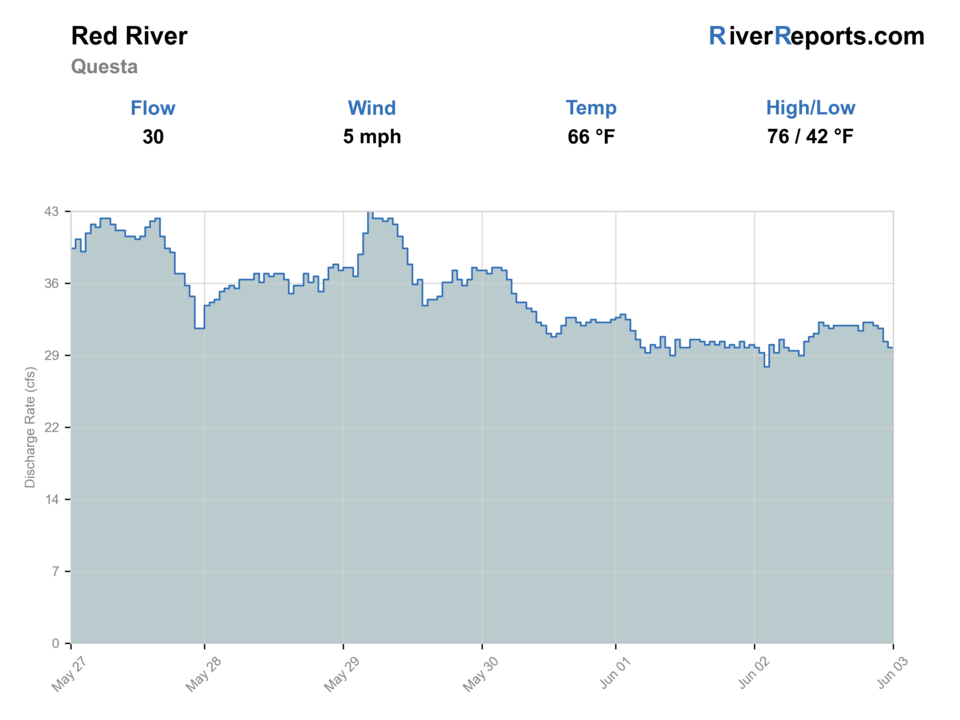
RiverReports is the quick chart, backed by USGS 08266820 Red River below Fish Hatchery near Questa.
Carson National Forest confirms fishing access around Eagle Rock Lake and nearby Red River water, while the lower Wild and Scenic section shifts to steep hike-in BLM access.
The BLM currently notes the La Junta Trail closure and directs lower-river access to the Little or Big Arsenic trails.
New Mexico rules and any special-trout-water details still need a same-day check before you fish.
Editorial review
How this report is maintained
This report starts with official regulation, flow, weather, and public-access sources, then adds practical planning guidance for fly anglers.
Byline
BlueStreamFly editorial desk
Reviewed by
BlueStreamFly source review
Maintained by
BlueStreamFly
Last material review
2026-06-02
Report confidence
Good confidence
87/100
Good confidence: RiverReports, USGS hatchery flow, New Mexico fishing rules, Carson National Forest access context, BLM Wild and Scenic River guidance, weather coverage, image disclosure, and route-specific upper-versus-lower planning support the page. Confidence is moderated by trail status, lower-canyon risk, runoff, heat, and roadside pressure.
Regulations
New Mexico fishing rules support the current rule-check path before choosing upper roadside or lower canyon water.
Access
Carson National Forest and BLM Red River Wild and Scenic River sources support the main public-access framework, with lower-canyon trail conditions still requiring day-of confirmation.
Flow and weather
RiverReports coverage is backed by USGS 08266820 below Fish Hatchery near Questa, and the National Weather Service point supports storm and heat decisions.
Fishing usefulness
The page now separates hatchery-gauge flow, upper roadside access, lower canyon access, trail risk, heat, pressure, and backup-water choices.
Fishability dashboard and source review
2026-06-02 / material content or source review
RiverReports, USGS 08266820 below Fish Hatchery near Questa, New Mexico fishing rules, Carson National Forest Eagle Rock Lake and Red River access context, BLM Red River Wild and Scenic River guidance, National Weather Service point data, and image-disclosure sources were checked before updating the current-fishability decision layer.
2026-06-02
Updated Red River to the current fishability-page standard with hatchery-gauge trend bands, upper-roadside and lower-canyon access cards, trail-closure backup cues, stable fishability SEO, and confidence signals.
2026-05-26
Published a new Red River report with upper- and lower-river access guidance, hatch timing, flow context, and hike-in safety notes.
Angler planning edge
Local details that change the plan
Best for
Easy first-pass New Mexico trout trips, Roadside dry-dropper sessions, Longer hike-in days when you want less casual pressure
Wade or float
This is a wade-first report. The lower canyon is a hike-to-wade plan, not a casual roadside stop.
Best flows
Stable clear flows that keep upper-river pocket water readable and make the lower-canyon hike worth the effort.
When to skip
Skip during sharp runoff, active lightning, trail-closure uncertainty, or when mid-day heat becomes the main trout-handling issue.
Local plan
Base in Red River or Questa, check the gauge first, then decide whether the easy upper river or the lower canyon gives you the better day.
Pressure
Upper roadside water gets the most attention. Fish early, walk a little farther, and do not stay married to the first obvious pool.
Access nuance
Carson access is convenient, but the lower BLM water is a real hike. Treat those as different trips rather than one interchangeable report.
Backup water
Cimarron River, Pecos River, and Chama River are better backups than forcing a crowded or high Red River day.
About the river
Setting, character, and why it fishes the way it does.
The Red River starts as a Sangre de Cristo trout stream with easy recognition value for visiting anglers, then drops into a more rugged lower canyon before it meets the Rio Grande.
That split matters because the easiest water to reach is not the same as the most remote or scenic water to fish. The gauge helps both, but access and physical effort shape the rest of the decision.
This page leans toward practical planning: what to check, where the access changes, and when to stop treating every mile of the river like the same trout stream.
Target species
Brown trout
A common target across the trout-focused Red River reaches.
Rainbow trout
Common in the system and often central to a visiting angler's plan.
Rio Grande cutthroat trout
Native-trout context matters in the broader region; verify any reach-specific rules before making assumptions.
Reading the water
Stable clear water
Best for dries, dry-droppers, and precise nymphing along banks and pocket water.
High runoff
Upper roadside water may still offer a look, but the lower gorge loses value fast.
Summer low water
Fish early, use longer leaders, and move away from pressured easy-access pockets.
Slight color after storms
Small streamers and darker nymphs can beat tiny dries until clarity returns.
Best seasons
Late spring
Good when runoff backs down enough for safe entries and clear edges.
Summer
The classic visiting window, especially for early and late trout sessions.
Early fall
Cooler nights and steadier flows often make for the cleanest trout conditions.
Winter
A niche cold-weather option rather than the broad recommendation.
Preferred flow source
Red River below Fish Hatchery
RiverReports is the preferred chart source when coverage exists. When a matching USGS gauge exists, keep it open as the official backstop for station data and current hydrograph context.
USGS data chart
Official USGS trend
Streamflow over the latest USGS reporting window.
Latest
30 cfs
Jun 3, 4 PM UTC
Weather
River weather report
Weather can change wading safety, road access, water temperature, hatches, and the best time of day to fish.
Live forecast loads as you reach this section
This keeps the report fast while still using the official National Weather Service forecast point.
Hatches and flies
Hatch chart and fly picks
May-June
Caddis, mayflies, stoneflies
Elk hair caddis, Adams, stonefly nymph, hare's ear
June-July
PMDs, caddis, yellow sallies
PMD emerger, caddis pupa, yellow stimulator, perdigon
July-August
Terrestrials, caddis, small mayflies
Foam ant, beetle, hopper-dropper, X-caddis
September-October
BWOs, midges, caddis
BWO emerger, zebra midge, soft hackle, olive bugger
Dry-dropper box
Stimulator, caddis, ant, beetle, pheasant tail, perdigon
The river is clear and trout will move in riffles or pocket water.
Nymphs
Hare's ear, zebra midge, caddis pupa, prince, stonefly nymph
Bright light or slightly faster current keeps fish lower.
Small streamers
Olive bugger, black bugger, small sculpin
Clouds or light color make a bigger profile worth showing.
Tactics
How to fish it
Use the hatchery gauge first, then decide whether you want convenience upstream or more hiking and solitude downstream.
Fish easy-access water early before the most obvious pools get worked over.
On the lower canyon section, treat the hike, weather, and return climb as part of the fishing decision.
A few careful presentations in soft seams usually beat covering big water with long blind casts.
Rigging
Rod, leader, and setup notes
A 4- or 5-weight rod is the all-around Red River choice.
Carry 4X through 6X tippet and a short streamer leader for the occasional higher-water adjustment.
Studs or strong traction help on polished cobble and any lower-canyon descent.
Pack more water than you think you need if you plan to fish the Wild Rivers section.
Access
Access and planning notes
Red River below Fish Hatchery gauge
Primary trout-flow trendWade / float / trail
RiverReports / USGS gauge / wade
When to pick it
Start here when flow, clarity, and upper-river pocket-water safety decide the trip.
Caution
The gauge does not settle lower-canyon trail status, private edges, crowding, or exact rule details.
Eagle Rock and upper Red River access
Easy roadside planWade / float / trail
Forest Service / roadside / wade
When to pick it
Use it for a straightforward upper-river trout check when flow and pressure are manageable.
Caution
Convenient water can be busy and clear, so first casts and stealth matter.
Red River Wild and Scenic River
Lower-canyon hike planWade / float / trail
BLM / trail / wade
When to pick it
Pick it only when trail access, daylight, weather, and water level all support a canyon day.
Caution
Lower access is not casual; trail closures, steep exits, lightning, and heat change the risk profile.
The easiest public access is not the quietest water. Expect more company in the town and roadside reaches.
The lower Wild Rivers section is a commitment: steep trail, elevation change, and a longer exit with gear.
Check for current access updates before planning the lower canyon because trail closures do change.
Regulations
Check before fishing
Confirm current New Mexico fishing rules and any special-trout-water restrictions before fishing the Red River. This page is a planning aid, not the regulation digest.
Primary base
Red River, Questa, or Taos
Best day style
Town and forest roadside access upstream, plus hike-in BLM access lower in the canyon
Check first
RiverReports, USGS 08266820, New Mexico fishing rules, Carson and BLM access updates, and the NWS forecast
Safety
Runoff, lightning, slick cobble, lower-canyon hiking effort, trail closures, and warm mid-summer afternoons
Gear
Helpful gear for this water
4- or 5-weight rod
Covers most Red River trout fishing from dry flies to light streamers.
Traction and wading staff
Useful for polished cobble and lower-canyon footing.
Thermometer
Still worth carrying during warm summer days.
Daypack with water
Essential if you are planning the lower Wild Rivers section.
Nearby water
Other water to research
Backup logic
Runoff or storm rise
Compare Cimarron River, Pecos River, or Chama River before forcing high Red River water.
Trail uncertainty
Stay with confirmed upper access or choose another northern New Mexico trout plan.
Roadside pressure
Start early, move carefully, or pick a less obvious legal reach.
Warm trout window
Fish cooler hours only or move to a colder, better-timed route.
Cimarron River
Another northern New Mexico trout option with a different access and canyon feel.
Pecos River
A strong mountain-river backup when the Red is crowded or out of shape.
Chama River
A release-driven alternative when you want a more controlled trout plan.
FAQ
Fast answers
Is Red River fishable today?
Red River looks very fishable right now. The live score is 96/100, based on current flow, weather, public alerts, and the report's planning context. Recheck the linked gauge and forecast before leaving because conditions can change quickly after rain, heat, access changes, or flow swings.
What flow is best for Red River?
Stable clear flows that keep upper-river pocket water readable and make the lower-canyon hike worth the effort.
When should I skip Red River?
Skip during sharp runoff, active lightning, trail-closure uncertainty, or when mid-day heat becomes the main trout-handling issue.
Is Red River safe to wade right now?
The fishability score is not a wading guarantee. Wade only where your chosen access has safe edges, clear footing, legal entry, and no forced crossings; high, rising, stained, or storm-affected water should be treated conservatively.
What gauge should I use for the Red River?
Use RiverReports for the quick chart and USGS 08266820 below the fish hatchery near Questa for the official gauge reference.
Is the lower Red River easy to access?
No. The lower Wild and Scenic section is a hike-in plan, and current BLM guidance routes access through the Arsenic trails while La Junta Trail is closed.
When is the Red River most useful for fly fishing?
It is strongest when flows are steady, trout water stays cool, and you choose the reach that fits your day instead of forcing the lower canyon or the busiest roadside water.
Sources
Source set for this report
Reviewed 2026-06-02