California / West
Truckee River
A California Truckee report for Tahoe City to the Nevada line, with RiverReports flow, CDFW access areas, winter ice cautions, hatches, flies, and regulations.
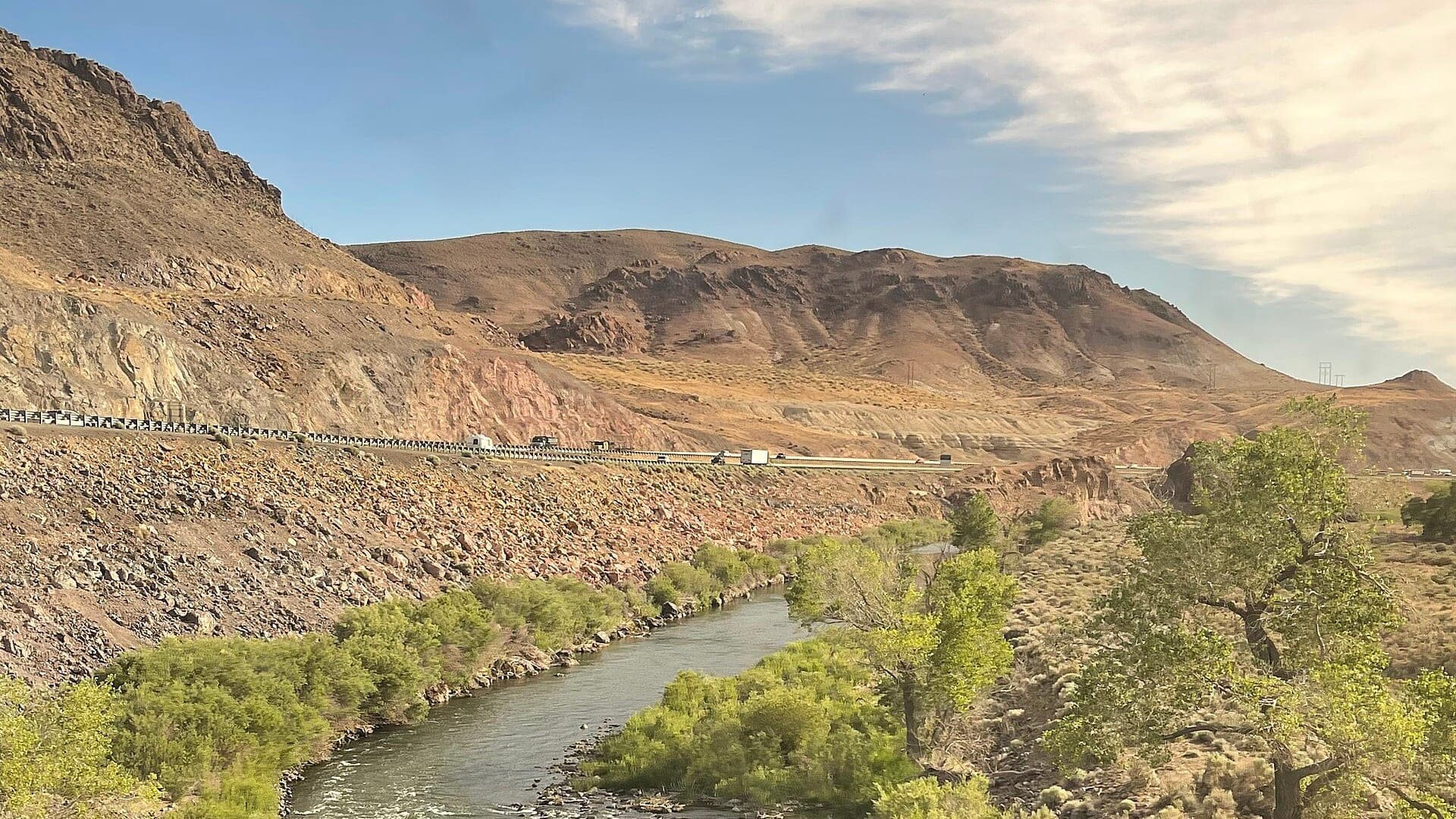
Image: Truckee River from California Zephyr - June 2022 - Sarah Stierch / CC BY 4.0 / MissvainFishability now: Truckee River fishability today
GoodData confidence: High72/100
Fishable now because Farad gauge is rising, weather is mild, and no public alert is active.
Flow observed
5:15 PM UTC
Weather observed
5:00 PM UTC
Score calculated
5:24 PM UTC
Why this rating
Flow
Water temperature
Public alerts
Next 6-12 hours
Watch
Recheck within the next few hours; rising water or active weather can change clarity and wading quickly.
USGS flow
744 cfs
Current trend: flow rising, rating can drop quickly if clarity or wading safety deteriorates.
More planning details: flies, flow bands, and live source checks
Fish it today
Start here
Pick the reach before the fly box: use the Truckee River Wildlife Area or Glenshire-area access when you want a clear public framework, then fish one section carefully instead of trying to sample the whole corridor in a single morning.
Best flow clue
Use the Farad trend as the planning anchor. Stable or slowly easing flows are the best fit for reading banks, seams, and pocket transitions; sharp storm or runoff rises should push the plan toward safer edges or another river.
Skip trigger
Skip the California mainstem when flows are rising hard, when summer water temperatures make trout handling questionable, when access roads or forest sites are closed, or when the day you want is really the separate Nevada-side Reno report.
Flow decision bands
Low but fishable
Low clear water can fish technically when temperatures are safe, but stealth and legal access matter more than covering distance.
Best technical trout window
Stable or slowly falling Farad flow with cool weather and clear water is the cleanest signal for nymphs, dries, and streamers.
Runoff or ice unsafe
High runoff, shelf ice, or fast winter edges should shrink the plan to safe banks or another river.
Heat or private-boundary caution
Hot afternoons and uncertain private banks can make a fishable gauge a poor choice.
USGS flow
744 cfs
Current trend: flow rising, rating can drop quickly if clarity or wading safety deteriorates.
Live USGS flow
744 cfs / rising about 37%
Live NWS forecast
64F / Mostly Sunny
Live water temperature
55F from USGS
No NWS alert flag
No active NWS alert was returned for this forecast point.
Use Farad and Truckee-area gauges to understand the California mainstem.
Check CDFW rules before fishing mainstem, tributary, or wildlife-area water.
Expect technical wild-trout presentations, clear water, and strong seasonal pressure.
Watch winter ice effects, summer temperatures, and private-property boundaries.
Editorial review
How this report is maintained
This Truckee River report is maintained from current California regulation, public-access, flow, weather, and forest-source checks so anglers can plan the California mainstem without mixing it into the separate Reno reach.
Byline
BlueStreamFly editorial team
Reviewed by
BlueStreamFly source review
Maintained by
Mountain Brook Run LLC
Last material review
2026-05-31
Report confidence
Good confidence
88/100
Good confidence: RiverReports, USGS Farad flow, CDFW Truckee River Wildlife Area access, Tahoe National Forest access context, CDFW regulations, and weather data support the page. Confidence is moderated by technical water, winter ice, summer temperature stress, and private-boundary variation.
Regulations
CDFW freshwater regulations support the legal-check path for the California Truckee.
Access
CDFW Wildlife Area and Tahoe National Forest sources provide strong public-access anchors, with private parcels and roadside pullouts still requiring current checks.
Flow and weather
RiverReports, USGS 10346000, and the National Weather Service point are attached to the route.
Fishing usefulness
The page now separates Farad trend use, technical low-water fishing, runoff and ice safety, summer heat, access boundaries, and nearby backup options.
Fishability dashboard and source review
2026-05-31 / material content or source review
RiverReports, USGS Truckee River at Farad flow data, CDFW Truckee River Wildlife Area access, Tahoe National Forest access context, CDFW freshwater regulations, and the National Weather Service point were checked before updating the current fishability guidance.
2026-05-31
Updated Truckee River with Farad trend guidance, California access cards, ice and heat caution, backup cues, stable fishability SEO, and confidence signals.
2026-05-28
Added California-mainstem trip-fit guidance, wade-versus-float framing, Farad trend planning, access nuance, pressure timing, backup-water suggestions, and a page-specific report-confidence meter after source review.
2026-05-24
Initial source-reviewed report published with flows, weather, hatches, flies, tactics, access, regulations, and FAQs.
Angler planning edge
Local details that change the plan
Best for
Anglers planning the California Truckee mainstem around Truckee, Glenshire, and the Farad gauge rather than the Reno urban reach, Walk-and-wade trout trips where flow trend, water temperature, and public-access choice drive the day, Dry-dropper, nymph, and streamer sessions on a larger freestone-style river with quick condition swings, Travel days that need a clear pivot if the mainstem is high, warm, crowded, or off-color
Wade or float
Treat this California Truckee page as mostly wade-focused with selective float logistics. The best public plan for most visiting fly anglers is to choose a reach, verify legal access, and fish on foot unless you already have a legal shuttle and current local boating plan.
Best flows
Use the Farad trend as the planning anchor. Stable or slowly easing flows are the best fit for reading banks, seams, and pocket transitions; sharp storm or runoff rises should push the plan toward safer edges or another river.
When to skip
Skip the California mainstem when flows are rising hard, when summer water temperatures make trout handling questionable, when access roads or forest sites are closed, or when the day you want is really the separate Nevada-side Reno report.
Local plan
Pick the reach before the fly box: use the Truckee River Wildlife Area or Glenshire-area access when you want a clear public framework, then fish one section carefully instead of trying to sample the whole corridor in a single morning.
Pressure
Pressure stacks at the obvious town and roadside access points, especially in summer and on pleasant weekends. Early starts, weekday windows, and walking away from the first visible run usually help more than constant fly changes.
Access nuance
Public access is good but not continuous. CDFW and Tahoe National Forest access anchors help define a legal plan, while private land and separate Nevada rules mean the page should not be used as a blanket Truckee River permission slip.
Backup water
If the California Truckee is too high, too warm, or too crowded, pivot to the Little Truckee for a more technical tailwater-style day or to the Reno Truckee page when your trip is actually downstream in Nevada.
About the river
Setting, character, and why it fishes the way it does.
The Truckee River leaves Lake Tahoe, flows through Tahoe City and Truckee, then crosses into Nevada on its way toward Pyramid Lake.
In California, the river mixes town access, forest access, CDFW wildlife-area units, private land, and technical trout water.
The river is historically part of Lahontan cutthroat trout country, but modern mainstem fishing commonly involves wild rainbow and brown trout management context.
Winter ice, snow, spring runoff, drought, and summer heat can each change both the fishing and the ethics of catch-and-release.
Target species
Rainbow trout
A primary wild-trout target in riffles, runs, and pocket-water edges.
Brown trout
Often tied to deeper banks, undercuts, and streamer or low-light windows.
Lahontan cutthroat trout context
Historically important in the basin; check current management sources before making target statements.
Mountain whitefish
Part of the river community and often encountered by nymphing anglers.
Reading the water
Low clear flow
Use long leaders, small nymphs, careful approaches, and avoid overplaying trout.
Stable medium flow
Good for nymphs, dry-droppers, streamers, and covering pocket water.
High runoff
Avoid risky wading and focus on edges only if clarity and access are safe.
Winter ice or summer heat
Gauge data can be affected by ice in winter, and warm water can make summer trout handling risky.
Best seasons
Winter
Midges and small nymphs can work on mild days, but ice and access can distort flow readings.
Spring
Runoff and clarity decide whether nymphs, streamers, or waiting is the right call.
Summer
Early and late windows can fish well if water temperatures stay safe.
Fall
Cooler weather, BWOs, streamers, and lower crowds often improve the plan.
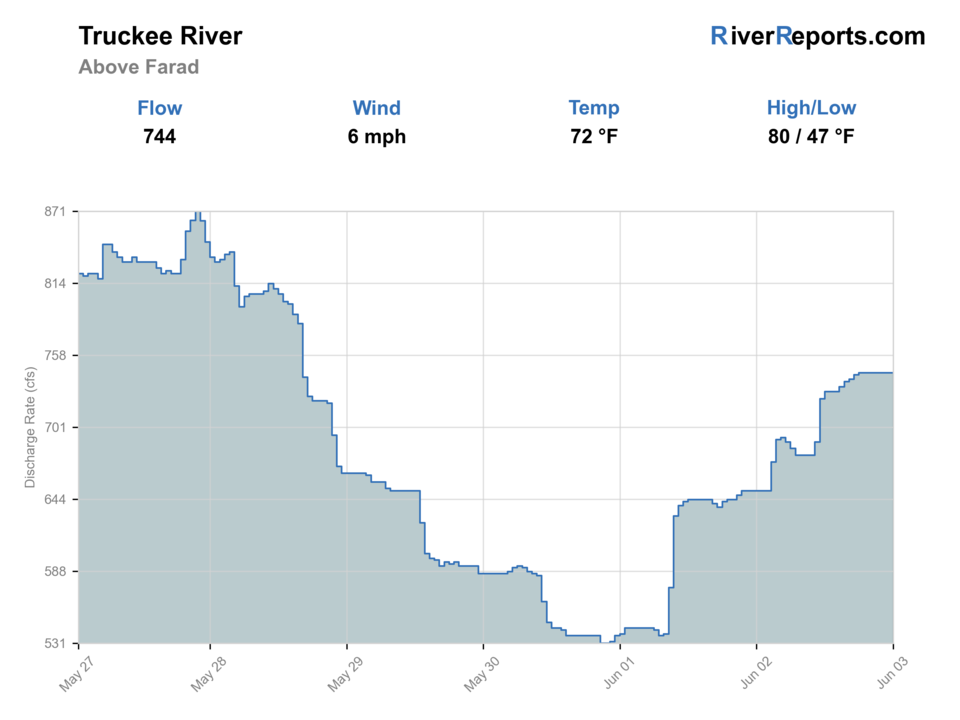
Preferred flow source
Truckee River at Farad
RiverReports is the preferred chart source when coverage exists. When a matching USGS gauge exists, keep it open as the official backstop for station data and current hydrograph context.
USGS data chart
Official USGS trend
Streamflow over the latest USGS reporting window.
Latest
744 cfs
Jun 3, 5 PM UTC
Weather
River weather report
Weather can change wading safety, road access, water temperature, hatches, and the best time of day to fish.
Live forecast loads as you reach this section
This keeps the report fast while still using the official National Weather Service forecast point.
Hatches and flies
Hatch chart and fly picks
Winter
Midges, BWOs
Zebra midge, BWO emerger, small baetis nymph, micro mayfly
Spring
Skwalas, BWOs, March browns, caddis
Skwala dry, stonefly nymph, March brown, caddis pupa
Summer
Caddis, PMDs, golden stones, terrestrials
Elk hair caddis, PMD, stimulator, ant, hopper-dropper
Fall
BWOs, October caddis, midges
BWO, October caddis, zebra midge, streamer
Nymphs
Stonefly, perdigon, pheasant tail, caddis pupa, zebra midge
Use through riffles, slots, and deeper runs when fish are not rising.
Dry flies
Skwala, BWO, PMD, elk hair caddis, ant, hopper
Use during visible hatch activity or low clear terrestrial windows.
Streamers
Sculpin, leech, crayfish, small baitfish
Use during higher flows, low light, or around deeper banks.
Dry-droppers
Chubby, stimulator, hopper, tungsten dropper
Use to cover pocket water and mixed-depth runs in summer and fall.
Tactics
How to fish it
Check whether your route is California or Nevada before applying regulations.
Use Farad and Truckee-area gauges, but remember winter ice can affect readings.
Approach clear runs slowly and fish near-bank water before stepping in.
Adjust weight often because fish hold in fast slots and soft edges.
Fish early in summer and carry a thermometer.
Respect CDFW wildlife-area unit boundaries and private property around town.
Rigging
Rod, leader, and setup notes
A 9-foot 5-weight is the best all-around California Truckee rod.
Use a 6-weight for streamers, wind, or heavier runoff rigs.
Carry 3X to 6X tippet so you can switch between streamers and small flies.
Bring split shot, indicators, tight-line leaders, and a dry-dropper setup.
Use a wading staff and traction for fast bouldery water.
Access
Access and planning notes
Truckee River Wildlife Area
Primary public access checkWade / float / trail
Walk-and-wade
When to pick it
Use it when CDFW access, flow, and temperature all support a careful trout session.
Caution
Respect posted boundaries and habitat signs.
Farad and Boca Bridge corridor
Gauge-area trend checkWade / float / trail
Gauge / wade / roadside scout
When to pick it
Start here when the Farad graph is stable or falling and the water is clear.
Caution
Roadside pullouts do not prove every bank is public or safe.
Glenshire and Tahoe National Forest context
Upper public planningWade / float / trail
Picnic site / trail / bank
When to pick it
Pick this when access and colder upper-river conditions fit the day.
Caution
Snow, ice, and private parcels can change the practical plan quickly.
Some CDFW wildlife-area units are difficult to reach or constrained by roads and private property.
Do not assume Little Truckee or Upper Truckee rules apply to the mainstem.
Winter snow and ice can affect parking, flows, and safe wading.
Summer water temperatures can make catch-and-release unsafe at times.
Use the Reno report for Nevada-side downtown and lower Truckee planning.
Regulations
Check before fishing
Verify CDFW's current Truckee River regulations for the California mainstem and separate tributaries before fishing. Nevada-side rules are different and belong with the Reno report.
Primary base
Truckee, Tahoe City, or Reno, California and Nevada
Best day style
Town access, wildlife-area units, forest sites, and private-boundary caution
Check first
CDFW rules, Farad or Truckee flow, weather, water temperature, access-unit status
Safety
Cold swift water, winter ice, private land, traffic, summer temperature stress
Gear
Helpful gear for this water
Thermometer
Important for summer trout handling and choosing when to stop.
Traction
The Truckee is fast, bouldery, and unforgiving at many flows.
Small nymph and streamer boxes
Technical trout can require tiny flies one hour and streamers the next.
Snow and sun layers
High-elevation weather can swing hard across seasons.
Nearby water
Other water to research
Backup logic
High water
Compare the Reno Truckee page, East Walker, or Upper Truckee rather than forcing a pushy California reach.
Heat
Fish early, check temperature, and shift to colder water when trout handling becomes questionable.
Storms or ice
Wait for clarity, road conditions, and safe shelf edges before committing.
Access issue
Use signed public parcels or choose another Tahoe-area option instead of guessing at private banks.
Truckee River at Reno
The Nevada-side report for downtown Reno and lower Truckee access.
East Walker River
A high-desert tailwater alternative with its own flow and temperature constraints.
Owens River
An Eastern Sierra option when Tahoe weather, flows, or crowds are wrong.
FAQ
Fast answers
Is Truckee River fishable today?
Truckee River looks fishable right now. The live score is 72/100, based on current flow, weather, public alerts, and the report's planning context. Recheck the linked gauge and forecast before leaving because conditions can change quickly after rain, heat, access changes, or flow swings.
What flow is best for Truckee River?
Use the Farad trend as the planning anchor. Stable or slowly easing flows are the best fit for reading banks, seams, and pocket transitions; sharp storm or runoff rises should push the plan toward safer edges or another river.
When should I skip Truckee River?
Skip the California mainstem when flows are rising hard, when summer water temperatures make trout handling questionable, when access roads or forest sites are closed, or when the day you want is really the separate Nevada-side Reno report.
Is Truckee River safe to wade right now?
The fishability score is not a wading guarantee. Wade only where your chosen access has safe edges, clear footing, legal entry, and no forced crossings; high, rising, stained, or storm-affected water should be treated conservatively.
Is this the same as the Reno Truckee page?
No. This page covers the California mainstem. Use the Reno page for Nevada rules, access, and gauges.
What gauge should I use?
Use the RiverReports Farad chart and USGS 10346000 for near-state-line context, plus Truckee-area gauges for upper reaches.
Is the Truckee beginner friendly?
It can be difficult. Fast water, clear conditions, private boundaries, and technical trout make it better for prepared anglers.
When should I avoid fishing?
Avoid unsafe runoff, winter ice hazards, and warm summer water that stresses trout.
Sources
Source set for this report
Reviewed 2026-05-31