Nevada / Reno-Tahoe
Truckee River
A practical Reno Truckee River report for urban access, live flows, hatches, fly choices, and safe wading decisions.
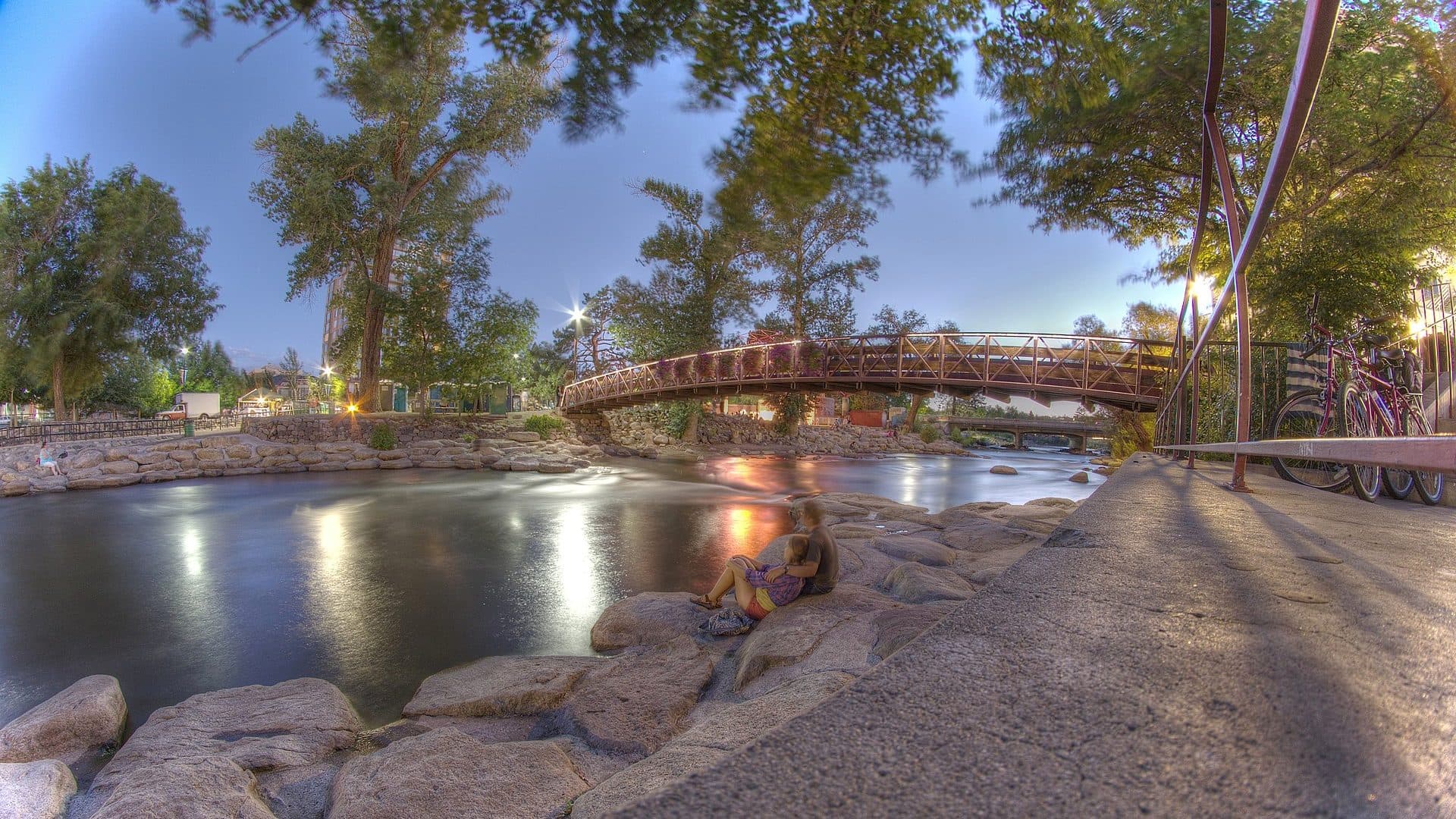
Image: Lovers and their bicycles by the Truckee River, Reno, Nevada (9782144271) / CC BY-SA 2.0 / Darron Birgenheier from Reno, NV, USAFishability now: Truckee River fishability today
GoodData confidence: High70/100
Fishable now because Reno gauge is rising, weather is mild, and no public alert is active.
Flow observed
4:35 PM UTC
Weather observed
4:00 PM UTC
Score calculated
4:50 PM UTC
Why this rating
Flow
Weather
Public alerts
Next 6-12 hours
Watch
Recheck within the next few hours; rising water or active weather can change clarity and wading quickly.
USGS flow
533 cfs
Current trend: flow rising, rating can drop quickly if clarity or wading safety deteriorates.
More planning details: flies, flow bands, and live source checks
Fish it today
Start here
Scout first, then fish. Check the Riverwalk and Whitewater Park corridor for flow speed, clarity, and crowd level, fish one high-confidence run, and only relocate if the first access point is unsafe or overrun.
Best flow clue
Use the Reno trend more than a fixed cfs rule. Stable or slowly dropping flows are the cleanest all-around trout window; rising, stained, or pushy water should move the plan toward safer bank edges or another report.
Skip trigger
Skip wading when runoff or storms make the river heavy, when summer temperatures are stressing trout, when visibility is too poor for controlled drifts, or when the downtown reach is crowded enough that you would rush presentations around other users.
Flow decision bands
Low and technical
Clear low water can still fish, but Reno trout need stealth, longer leaders, smaller bugs, and careful shade or riffle targets.
Best Reno window
Stable or slowly falling flow at the Reno gauge is the cleanest signal for nymphs, caddis, terrestrials, soft hackles, and short streamer work.
Pushy or unsafe
High runoff, cold heavy current, or any crossing that feels forced should move the day to safe banks, bridge scouting, or another water.
Urban runoff or stain
Storms can add color and debris through town quickly, so pair the chart with water color, floating debris, and access-point safety.
USGS flow
533 cfs
Current trend: flow rising, rating can drop quickly if clarity or wading safety deteriorates.
Live USGS flow
533 cfs / rising about 41%
Live NWS forecast
67F / Mostly Sunny
Water temperature not verified
Heat guidance uses weather and river type unless an official water-temperature value is available.
No NWS alert flag
No active NWS alert was returned for this forecast point.
Use RiverReports first for the quick Reno flow read, with USGS 10348000 as the official station reference.
Fish short, accurate drifts. Reno fish see pressure and usually punish sloppy mends faster than remote water.
High runoff and storm pulses can make the river difficult or unsafe. Skip crossings when the current is heavy.
Urban access is a strength, but check NDOW rules and respect park, bridge, trail, and private-property boundaries.
Editorial review
How this report is maintained
This report starts with official regulation, access, flow, weather, and public-river sources, then adds practical planning guidance for anglers.
Byline
BlueStreamFly editorial desk
Reviewed by
BlueStreamFly source review
Maintained by
BlueStreamFly
Last material review
2026-05-31
Report confidence
High confidence
87/100
Strong Nevada regulation, urban-access, RiverReports plus USGS flow support, and weather coverage support this Reno Truckee report. Confidence is capped by quick runoff swings, clarity changes, and city-reach access conditions that still need a same-day check.
Regulations
NDOW river and regulation sources give a current rule-check path for Reno Truckee trips.
Flow support
RiverReports coverage is backed by USGS 10348000 at Reno.
Access support
City of Reno Whitewater Park information supports the core downtown public-access framework.
Weather and safety
The forecast point is linked and the report calls out runoff spikes, warm-water stress, visibility changes, and urban safety concerns.
Angler usefulness
The page separates urban scouting, walk-and-wade planning, crowd timing, access nuance, and backup-water decisions.
Editorial review
A public correction path, source standards page, and public review history are included.
Source and planning review
2026-05-31 / material content or source review
RiverReports flow support, the USGS Reno gauge, Nevada Department of Wildlife Truckee River and 2026 to 2027 fishing-regulation sources, the City of Reno whitewater-park access page, and the National Weather Service Reno forecast point were rechecked before adding the current fishability dashboard guidance.
2026-05-31
Upgraded the page to the Pine Creek fishability standard with route-specific flow decision bands, access cards, backup logic, reviewed fishability profile, and top-page current-fishability answer.
2026-05-28
Added trip-fit guidance, better urban wade-versus-walk framing, clearer skip triggers, crowd and parking nuance, backup-water planning, a public correction path, and a page-specific report-confidence meter after source review.
2026-05-24
Initial source-reviewed report published with flows, weather, hatches, flies, tactics, access, regulations, and FAQs.
Angler planning edge
Local details that change the plan
Best for
Short Reno sessions where easy public access matters more than a full-day float, Technical nymphing, caddis, and terrestrial fishing when flows are stable and the water is clear, Anglers willing to fish one seam or park corridor carefully instead of roaming all over town, Trips where you want an urban trout option with a fast backup decision if the river turns pushy or crowded
Wade or float
Treat the Reno Truckee as a walk-and-wade page first. The city reach rewards short, careful approaches from parks, bridges, and trails more than big crossing ambitions, especially when flows are up or the best lanes sit tight to bank structure.
Best flows
Use the Reno trend more than a fixed cfs rule. Stable or slowly dropping flows are the cleanest all-around trout window; rising, stained, or pushy water should move the plan toward safer bank edges or another report.
When to skip
Skip wading when runoff or storms make the river heavy, when summer temperatures are stressing trout, when visibility is too poor for controlled drifts, or when the downtown reach is crowded enough that you would rush presentations around other users.
Local plan
Scout first, then fish. Check the Riverwalk and Whitewater Park corridor for flow speed, clarity, and crowd level, fish one high-confidence run, and only relocate if the first access point is unsafe or overrun.
Pressure
Reno fish see steady foot traffic and frequent anglers. Early starts, weekday windows, and fishing secondary slots instead of the most visible pocket near a bridge often matter more than constant fly changes.
Access nuance
Urban access is abundant, but it is not uniform. Use obvious public parks, signed trail entries, and bridge corridors, then keep valuables out of sight and avoid assuming every landscaped bank or quiet side path is a good late-day parking choice.
Backup water
If Reno is too high, warm, or crowded, pivot upstream to the California Truckee for a different mainstem feel or downstream to Pyramid Lake only if you have the separate permits and setup that lake fishing requires.
About the river
Setting, character, and why it fishes the way it does.
The Truckee River drains Lake Tahoe, crosses the Reno-Sparks area, and continues toward Pyramid Lake. In Reno it is both a working urban river and a serious trout fishery.
The city reach gives anglers rare convenience: downtown bridges, the Truckee Riverwalk, Wingfield Park, Idlewild-area access, and connected trails can put you on the water quickly.
The Reno USGS station is the key flow reference for this page. USGS identifies the site as Truckee River at Reno, NV, which makes it the right gauge for deciding whether the city reach is fishable, pushy, or low and technical.
Target species
Rainbow trout
A primary target through the Reno reach, including stocked and wild-influenced opportunities depending on reach and season.
Brown trout
Often structure-oriented. Look near deeper edges, undercut banks, boulders, and low-light streamer lanes.
Lahontan cutthroat trout
Part of the broader Truckee River story. Verify current NDOW rules and identification before keeping any trout.
Mountain whitefish
A useful indicator that nymph depth and drift are close, especially in slower winter and shoulder-season water.
Reading the water
Low and clear
Use longer leaders, smaller nymphs or dries, lighter indicators, and careful approach angles from downstream or the side.
Stable medium flow
This is the most flexible window for indicator nymphs, Euro-style nymphing, caddis soft hackles, and dry-dropper rigs.
High or stained
Stay off heavy mid-river current. Fish banks, bridge-safe edges, slower inside seams, and streamers where visibility allows.
Hot weather
Take a thermometer. In summer, fish early, check water temperature, and stop trout fishing when conditions are stressful.
Best seasons
Winter
Midges, small mayflies, and slow nymphing can work. Fish the warmest part of the day and avoid icy, unsafe footing.
Spring
Blue-winged olives, midges, caddis, and streamer windows are possible, but runoff can quickly make the river difficult.
Early summer
Caddis, PMDs, yellow sallies, and attractor-dropper fishing can matter as flows settle after runoff.
Late summer
Terrestrials, caddis, and pocket-water nymphing can work best early and late. Watch temperature closely.
Fall
Cooler weather, blue-winged olives, streamers, and lighter crowds can make fall one of the strongest windows.
Preferred flow source
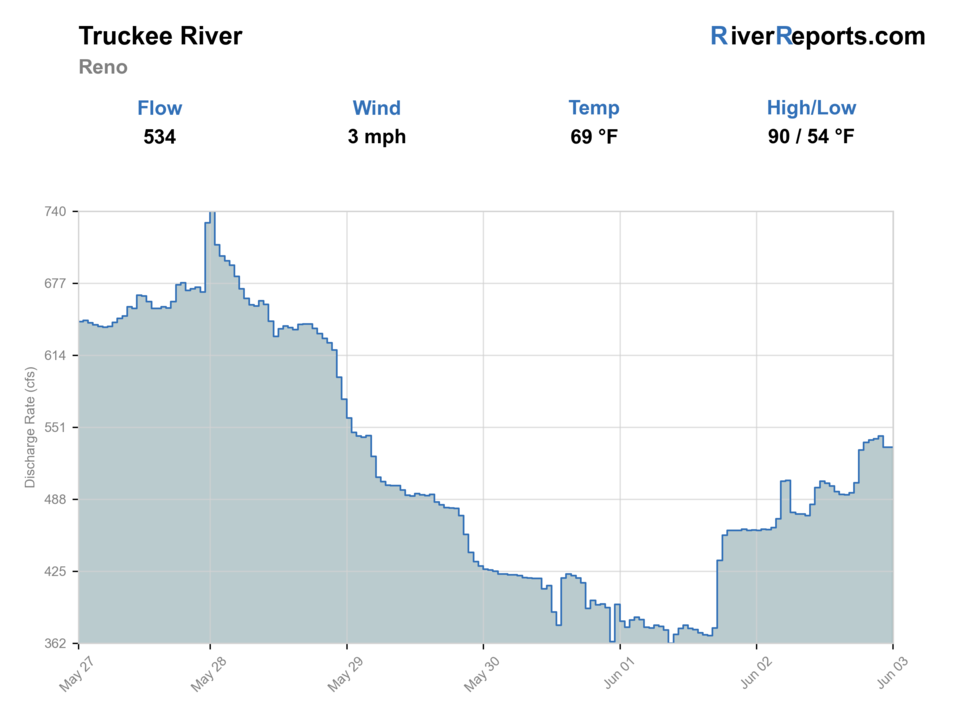
Truckee River at Reno
RiverReports is the preferred chart source when coverage exists. When a matching USGS gauge exists, keep it open as the official backstop for station data and current hydrograph context.
USGS data chart
Official USGS trend
Streamflow over the latest USGS reporting window.
Latest
533 cfs
Jun 3, 4 PM UTC
Weather
River weather report
Weather can change wading safety, road access, water temperature, hatches, and the best time of day to fish.
Live forecast loads as you reach this section
This keeps the report fast while still using the official National Weather Service forecast point.
Hatches and flies
Hatch chart and fly picks
Winter
Midges and occasional small olives
Zebra midges, RS2-style emergers, small pheasant tails, Griffith's gnat
March to April
Blue-winged olives, midges, early caddis
BWO dries, baetis nymphs, caddis pupa, soft hackles
May to June
Caddis, PMDs, yellow sallies, stoneflies
Elk hair caddis, PMD comparaduns, yellow sally nymphs, Pat's rubber legs
July to September
Caddis, hoppers, ants, beetles, small mayflies
Foam hoppers, ants, beetles, small attractors, caddis dries
October to November
Blue-winged olives and midges
Small BWO dries, zebra midges, perdigons, small streamers
Dry flies
BWO, elk hair caddis, Parachute Adams, foam ant, beetle, small hopper
Use during visible rises, soft bank seams, and summer terrestrial windows.
Nymphs
Pheasant tail, hare's ear, perdigon, zebra midge, caddis pupa, stonefly nymph
Use for most searching. Adjust weight and depth often because slots change quickly.
Streamers
Sculpin, leech, woolly bugger, small baitfish pattern
Use early, late, during stained water, or around boulders and deeper bank cover.
Soft hackles
Partridge and orange, partridge and green, caddis soft hackle
Swing through riffle tailouts during caddis or small mayfly activity.
Tactics
How to fish it
Break the river into small targets. Fish one seam or boulder pocket well instead of casting across the whole channel.
Use stealth even in the city. Fish are used to people, but not to poor drifts, drag, or heavy wading.
Indicator nymphing works well when depth is changing every few feet. Keep the first drift short and adjust before lengthening casts.
Dry-dropper rigs are useful in summer pocket water, especially when caddis or terrestrials are active.
If water is stained, use darker streamers or larger nymph profiles near the bank rather than forcing tiny flies into poor visibility.
Rigging
Rod, leader, and setup notes
A 9-foot 5-weight is the everyday setup. A 6-weight helps with wind, bigger nymph rigs, or streamers.
Carry 3X to 6X tippet. Use stronger tippet around streamers, heavy current, and larger attractors.
For technical dry-fly windows, use a 9- to 12-foot leader and mend before the fly drags.
For nymphing, use enough weight to reach the slot without hanging up every cast. The right amount changes fast.
Access
Access and planning notes
Wingfield Park / Whitewater Park
Gauge-area visual checkWade / float / trail
Walk-and-wade / bridge scout
When to pick it
Start here when you want a fast read on Reno flow speed, water color, recreation pressure, and safe edge water.
Caution
This is visible, pressured urban water; secure valuables, share space, and avoid heavy chute current.
Truckee Riverwalk corridor
Clarity and crowd scoutWade / float / trail
Walk-and-scout / short session
When to pick it
Use it when you need to compare several small runs before committing to one careful setup.
Caution
Do not assume every landscaped bank or bridge edge is legal, safe, or comfortable late in the day.
Idlewild Park area
West-side Reno baseWade / float / trail
Park access / walk-and-wade
When to pick it
Pick it when downtown looks too busy but the gauge and weather still support a short trout plan.
Caution
Expect mixed recreation use and changing bank conditions after runoff or storms.
Reno-Sparks downstream reaches
Pressure reliefWade / float / trail
Road scout / legal access check
When to pick it
Use downstream water when you have time to confirm parking, rules, and safe entry before fishing.
Caution
Access and water quality can change by reach; verify the spot before treating it as a backup.
Urban fishing means sharing space with walkers, cyclists, kayakers, unhoused residents, dogs, and other anglers.
Do not leave gear visible in vehicles. Choose visible parking areas and avoid isolated spots late in the day.
Respect private property, bridge work zones, park closures, and signed river restoration areas.
After storms, check both flow and clarity. Urban runoff can change conditions quickly.
Regulations
Check before fishing
Use current Nevada Department of Wildlife regulations before fishing. The Truckee River has managed trout opportunities and may have reach-specific rules, stocking information, seasonal guidance, or special restrictions that change how you fish.
Best first check
RiverReports Truckee River chart plus USGS 10348000
Best beginner plan
Scout the Riverwalk, then fish one safer edge or riffle carefully
Crowd strategy
Fish early, weekdays, or less obvious access points after checking safety
Safety trigger
Skip wading when flows are high, cold, stained, or pushy
Gear
Helpful gear for this water
Thermometer
Important during summer and shoulder seasons when urban water temperature can change the trout plan.
Wading staff
Useful in slick cobble, pushy current, and uneven city-river access points.
Polarized glasses
Help spot slots, fish movement, and submerged hazards in glare-heavy urban water.
Small day pack
Keep fly boxes, water, license, thermometer, and rain/wind layers with you while walking between parks.
Nearby water
Other water to research
Backup logic
High water
Stay off crossings, fish only safe bank edges if clarity allows, or wait for the Reno gauge to settle before making the main river the plan.
Heat
Fish early, carry a thermometer, and stop trout fishing when water temperatures become stressful instead of pushing through town in the afternoon.
Storm runoff
Let color and debris clear before committing; compare upstream and downstream Truckee options only after checking current access and rules.
Access or crowd issue
Move to another verified public park, bridge corridor, or a different legal water rather than forcing posted banks or crowded runs.
Truckee River near Sparks
A nearby RiverReports/USGS reference that can help compare downstream conditions.
Pyramid Lake
A major Lahontan cutthroat destination downstream, with separate tribal permits and rules.
Little Truckee River
A more technical regional trout option on the California side; verify regulations and access before fishing.
FAQ
Fast answers
Is Truckee River fishable today?
Truckee River looks fishable right now. The live score is 70/100, based on current flow, weather, public alerts, and the report's planning context. Recheck the linked gauge and forecast before leaving because conditions can change quickly after rain, heat, access changes, or flow swings.
What flow is best for Truckee River?
Use the Reno trend more than a fixed cfs rule. Stable or slowly dropping flows are the cleanest all-around trout window; rising, stained, or pushy water should move the plan toward safer bank edges or another report.
When should I skip Truckee River?
Skip wading when runoff or storms make the river heavy, when summer temperatures are stressing trout, when visibility is too poor for controlled drifts, or when the downtown reach is crowded enough that you would rush presentations around other users.
Is Truckee River safe to wade right now?
The fishability score is not a wading guarantee. Wade only where your chosen access has safe edges, clear footing, legal entry, and no forced crossings; high, rising, stained, or storm-affected water should be treated conservatively.
What flow source should I use for the Truckee River in Reno?
Use the RiverReports Reno chart first for a quick fishing view, then use USGS 10348000 as the official station reference.
Is the Truckee River in Reno good for fly fishing?
Yes, but it is technical. The access is convenient, while the fish, current, and urban pressure require careful drifts and good wading judgment.
What flies should I bring?
Bring midges, small mayflies, caddis, stonefly nymphs, terrestrials, and a few streamers. Match the final choice to clarity, flow, and observed insects.
Is downtown Reno access safe and easy?
It is convenient, but treat it like any urban river corridor. Use visible access, secure valuables, watch footing, and respect other river users.
Sources
Source set for this report
Reviewed 2026-05-31