Wisconsin / Midwest
Root River
A southeastern Wisconsin Root River report for Racine-to-Franklin planning, with DNR seasonal reports, USGS flow, lake-run fish, access, and fly tactics.
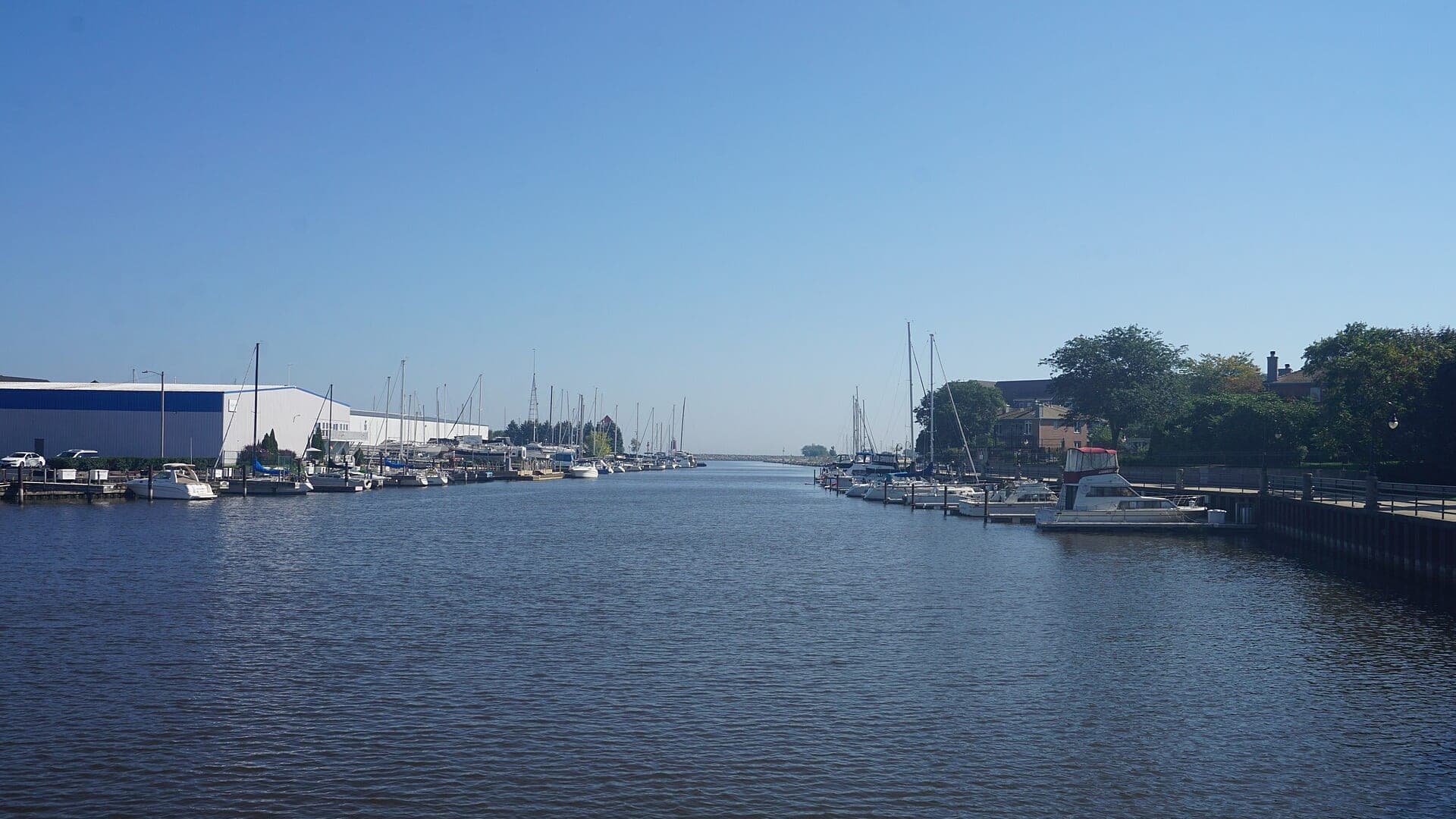
Image: Racine October 2023 024 (Root River) / CC BY-SA 4.0 / Michael BareraFishability now: Root River fishability today
GoodData confidence: High82/100
Fishable now because Racine gauge is stable, weather is mild, and a public alert may affect the plan.
Flow observed
5:00 PM UTC
Weather observed
5:00 PM UTC
Score calculated
5:23 PM UTC
Why this rating
Flow
Weather
Public alert
Next 6-12 hours
Hold
Stable live data supports staying with the plan, but recheck the gauge and forecast before leaving.
USGS flow
51 cfs
Current trend: flow stable, so weather, temperature, and access checks drive the next change.
More planning details: flies, flow bands, and live source checks
Fish it today
Start here
Read the DNR Root River report first, then pair the Racine gauge with one legal access choice and one alternate bank before selecting egg, nymph, leech, or streamer rigs.
Best flow clue
Use RiverReports and USGS 04087240 at Racine as the primary live trend, then compare the DNR Root River report for fish movement and clarity. Falling, clearing water after rain is usually the best lake-run setup.
Skip trigger
Skip or change the plan when the river is rising and muddy, the DNR report is dated or does not match conditions, crowds are stacked on visible fish, facility boundaries are unclear, or rules for salmon and trout methods have not been checked.
Flow decision bands
Falling and clearing
Falling, clearing water after rain is the strongest lake-run signal when rules and access are clear.
DNR report match
Use the DNR Root River report for fish movement and clarity, then compare it against the Racine gauge.
Rising muddy water
Rising, muddy, or unsafe current should move the plan off the river.
Crowd and facility boundaries
Visible fish, facility areas, and park pressure can make a legal day fish poorly.
USGS flow
51 cfs
Current trend: flow stable, so weather, temperature, and access checks drive the next change.
Live USGS flow
51 cfs / stable
Live NWS forecast
70F / Mostly Sunny
Water temperature not verified
Heat guidance uses weather and river type unless an official water-temperature value is available.
Active public alerts
Air Quality Alert issued June 3 at 9:39AM CDT by NWS Milwaukee/Sullivan WI
Use USGS 04087240 at Racine as the main lower-river flow check.
The DNR Root River report is the best seasonal editorial source during spring and fall runs.
Rain can move fish, but high muddy water can make the river unsafe and unfishable.
This page is for Wisconsin's Root River, not the Minnesota Root River system.
Editorial review
How this report is maintained
This report is maintained from current regulation, access, flow, weather, and public planning sources so anglers can make better trip decisions than a raw gauge or generic overview would allow.
Byline
BlueStreamFly editorial team
Reviewed by
BlueStreamFly source review
Maintained by
Mountain Brook Run LLC
Last material review
2026-06-01
Report confidence
High confidence
91/100
High confidence: Wisconsin regulation and Lake Michigan tributary sources, DNR Root River report and facility pages, RiverReports and USGS Racine flow, Franklin backup flow, weather coverage, city access, licensed route-specific media, and route-specific run-timing guidance support the page. Confidence is moderated by fast-changing run timing, crowds, water clarity, and facility or park boundaries.
Regulations
Wisconsin fishing, Lake Michigan tributary, and Root River DNR sources support salmon, trout, steelhead, method, harvest, and facility checks.
Access
DNR tributary and facility sources plus Lincoln Park access support the public-access framework, with posted boundaries still requiring care.
Flow and weather
RiverReports, USGS 04087240, USGS 04087220, and the National Weather Service point support live conditions decisions.
Fishing usefulness
The page now separates DNR report timing, fish movement, access pressure, high-water safety, legal methods, and backup-water decisions.
Fishability dashboard and source review
2026-06-01 / material content or source review
Wisconsin fishing regulation, Lake Michigan tributary access, Root River Steelhead Facility, DNR Root River report, Root River water detail, Lincoln Park access, RiverReports and USGS Racine flow, Franklin backup flow, National Weather Service data, and route-specific media-credit sources were checked before updating the current-fishability decision layer.
2026-06-01
Updated Root River to the current fishability-page standard with Racine flow bands, run-timing access cards, backup cues, stable fishability SEO, and confidence signals.
2026-05-29
Added Root River trip-fit guidance, exact RiverReports and USGS Racine gauge framing, DNR seasonal report use, Horlick and Lincoln Park access nuance, crowd and high-water cautions, backup-water suggestions, editorial review signals, and a page-specific confidence meter after source review.
2026-05-24
Initial source-reviewed report published with flows, weather, hatches, flies, tactics, access, regulations, and FAQs.
Angler planning edge
Local details that change the plan
Best for
Southeast Wisconsin anglers checking whether the Root River has a real steelhead, salmon, brown trout, or warmwater window, Run-timing trips that need the DNR Root River report date, exact Racine flow, clarity, and legal method checks before driving, Anglers choosing between Lincoln Park, Horlick Dam, lower river, and facility-area context without treating every pool the same, Trips that can shift to Milwaukee River, Wisconsin River, or Flambeau River when the Root is high, crowded, stale, or off-color
Wade or float
Treat the Root River as a walk-and-wade and bank-access tributary report, not a float plan. Flow, crowds, park access, and run timing should decide whether the day is worth it.
Best flows
Use RiverReports and USGS 04087240 at Racine as the primary live trend, then compare the DNR Root River report for fish movement and clarity. Falling, clearing water after rain is usually the best lake-run setup.
When to skip
Skip or change the plan when the river is rising and muddy, the DNR report is dated or does not match conditions, crowds are stacked on visible fish, facility boundaries are unclear, or rules for salmon and trout methods have not been checked.
Local plan
Read the DNR Root River report first, then pair the Racine gauge with one legal access choice and one alternate bank before selecting egg, nymph, leech, or streamer rigs.
Pressure
Pressure follows spring steelhead, fall salmon, easy park paths, visible fish, and report updates. Moving to a secondary legal run often improves the day more than changing to smaller flies.
Access nuance
DNR and city sources support the access framework, but park rules, facility boundaries, posted edges, high water, and current report dates still need confirmation.
Backup water
If the Root is blown out, stale, crowded, or rule-complicated, compare Milwaukee River, Wisconsin River, or Flambeau River before forcing the same tributary plan.
About the river
Setting, character, and why it fishes the way it does.
The Root River runs through southeastern Wisconsin and Racine before entering Lake Michigan. Its lower river, Horlick Dam area, Lincoln Park, pathway access, and steelhead facility define much of the fishing plan.
Lake Michigan trout and salmon are seasonally important here, but the day-to-day report depends on flow, water clarity, DNR updates, and current rules.
A useful Root River page helps anglers decide when to go and when to skip the crowd, not just list that salmon and steelhead exist.
Target species
Steelhead
Primary spring draw when fish move and current rules support fishing.
Chinook and coho salmon
Fall context; verify seasons, methods, and fish condition.
Brown trout
Can enter during fall and winter windows.
Smallmouth bass and warmwater fish
Possible outside peak migratory-fish focus.
Reading the water
Falling after rain
Often the best chance for moving lake-run fish if clarity improves.
Clear low water
Use lighter tippet, smaller flies, and stealth near pressured fish.
High and muddy
Avoid wading and wait; the river can become unsafe quickly.
Cold winter window
Slow deep presentations only when ice, access, and rules allow.
Best seasons
Spring
Steelhead window tied to rain, flow, clarity, and the DNR report.
Summer
Lower-pressure warmwater and scouting window.
Fall
Salmon, brown trout, and steelhead context with crowds and rule checks.
Winter
Limited cold-water opportunities around safe access and open water.
Preferred flow source
Root River at Racine
RiverReports is the preferred chart source when coverage exists. When a matching USGS gauge exists, keep it open as the official backstop for station data and current hydrograph context.
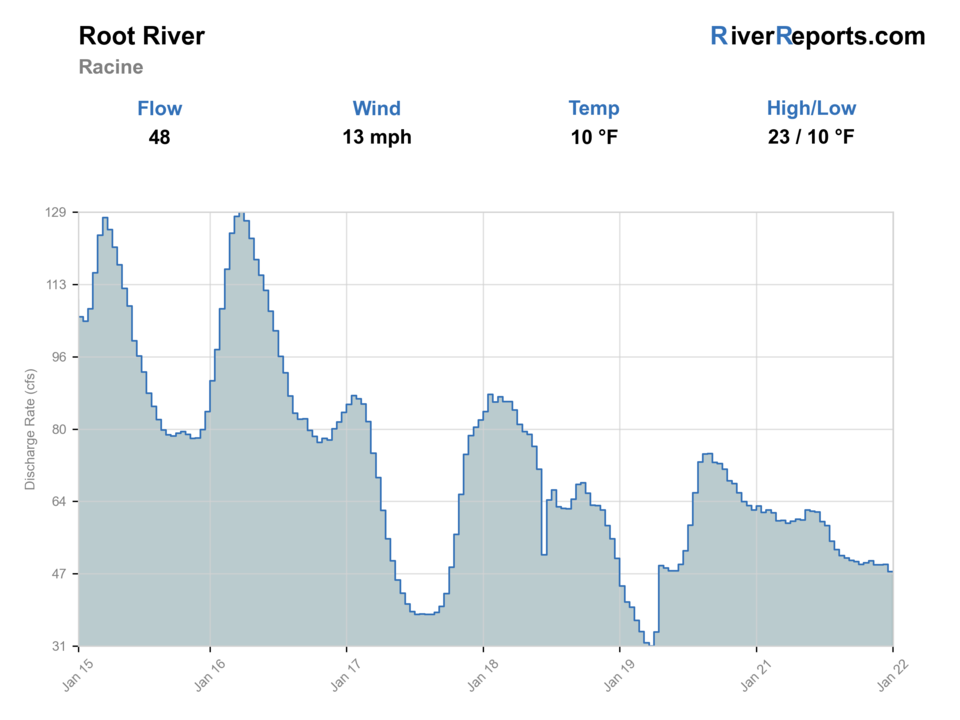
USGS data chart
Official USGS trend
Streamflow over the latest USGS reporting window.
Latest
51 cfs
Jun 3, 5 PM UTC
Weather
River weather report
Weather can change wading safety, road access, water temperature, hatches, and the best time of day to fish.
Live forecast loads as you reach this section
This keeps the report fast while still using the official National Weather Service forecast point.
Hatches and flies
Hatch chart and fly picks
March to May
Spring steelhead, suckers, midges, caddis, stoneflies, and cold-water nymphs
Stonefly, caddis pupa, egg pattern where legal, small leech, soft hackle
June to August
Smallmouth baitfish, crayfish, caddis, damselflies, and low-light topwater
Clouser, crayfish, popper, slider, caddis, olive bugger
September to November
Salmon, brown trout, steelhead, baitfish, eggs where legal, and streamers
Woolly bugger, egg pattern where legal, leech, intruder, baitfish streamer
December to February
Winter steelhead windows, midges, small stoneflies, and slow deep presentations
Stonefly nymph, midge, black leech, small egg where legal, soft hackle
Migratory fish
Stonefly, egg pattern where legal, leech, intruder, estaz bug, small tube fly
Use only in a legal open season after checking the current DNR report and reach rules.
Smallmouth and warmwater
Clouser, crayfish, hellgrammite, popper, slider, baitfish streamer
Use through summer seams, shade lines, bridge structure, and slower urban runs.
High or stained water
Black bugger, chartreuse streamer, rabbit strip, dark leech, heavy stonefly
Use after safe rain bumps when visibility is limited but the river is falling.
Tactics
How to fish it
Read the latest DNR Root River report before driving for a run.
Fish softer travel lanes and tailouts when the river is falling and clearing.
Use legal egg, nymph, leech, and streamer patterns without snagging behavior.
Give crowded pools space and move if fish are being harassed.
Handle steelhead and trout quickly with a wet net and pliers ready.
Rigging
Rod, leader, and setup notes
A 7 or 8-weight is useful for steelhead, salmon, and heavier fall flies.
Use floating or light sink-tip lines depending on depth and color.
Carry 1X to 4X tippet, split shot where legal, and simple indicators.
Bring cold-weather layers and traction for slick park banks.
Access
Access and planning notes
Racine gauge
Primary tributary trendWade / float / trail
RiverReports / USGS gauge / wade
When to pick it
Start here when lake-run movement, clarity, and wading safety decide the day.
Caution
The gauge does not confirm fish movement, facility boundaries, or crowds.
Root River Steelhead Facility context
Run and boundary checkWade / float / trail
DNR report / facility / rules
When to pick it
Use this before choosing salmon, steelhead, brown trout, or method-specific tactics.
Caution
Check current report dates and posted facility limits.
Lincoln Park and Racine access
Public bank frameworkWade / float / trail
Park / bank / selective wade
When to pick it
Pick this when public access, flow, and pressure are manageable.
Caution
Park rules, high water, and visible-fish crowds can change the plan.
The DNR Root River report is seasonal, so check the date before using it as current guidance.
High water can make familiar park access unsafe.
Existing local-access pages should be treated as child pages or redirect candidates after cleanup, not copied into this report.
Regulations
Check before fishing
Check Wisconsin regulations, Lake Michigan tributary rules, and current DNR Root River guidance before fishing. Salmon, trout, steelhead, harvest, snagging, and facility boundaries are regulation-sensitive.
Primary base
Racine, Franklin, and Caledonia
Best day style
Urban parks, pathway access, lower-river banks, and seasonal run checks
Check first
DNR Root River report, Wisconsin regulations, Racine flow, recent rain, clarity, and facility or park access
Safety
Fast dirty water, slick park banks, crowds, cold spring/fall weather, and fish-handling rules
Gear
Helpful gear for this water
6 to 8-weight rod
Useful for salmon, steelhead, brown trout, and larger urban streamers where legal.
Floating and sink-tip lines
Match rain-driven depth changes without wading too far.
Rubber net and release tools
Handle fish quickly, especially wild steelhead, lake-run browns, and trout.
Layered clothing
Spring and fall runs often mean cold rain, wind, and slick banks.
Nearby water
Other water to research
Backup logic
Blown out or muddy
Wait for falling and clearing water or compare Milwaukee River, Wisconsin River, or Flambeau River.
Stale report
Do not trust old run notes alone; use current flow, clarity, and weather before driving.
Crowding
Move to a secondary legal run instead of stacking on visible fish.
Rule uncertainty
Confirm salmon, trout, steelhead, method, and facility details before fishing.
Milwaukee River
Another Lake Michigan tributary with urban access and run timing.
Flambeau River
A northwoods warmwater float option when tributaries are crowded.
Wisconsin River
A big warmwater river with very different flow and safety planning.
FAQ
Fast answers
Is Root River fishable today?
Root River looks fishable right now. The live score is 82/100, based on current flow, weather, public alerts, and the report's planning context. Recheck the linked gauge and forecast before leaving because conditions can change quickly after rain, heat, access changes, or flow swings.
What flow is best for Root River?
Use RiverReports and USGS 04087240 at Racine as the primary live trend, then compare the DNR Root River report for fish movement and clarity. Falling, clearing water after rain is usually the best lake-run setup.
When should I skip Root River?
Skip or change the plan when the river is rising and muddy, the DNR report is dated or does not match conditions, crowds are stacked on visible fish, facility boundaries are unclear, or rules for salmon and trout methods have not been checked.
Is Root River safe to wade right now?
The fishability score is not a wading guarantee. Wade only where your chosen access has safe edges, clear footing, legal entry, and no forced crossings; high, rising, stained, or storm-affected water should be treated conservatively.
What should I check before fishing Root River?
DNR Root River report, Wisconsin regulations, Racine flow, recent rain, clarity, and facility or park access
Which flow should I use for Root River?
Use USGS 04087240 at Racine for the lower river, and compare the DNR Root River report for clarity and fish movement.
Where should I start on Root River?
Start around Lincoln Park, the Root River Pathway, Horlick Dam, and Racine lower-river access after checking current conditions.
Can I wade Root River?
Sometimes in moderate flows, but high dirty water is dangerous and often not worth fishing.
Sources
Source set for this report
Reviewed 2026-06-01