
Virginia / Southeast
Tye River
A Tye River report built around the official Tye River WMA walk-in reach, with live flow checks, smallmouth-first tactics, and realistic private-land guardrails.
Image: Generated Nelson County planning image for Tye River / BlueStreamFly generated; not exact location / BlueStreamFlyFishability now: Tye River fishability today
GreatData confidence: High96/100
Fishable now because the live gauge is falling, weather is usable, and no public alert is active.
Flow observed
2:45 PM UTC
Weather observed
3:00 PM UTC
Score calculated
3:22 PM UTC
Why this rating
Flow
Weather
Public alerts
Next 6-12 hours
Improving / hold
A falling gauge and usable weather should keep the next 6-12 hours in play unless tributaries stain or heat builds.
USGS flow
53 cfs
Current trend: flow falling, rating likely holding strong unless weather or clarity changes.
More planning details: flies, flow bands, and live source checks
Fish it today
Start here
Start with USGS 02027000, confirm WMA access, then commit to the ridgetop parking walk only if stable water and weather justify it.
Best flow clue
Use the Lovingston gauge with WMA access and recent rain. Stable clear flow is the best smallmouth signal.
Skip trigger
Skip when water is rising, murky, too hot for the hike, footing is unsafe, private-road temptation enters the plan, or you are not ready for spotty service.
Flow decision bands
Stable Lovingston flow
Stable clear flow at the Tye gauge is the best signal before committing to the WMA walk.
Best walk-in window
Mild weather, manageable heat, clear water, and confirmed WMA access make the smallmouth plan most useful.
Fresh rise or murky water
A rain bump, murky flow, or hard current should stop the hike because fish location and wading safety both get worse.
Access or heat hard stop
No-float reality, private-road boundaries, spotty service, and unsafe heat can make another river the better call.
USGS flow
53 cfs
Current trend: flow falling, rating likely holding strong unless weather or clarity changes.
Live USGS flow
52 cfs / falling about 14%
Live NWS forecast
75F / Sunny
Water temperature not verified
Heat guidance uses weather and river type unless an official water-temperature value is available.
No NWS alert flag
No active NWS alert was returned for this forecast point.
Virginia DWR says anglers willing to walk about a mile and a half can find a good smallmouth fishery from the Tye River WMA.
The same WMA page says there is no boating access site, which means this page should stay firmly in bank-and-wade territory.
DWR also warns that one gated road crosses private property and should be avoided, and that cell service down in the river bottom is spotty.
Use RiverReports for trend and USGS 02027000 for the official check before you commit to the hike.
Editorial review
How this report is maintained
This report starts with official regulation, access, flow, weather, and public-water sources, then adds practical planning guidance for fly anglers.
Byline
BlueStreamFly editorial desk
Reviewed by
BlueStreamFly source review
Maintained by
BlueStreamFly
Last material review
2026-06-02
Report confidence
Good confidence
86/100
Good confidence: RiverReports, USGS Lovingston flow, Virginia DWR Tye River WMA access, Virginia regulation and advisory sources, weather coverage, image disclosure, and route-specific WMA smallmouth guidance support the page. Confidence is moderated by remote walk-in access, no public boating site, private-road boundaries, spotty cell service, storm response, and summer heat.
Regulations
Virginia freshwater regulation and fish-consumption advisory sources support the legal and harvest-check path.
Access
Virginia DWR Tye River WMA source supports the public walk-in plan and no-boating-access limitation.
Flow and weather
RiverReports coverage is backed by USGS 02027000 near Lovingston, and the National Weather Service point supports storm and heat decisions.
Fishing usefulness
The page now separates Lovingston flow, WMA walk-in access, no-float planning, private-road avoidance, heat, spotty service, and backup-water choices.
Fishability dashboard and source review
2026-06-02 / material content or source review
RiverReports, USGS 02027000 near Lovingston, Virginia DWR Tye River WMA, Virginia freshwater regulation sources, fish-consumption advisory sources, National Weather Service data, and image-disclosure sources were checked before updating the current-fishability decision layer.
2026-06-02
Updated Tye River to the current fishability-page standard with Lovingston trend bands, WMA walk-in access cards, no-float and private-road skip cues, backup logic, stable fishability SEO, and confidence signals.
2026-05-27
Published a new Tye River page with WMA-centered access guidance, RiverReports plus USGS flow support, and clear private-property and remoteness cautions.
Angler planning edge
Local details that change the plan
Best for
walk-in smallmouth, WMA bank and wade fishing, summer sunfish and bass action
Wade or float
Walk in, bank fish, and wade selectively from the WMA frontage; DWR says this is not a public boating-access plan.
Best flows
Use the Lovingston gauge with WMA access and recent rain. Stable clear flow is the best smallmouth signal.
When to skip
Skip when water is rising, murky, too hot for the hike, footing is unsafe, private-road temptation enters the plan, or you are not ready for spotty service.
Local plan
Start with USGS 02027000, confirm WMA access, then commit to the ridgetop parking walk only if stable water and weather justify it.
Pressure
Fishing pressure is usually less important than whether the long walk, access rules, and water clarity fit the day.
Access nuance
The public plan is WMA-based. Avoid the private gated road and do not build a float or shuttle assumption into this page.
Backup water
Compare Maury River, South River, or a larger smallmouth route when the Tye is rising, muddy, too hot, or access does not fit.
About the river
Setting, character, and why it fishes the way it does.
The Tye River drops out of the Blue Ridge and then broadens into a warmwater river with enough current, rock, and depth changes to produce a legitimate fly-rod smallmouth day. It is not a simple roadside access river, and that is exactly why this page is built around the WMA reach instead of pretending public access is easy everywhere.
Virginia DWR's Tye River WMA page gives the river a mixed-species identity. Smallmouth lead the plan, but largemouth, bluegill, and several trout species are also present. That means the page works best when it stays honest about the river being a warmwater trip first with incidental coldwater crossover value.
The river also demands some humility. The easiest public access is a walk-in approach, and the wrong gated road can put you on private land fast. Good Tye days are deliberate, not improvised.
Target species
Smallmouth bass
The lead fly target on the public WMA frontage and the reason to center the page on stable-flow warmwater tactics.
Bluegill and redbreast-class sunfish
Reliable side action on softer edges and summer banks when bass are not pushing shallow.
Brown, rainbow, and brook trout
Documented on the WMA page, but better treated as occasional bonus fish than the core identity of the lower public reach.
Reading the water
Stable clear flow
The best window for wading ledges, drifting nymphs, and fishing streamers or topwater through defined current lanes.
Fresh rain bump
A good reason to wait, because the river gets faster and less readable faster than the long walk makes worth forcing.
Low summer flow
Fish early or late and protect any trout you encounter by keeping the day short and handling minimal.
Murky or still rising
A skip signal for this walk-in page because you lose both wading confidence and fish location clarity.
Best seasons
Spring
The best blend of cool water, active bass, and manageable hiking weather if recent rain has not dirtied the river.
Early summer
Good for popper-dropper and streamer fishing before the hottest afternoons shrink the responsible window.
Fall
A strong smallmouth streamer season with cleaner water and less pressure around the public reach.
Winter
Possible on mild stable days, but not a reason to build a long exploratory trip.
Preferred flow source
TYE RIVER NEAR LOVINGSTON, VA
RiverReports is the preferred chart source when coverage exists. When a matching USGS gauge exists, keep it open as the official backstop for station data and current hydrograph context.
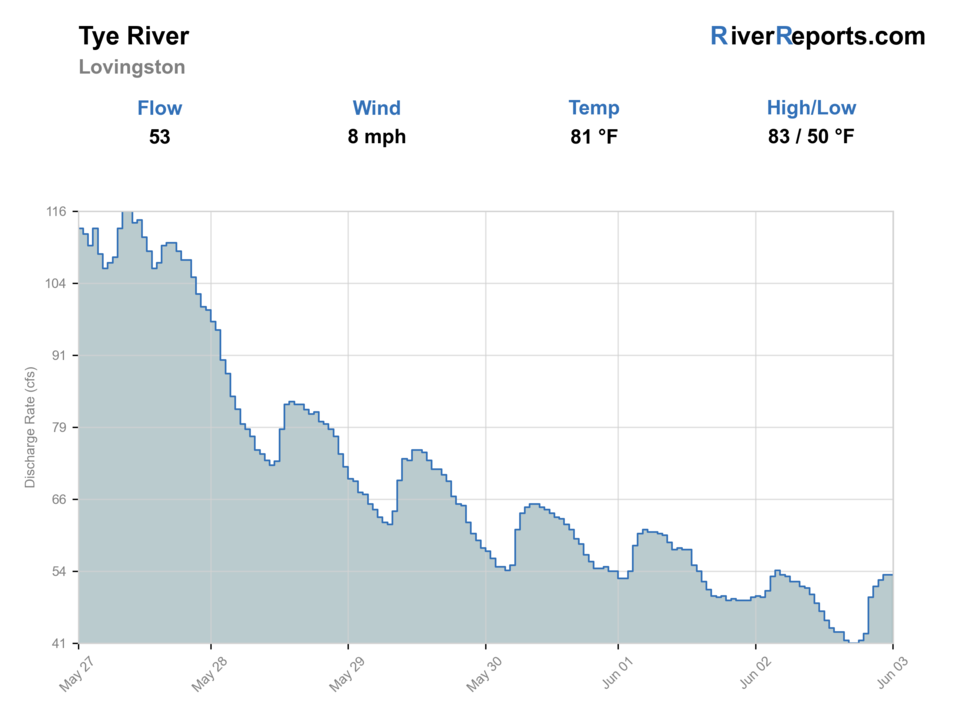
USGS data chart
Official USGS trend
Streamflow over the latest USGS reporting window.
Latest
53 cfs
Jun 3, 4 PM UTC
Weather
River weather report
Weather can change wading safety, road access, water temperature, hatches, and the best time of day to fish.
Live forecast loads as you reach this section
This keeps the report fast while still using the official National Weather Service forecast point.
Hatches and flies
Hatch chart and fly picks
March to May
Crayfish movement, minnow activity, caddis around riffles, and the first consistent smallmouth feeding windows
Olive bugger, Clouser, crayfish jig, caddis pupa, soft hackle
June to August
Terrestrials, cicada years, and low-light topwater windows
Popper, slider, foam beetle, ant, small baitfish streamer
September to November
Crayfish and baitfish feeding with steadier streamer windows
Crayfish, woolly bugger, Game Changer, jig streamer, hellgrammite
Winter
Sparse insect activity and slow deep-hold feeding windows
Small streamer, jig bug, zebra midge, dark leech
Topwater
Poppers, sliders, sneaky Pete, foam beetle
Best at first and last light when bass slide shallow along shade, grass, and soft banks.
Subsurface bass flies
Clouser, woolly bugger, crayfish, hellgrammite, Game Changer
The highest-percentage choice whenever current seams, ledges, and boulder pockets matter more than surface eats.
Light nymph crossover
Pheasant tail, hare's ear, caddis pupa
Useful when panfish and smaller bass stack in shallow moving water or trout show up in cooler edges.
Tactics
How to fish it
Walk in prepared to fish one productive stretch thoroughly instead of covering miles, because the WMA access cost makes repeated repositioning inefficient.
Start with streamers or a light nymph-dropper around ledges and pockets, then switch to poppers only once you see fish willing to move in lower light.
Use the clearer softer banks and boulder pockets first; save the broad faster lanes for higher-confidence flow days.
Do not use private lanes, posted roads, or uncertain bridge shoulders to expand the day. Move legally or end the trip.
Rigging
Rod, leader, and setup notes
A 5- or 6-weight with floating line covers most Tye River bass fishing.
Carry 0X to 4X for streamers and poppers, plus a lighter tippet spool for occasional nymph or sunfish work.
A compact pack matters because the walk in and out is part of the trip, not an afterthought.
Keep a headlamp and basic first-aid kit because the remote walk-out gets harder if the day runs long.
Access
Access and planning notes
Lovingston gauge
Primary WMA-flow checkWade / float / trail
RiverReports / USGS gauge / smallmouth
When to pick it
Start here when clarity, stability, and safe ledge wading decide whether the walk is worth it.
Caution
The gauge does not solve WMA access, no-boating limitations, cell service, or private-road boundaries.
Tye River WMA ridgetop parking
Official public startWade / float / trail
WMA / hike / bank
When to pick it
Use it when you are prepared for the walk and have enough water, daylight, and weather margin.
Caution
Avoid the gated private road called out by DWR and expect limited service in the river bottom.
WMA river frontage
Main fishable waterWade / float / trail
Bank / wade / no official boat launch
When to pick it
Pick it when stable clear water supports bass, sunfish, streamers, nymphs, and topwater.
Caution
No official boating access means no casual shuttle plan.
The official DWR page says there is no boating access site here, so build the day around wading and hiking instead of shuttle assumptions.
The gated road marked no trespassing on the WMA page should stay off your route entirely.
Carry enough water and assume your phone may not help you once you drop into the river bottom.
Regulations
Check before fishing
Check Virginia freshwater regulations and current WMA access requirements before fishing the Tye River. Treat the WMA as the legal public-access spine for this page, and review Virginia fish-consumption advisories if you plan to keep any fish.
Primary base
Lovingston, Arrington, and the Tye River WMA parking area near Norwood
Best day style
Walk-in WMA access, bank and wade fishing, and no official public boating launch
Check first
Virginia regulations, the 02027000 trend, recent rain, WMA access requirements, and whether you are willing to make the 1.5-mile walk to the river
Safety
Remote access, spotty cell service in the river bottom, slick ledges, and private-property temptation on the wrong roads
Gear
Helpful gear for this water
5- or 6-weight rod
A 6-weight is the safer all-around choice for streamers, poppers, and windy valley afternoons.
Sticky-soled wading shoes
Virginia ledge rock and mossy shelves are more dangerous than they look from the bank.
Thermometer
Helpful on mixed warmwater-trout rivers where summer heat can change the responsible plan quickly.
Compact shuttle and safety kit
Longer floats and remote access roads punish anglers who assume there will be easy service or roadside recovery.
Nearby water
Other water to research
Backup logic
Rising or muddy water
Compare Maury River or another easier-access smallmouth route before making the hike.
Unsafe heat
Fish early, shorten the walk, or choose a cooler/easier access plan.
Access-route uncertainty
Stay entirely on the WMA route or choose a different river.
No-float mismatch
Use Maury River or New River when the day needs mileage and a shuttle.
Maury River
A stronger Virginia float option when you want more downstream mileage and easier shuttle logic.
South River
A better pick when you want clearer trout-specific public water instead of a mixed-species hike-in plan.
Rappahannock River
A bigger smallmouth river if the Tye is too low or the WMA walk does not fit the day.
FAQ
Fast answers
Is Tye River fishable today?
Tye River looks very fishable right now. The live score is 96/100, based on current flow, weather, public alerts, and the report's planning context. Recheck the linked gauge and forecast before leaving because conditions can change quickly after rain, heat, access changes, or flow swings.
What flow is best for Tye River?
Use the Lovingston gauge with WMA access and recent rain. Stable clear flow is the best smallmouth signal.
When should I skip Tye River?
Skip when water is rising, murky, too hot for the hike, footing is unsafe, private-road temptation enters the plan, or you are not ready for spotty service.
Is Tye River safe to wade right now?
The fishability score is not a wading guarantee. Wade only where your chosen access has safe edges, clear footing, legal entry, and no forced crossings; high, rising, stained, or storm-affected water should be treated conservatively.
Is the Tye River a trout page or a bass page?
Treat it as a smallmouth-first page. Virginia DWR documents trout presence on the WMA, but the official public access and the lower gauge reach line up better with a warmwater bass plan.
Where should I start on the Tye River?
Start with the official Tye River WMA parking and plan on the walk to the river. That is the clearest public access path in the current official source stack.
Can I float the Tye River from this page's access points?
Not as a primary plan. Virginia DWR says there is no boating access site at the WMA, so this page is built for bank and wade fishing.
When should I skip the Tye River?
Skip it when the Lovingston gauge is still rising, when the river is muddy enough to hide structure, or when heat and low water would make a long walk for marginal fish a poor trade.
Sources
Source set for this report
Reviewed 2026-06-02