North Carolina / Southeast
Catawba River
A Catawba River report for anglers checking Lake James tailwater flows, public access, trout and smallmouth timing, and wading safety before fishing.
Image: Generated regional planning image for Catawba River / BlueStreamFly generated; not exact location / BlueStreamFlyFishability now: Catawba River fishability today
GreatData confidence: High96/100
Fishable now because the live gauge is stable, weather is usable, and no public alert is active.
Flow observed
5:00 PM UTC
Weather observed
5:00 PM UTC
Score calculated
5:25 PM UTC
Why this rating
Flow
Water temperature
Public alerts
Next 6-12 hours
Hold
Stable live data supports staying with the plan, but recheck the gauge and forecast before leaving.
USGS flow
89 cfs
Current trend: flow stable, so weather, temperature, and access checks drive the next change.
More planning details: flies, flow bands, and live source checks
Fish it today
Start here
Base around Morganton, Marion, Bridgewater, or Lake James; check the gauge first, then pick a trout or warmwater tactic.
Best flow clue
Stable moderate flows that leave visible edges, safe entries, and enough cover for fish without pushing anglers into heavy current.
Skip trigger
Skip wading during rising releases, muddy water, unclear access, or warm-water trout stress.
Flow decision bands
Stable below-Lake-James flow
Stable Bridgewater-area flow with visible edges is the best signal for cautious wading, bank fishing, or a smallmouth-style plan.
Best edge-water window
Mild weather, manageable current, confirmed public access, and clear enough water make the Catawba most useful.
Rising or pushy
A rising trend, strong tailwater-style current, or muddy water should move the plan bank-first, float-supported, or elsewhere.
Warm trout or access issue
Warm-water trout stress, unclear pullouts, or posted access problems can make the route a poor fit even when flow is fishable.
USGS flow
89 cfs
Current trend: flow stable, so weather, temperature, and access checks drive the next change.
Live USGS flow
89 cfs / stable
Live NWS forecast
74F / Sunny
Live water temperature
49F from USGS
No NWS alert flag
No active NWS alert was returned for this forecast point.
RiverReports is the quick chart, backed by USGS 02138520 Catawba River at SR1223 below Lake James near Bridgewater.
NCWRC regulations and trout-water tools should be checked before assuming trout rules, harvest, or seasonal classifications.
The Catawba is useful for both trout-style and warmwater fly plans depending on reach, season, and water temperature.
High or changing flows are a reason to back away from wading and rethink the plan.
Editorial review
How this report is maintained
This report starts with official regulation, access, flow, weather, and public-land sources, then adds practical planning guidance for fly anglers.
Byline
BlueStreamFly editorial desk
Reviewed by
BlueStreamFly source review
Maintained by
BlueStreamFly
Last material review
2026-06-02
Report confidence
Good confidence
86/100
Good confidence: RiverReports, USGS below-Lake-James flow, NCWRC regulations, trout and access tools, weather coverage, image disclosure, and route-specific tailwater-to-warmwater guidance support the page. Confidence is moderated by release timing, access specifics, trout-versus-smallmouth target choice, warm water, and muddy storm response.
Regulations
NCWRC fishing regulation and trout resources support the current rule and classification-check path.
Access
NCWRC where-to-fish resources support public planning, but exact bank entries and roadside pullouts still need confirmation.
Flow and weather
RiverReports coverage is backed by USGS 02138520 below Lake James near Bridgewater, and the National Weather Service point supports storm and heat decisions.
Fishing usefulness
The page now separates below-Lake-James flow, edge-wading safety, trout-versus-warmwater targets, access checks, warm-water restraint, and backup-water choices.
Fishability dashboard and source review
2026-06-02 / material content or source review
RiverReports, USGS 02138520 below Lake James near Bridgewater, NCWRC fishing regulations, NCWRC trout and where-to-fish resources, National Weather Service point data, and image-disclosure sources were checked before updating the current-fishability decision layer.
2026-06-02
Updated Catawba River to the current fishability-page standard with below-Lake-James trend bands, tailwater and access-planning cards, warmwater backup cues, stable fishability SEO, and confidence signals.
2026-05-26
Published a new Catawba River report with Lake James tailwater flow planning, access cautions, hatches, and trout-to-warmwater tactics.
Angler planning edge
Local details that change the plan
Best for
Lake James tailwater checks, Foothill river scouting, Trout-to-smallmouth decision making
Wade or float
Wade only when flows are stable and clearly safe. Bank or float-style planning is smarter when water is strong or changing.
Best flows
Stable moderate flows that leave visible edges, safe entries, and enough cover for fish without pushing anglers into heavy current.
When to skip
Skip wading during rising releases, muddy water, unclear access, or warm-water trout stress.
Local plan
Base around Morganton, Marion, Bridgewater, or Lake James; check the gauge first, then pick a trout or warmwater tactic.
Pressure
Obvious access can be busy. Fish the first soft edge well, then move rather than crowding bridge water.
Access nuance
Use official access tools and posted signs. A roadside pullout is not automatically a legal fishing entrance.
Backup water
Linville River, Davidson River, and New River pages give nearby alternatives when Catawba flows or temperatures are wrong.
About the river
Setting, character, and why it fishes the way it does.
The Catawba River below Lake James is part of a larger piedmont and foothill system, but this report focuses on the North Carolina reach where lake influence, roadside access, and changing releases shape the fishing day.
It is not a one-style river. Depending on season and temperature, anglers may be planning for stocked trout context, holdover trout windows, or warmwater species in broader lower-gradient water.
Because flows can change and access varies by reach, the page emphasizes the gauge, current NCWRC rules, legal parking, and conservative wading before fly choice.
Target species
Trout
Check NCWRC tools for current trout-water designations and rules before planning harvest or tackle details.
Smallmouth bass
A practical warmwater fly target when temperatures and lower-river conditions fit.
Sunfish and other warmwater species
Useful backup targets when trout handling would be poor.
Reading the water
Stable moderate flow
Best for cautious wading, nymphing seams, and bank-focused streamers.
Changing release
Avoid mid-channel wading and keep the plan close to shore.
Low warm water
Fish early, check temperature, and shift to warmwater targets when trout stress is likely.
Stained water
Use small streamers or larger nymphs tight to softer edges.
Best seasons
Spring
Good for nymphs and small streamers when flows are stable.
Early summer
Can support trout windows early and smallmouth plans as water warms.
Late summer
Often a warmwater-first plan unless cool water and rules support a trout day.
Fall
Stable flows and cooling weather can improve streamer and nymph options.
Preferred flow source
Catawba River below Lake James
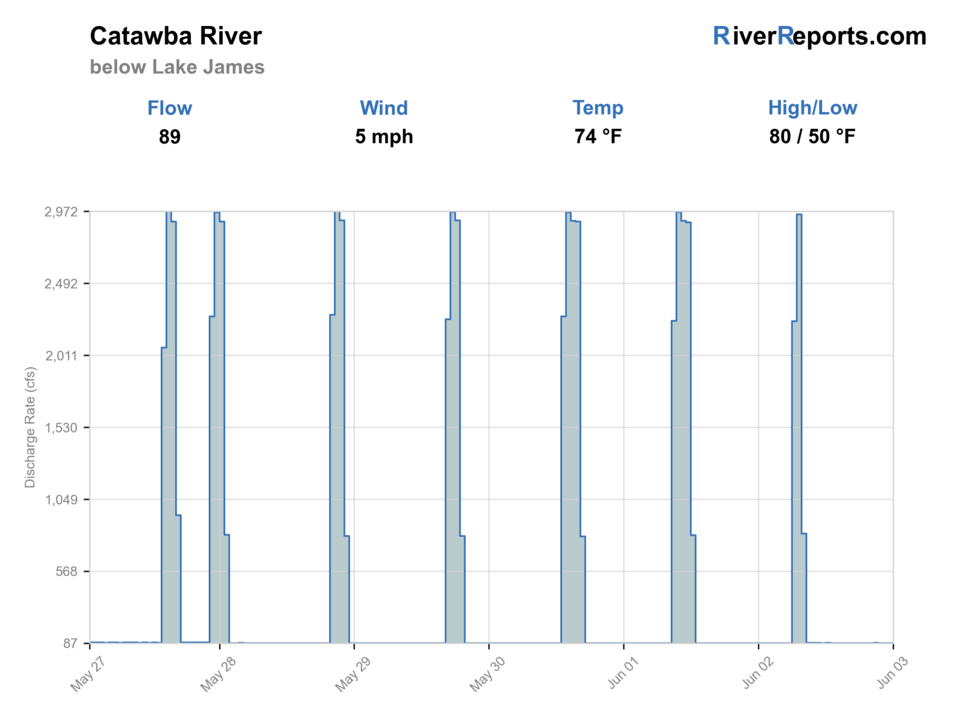
RiverReports is the preferred chart source when coverage exists. When a matching USGS gauge exists, keep it open as the official backstop for station data and current hydrograph context.
USGS data chart
Official USGS trend
Streamflow over the latest USGS reporting window.
Latest
89 cfs
Jun 3, 5 PM UTC
Weather
River weather report
Weather can change wading safety, road access, water temperature, hatches, and the best time of day to fish.
Live forecast loads as you reach this section
This keeps the report fast while still using the official National Weather Service forecast point.
Hatches and flies
Hatch chart and fly picks
March-April
Midges, early mayflies, small black stones
Zebra midge, pheasant tail, black stonefly nymph
April-June
Caddis, sulphur-style mayflies, baitfish activity
Elk hair caddis, caddis pupa, soft hackle, small minnow
June-August
Terrestrials, caddis, warmwater forage
Foam ant, beetle, popper, crayfish, small streamer
September-November
BWOs, midges, baitfish
BWO emerger, zebra midge, olive bugger
Tailwater nymphs
Zebra midge, pheasant tail, hare's ear, caddis pupa
Water is clear and cool enough for a trout-focused plan.
Small streamers
Olive bugger, black bugger, small baitfish, crayfish
Flows are slightly up or fish are holding along bank structure.
Warmwater flies
Small popper, stealth bomber, foam bug, crayfish
Summer conditions point toward bass and sunfish.
Tactics
How to fish it
Start at the gauge and make a wade-or-bank decision before rigging.
Fish current breaks and bank seams first; do not assume mid-river footing will stay safe.
Use streamers when flow or stain gives fish cover, then downsize when the river clears.
In warm water, protect trout by shifting targets or stopping early.
Rigging
Rod, leader, and setup notes
A 5-weight rod is the best all-around choice; use a 6-weight if streamers or bass bugs are the main plan.
Carry 3X through 5X for streamers, nymphs, and warmer-water flies.
Use split shot sparingly in edge water so rigs do not drag through shallow rocks.
Bring a thermometer and wading staff for flow and fish-handling decisions.
Access
Access and planning notes
Catawba below Lake James gauge
Primary flow decisionWade / float / trail
RiverReports / USGS gauge / wade / bank
When to pick it
Start here when current strength and edge visibility decide wading, bank fishing, or a float-style plan.
Caution
The gauge does not confirm release timing, parking, legal bank entry, or trout temperature.
Bridgewater and foothill river access
Tailwater-style public checkWade / float / trail
Roadside / bank / careful wade
When to pick it
Use it when the flow trend leaves safe edges and the access point is clearly public.
Caution
Do not treat informal roadside pullouts as legal access without confirmation.
NCWRC trout and where-to-fish tools
Rule and reach fitWade / float / trail
Regulation / access planning
When to pick it
Check these before deciding whether the day is a trout, mixed, or warmwater plan.
Caution
Classification, season, and public-access details can change the practical target.
Access can be reach-specific. Use official maps, signs, and public land rather than informal parking.
Do not wade rising or changing tailwater conditions.
Some reaches fish better from a boat or bank than from wading; choose the method that fits the flow.
Regulations
Check before fishing
Check NCWRC regulations and any Public Mountain Trout Waters classification before fishing. Rules can change by reach and season.
Primary base
Morganton, Marion, Bridgewater, or Lake James
Best day style
Tailwater and foothill-river bank planning with flow-dependent wading and careful parking checks
Check first
RiverReports, USGS 02138520, NCWRC regulations, NCWRC access tools, and the NWS forecast
Safety
Changing flows, slick rocks, warm-water trout stress, limited legal parking, and stronger current near releases
Gear
Helpful gear for this water
5-weight rod
Best all-around setup for nymphs, small streamers, and light warmwater flies.
6-weight option
Useful when bass bugs or heavier streamers are the main plan.
Wading staff
Helpful when releases or slick rock make footing uncertain.
Thermometer
Important for trout ethics in summer and low water.
Nearby water
Other water to research
Backup logic
Pushy or rising water
Compare Linville River, Davidson River, or New River before forcing a wade.
Warm trout conditions
Switch target, fish cooler windows, or choose colder mountain trout water.
Muddy storm water
Wait for clarity to improve or choose a better-buffered route.
Unclear access
Use NCWRC-backed access information instead of guessing at pullouts.
Linville River
A steeper Blue Ridge option with a different access and wading profile.
Davidson River
A more trout-focused Pisgah option with heavy pressure and clear water.
New River
A larger warmwater and trout-region alternative with a different flow plan.
FAQ
Fast answers
Is Catawba River fishable today?
Catawba River looks very fishable right now. The live score is 96/100, based on current flow, weather, public alerts, and the report's planning context. Recheck the linked gauge and forecast before leaving because conditions can change quickly after rain, heat, access changes, or flow swings.
What flow is best for Catawba River?
Stable moderate flows that leave visible edges, safe entries, and enough cover for fish without pushing anglers into heavy current.
When should I skip Catawba River?
Skip wading during rising releases, muddy water, unclear access, or warm-water trout stress.
Is Catawba River safe to wade right now?
The fishability score is not a wading guarantee. Wade only where your chosen access has safe edges, clear footing, legal entry, and no forced crossings; high, rising, stained, or storm-affected water should be treated conservatively.
What gauge should I use for the Catawba River?
Use RiverReports for the quick chart and USGS 02138520 below Lake James near Bridgewater for the official gauge reference.
Is the Catawba a trout river or a smallmouth river?
It can be either depending on reach, season, and temperature. Check NCWRC rules and use a thermometer before handling trout in warm water.
Can I wade the Catawba below Lake James?
Only when the gauge and release conditions are safe. If water is rising or strong, stay on the bank or choose another plan.
Sources
Source set for this report
Reviewed 2026-06-02