Montana / West
Missouri River
A Missouri River report for anglers checking Holter Dam flow, Wolf Creek and Craig access, PMD and caddis hatches, rules, and weather.
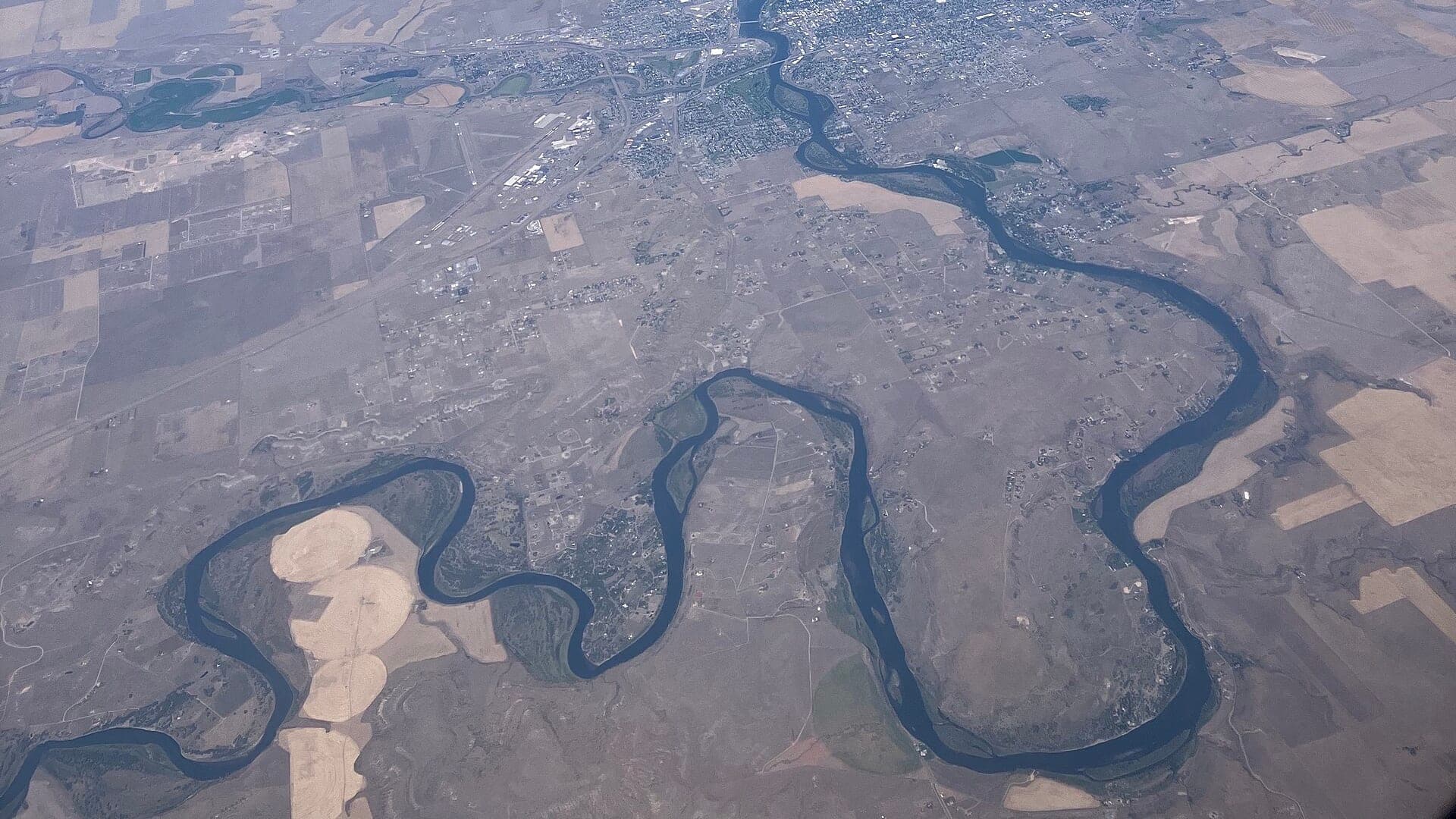
Image: Aerial view of the Missouri River at Great Falls, Montana / CC BY-SA 4.0 / Jsayre64Fishability now: Missouri River fishability today
GreatData confidence: High96/100
Fishable now because the live gauge is stable, weather is mild, and no public alert is active.
Flow observed
3:45 PM UTC
Weather observed
4:00 PM UTC
Score calculated
4:50 PM UTC
Why this rating
Flow
Water temperature
Public alerts
Next 6-12 hours
Hold
Stable live data supports staying with the plan, but recheck the gauge and forecast before leaving.
USGS flow
3,600 cfs
Current trend: flow stable, so weather, temperature, and access checks drive the next change.
More planning details: flies, flow bands, and live source checks
Fish it today
Start here
Start with the below-Holter flow, wind forecast, and one defined ramp or wade access. Then decide whether the day is a nymph-depth exercise, a dry-fly pod hunt, or a streamer bank plan.
Best flow clue
Use RiverReports and USGS 06066500 below Holter Dam together. Stable generation is the best platform for depth control and dry-fly pods; sudden flow changes should trigger another wade-safety and boat-position check.
Skip trigger
Skip or simplify when wind makes boat control unsafe, flow changes expose or flood wade shelves, FWP restrictions affect the plan, weed conditions are poor, or ramps and takeouts are too crowded for a clean float.
Flow decision bands
Low to moderate and technical
Moderate stable Missouri releases keep the river fishable, but wade shelves, boat lanes, and trout pods still demand a technical plan.
Best steady tailwater window
Steady below-Holter flow with manageable wind is the cleanest signal for nymph depth control, podded dry-fly shots, and short streamer banks.
Pushy or unsafe
Flow swings, flooded shelves, or a boat plan that depends on crowded ramps and uncertain wind control should move the day to another reach or another river.
Wind and crowding caution
A good graph does not solve stiff wind, weed issues, packed launches, or a private-bank corridor that leaves no clean fallback lane.
USGS flow
3,600 cfs
Current trend: flow stable, so weather, temperature, and access checks drive the next change.
Live USGS flow
3,600 cfs / stable
Live NWS forecast
65F / Sunny
Live water temperature
55F from USGS
No NWS alert flag
No active NWS alert was returned for this forecast point.
Use the below-Holter gauge for this page; Cascade and Fort Benton are different river reports.
PMDs, caddis, tricos, midges, and sowbugs can all matter by season.
Wind can make good flow feel unfishable, especially from a boat.
Wade shelves and private banks require careful access choices.
Editorial review
How this report is maintained
This Missouri River report is maintained from RiverReports and USGS below-Holter flow data, Montana FWP fishing regulations, current closure and restriction sources, stream-access law, FishMT Wolf Creek Bridge access information, weather, media-credit, and Craig-area tailwater planning guidance.
Byline
BlueStreamFly editorial team
Reviewed by
BlueStreamFly source review
Maintained by
Mountain Brook Run LLC
Last material review
2026-05-31
Report confidence
High confidence
93/100
High confidence: RiverReports, USGS below-Holter flow, Montana FWP regulations, current restrictions, stream-access law, FishMT access, weather, and image credit are present. Confidence is moderated mainly by wind, boat pressure, private-bank details, ramp congestion, weeds, and release changes.
Regulations
Montana FWP regulations and current restriction pages are linked for the Holter-to-Cascade planning scope.
Flow support
RiverReports Missouri below Holter Dam is backed by USGS 06066500.
Access support
Stream-access law and FishMT Wolf Creek Bridge access information provide concrete public-planning anchors.
Weather and safety
The National Weather Service point resolved and the page calls out wind, cold tailwater, boat traffic, slick shelves, and flow changes.
Angler usefulness
The page separates flow, hatch timing, depth control, wade/boat choice, ramp etiquette, and backup-water decisions.
Editorial review
A public correction path, source standards page, image credit, and public review history are included.
Fishability source review
2026-05-31 / material content or source review
RiverReports below-Holter flow support, USGS 06066500, Montana FWP fishing regulations, stream-access law, current restriction pages, FishMT Wolf Creek Bridge access information, the National Weather Service point, and image credit were rechecked before adding the Pine Creek-standard current-fishability layer.
2026-05-31
Upgraded the page to the Pine Creek fishability standard with tailwater decision bands, access cards, backup logic, and a reviewed route profile.
2026-05-28
Added Holter-to-Craig tailwater trip fit, wade-versus-boat framing, wind and flow-change skip cues, access and ramp nuance, backup-water suggestions, editorial review signals, and a page-specific report-confidence meter after source review.
2026-05-25
Initial source-reviewed report published with flows, weather, hatches, flies, tactics, access, regulations, and FAQs.
Angler planning edge
Local details that change the plan
Best for
Montana tailwater anglers planning the Holter Dam, Wolf Creek, Craig, and Cascade corridor around flow, wind, and hatch timing, Technical PMD, caddis, trico, midge, sowbug, scud, and streamer days when stable water and manageable wind line up, Boat or wade trips where ramp choice, private banks, boat traffic, and FWP rules need to be settled before the first cast, Anglers comparing the Missouri against the Bighorn, Madison, and Gallatin when freestones are high, hot, or crowded
Wade or float
Treat the Missouri below Holter as both a boat and wade tailwater, but choose the day style before rigging. Wind, flows, shelves, private banks, and boat pressure should decide whether you float, wade, or shorten the plan.
Best flows
Use RiverReports and USGS 06066500 below Holter Dam together. Stable generation is the best platform for depth control and dry-fly pods; sudden flow changes should trigger another wade-safety and boat-position check.
When to skip
Skip or simplify when wind makes boat control unsafe, flow changes expose or flood wade shelves, FWP restrictions affect the plan, weed conditions are poor, or ramps and takeouts are too crowded for a clean float.
Local plan
Start with the below-Holter flow, wind forecast, and one defined ramp or wade access. Then decide whether the day is a nymph-depth exercise, a dry-fly pod hunt, or a streamer bank plan.
Pressure
Pressure is normal on the Missouri. Clean boat spacing, respectful wade distance, and a backup ramp or shelf usually matter more than chasing every report of rising fish.
Access nuance
Stream-access law and FishMT access records support public planning, but private banks, boat lanes, ramp capacity, islands, and anchoring choices still need current judgement.
Backup water
If the Missouri is too windy, crowded, or flow-shifted, compare the Bighorn for another technical tailwater, the Gallatin for canyon wading, or the Madison for a different west-side trout plan.
About the river
Setting, character, and why it fishes the way it does.
The Missouri River below Holter Dam is one of Montana's most productive tailwaters. The Wolf Creek and Craig corridor is known for clear flows, rich insect life, drift boats, and technical trout.
Unlike a steep freestone, the Missouri often rewards precision: depth control, long drifts, small flies, careful dry-fly approaches, and patient pods.
This page is scoped to the below-Holter tailwater so it does not mix in Cascade, Fort Benton, or warm lower Missouri fishing that needs separate planning.
Target species
Rainbow trout
A primary target on nymph rigs, dry-fly flats, riffles, and tailwater seams.
Brown trout
Present throughout the tailwater, with streamer and low-light opportunities.
Mountain whitefish
Common in nymph water and an indicator of productive seams.
Walleye and pike
FWP rules include non-trout species in the corridor; check current harvest rules.
Reading the water
Stable generation
Dial depth, watch for pods, and match PMD, caddis, trico, or midge activity.
Windy
Fish protected banks, shorter floats, heavier rigs, or streamers where casting stays safe.
Clear flats
Use long leaders, small dries, and patient presentations to feeding trout.
Flow change
Recheck wade shelves, boat position, and nymph depth.
Best seasons
Spring
Midges, BWOs, sowbugs, scuds, and early tailwater nymphing are reliable.
Summer
PMDs, caddis, tricos, and dry-fly pods draw technical fishing.
Fall
BWOs, streamers, and cooling water can improve brown-trout movement.
Winter
Midges, scuds, and slower nymph rigs work when weather and access allow.
Preferred flow source
Missouri River below Holter Dam
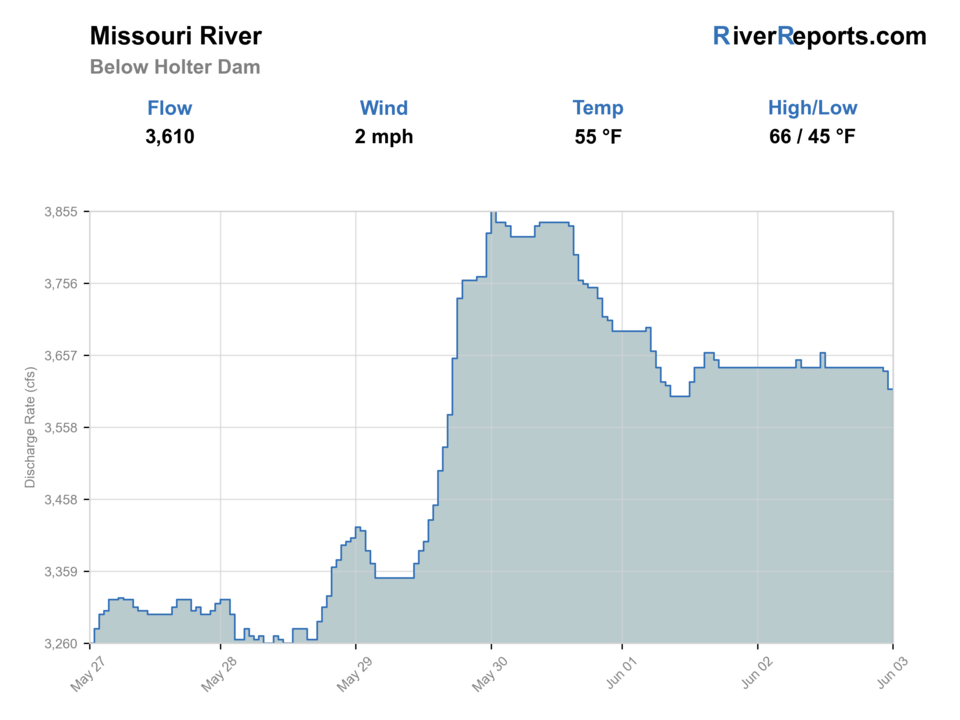
RiverReports is the preferred chart source when coverage exists. When a matching USGS gauge exists, keep it open as the official backstop for station data and current hydrograph context.
USGS data chart
Official USGS trend
Streamflow over the latest USGS reporting window.
Latest
3,600 cfs
Jun 3, 3 PM UTC
Weather
River weather report
Weather can change wading safety, road access, water temperature, hatches, and the best time of day to fish.
Live forecast loads as you reach this section
This keeps the report fast while still using the official National Weather Service forecast point.
Hatches and flies
Hatch chart and fly picks
Winter to early spring
Midges, scuds, sowbugs, slow nymphs, and occasional olives
Zebra midge, scud, sowbug, Ray Charles, small leech
May to July
PMDs, caddis, midges, yellow sallies, and worms during bumps
PMD emerger, sparkle caddis, midge pupa, soft hackle, small worm
August to October
Tricos, pseudos, caddis, hoppers, ants, and small baitfish
Trico spinner, small BWO, X-caddis, hopper-dropper, sculpin
Late fall
Midges, BWOs, scuds, sowbugs, and streamer windows
Midge cluster, BWO emerger, scud, sowbug, black leech
Tailwater nymphs
Scuds, sowbugs, zebra midges, PMD nymphs, small worms
Use for steady-flow tailwater fishing when trout feed near the bottom.
Dry flies
Midge cluster, PMD cripple, caddis, trico, small BWO
Use when pods feed in slicks, flats, foam lines, or soft bank seams.
Streamers
Sculpin, leech, sparkle minnow, small articulated streamer
Use during flow changes, clouds, wind, or when larger trout move.
Attractors
Soft hackle, hot bead sowbug, small worm, egg only where legal
Use after flow bumps, during stain, or when exact hatch matching is not needed.
Tactics
How to fish it
Start with depth and speed before changing flies; most nymphing failures are rigging failures.
Watch slicks and soft banks for PMD, caddis, trico, or midge pods before wading in.
Use reach casts and long leaders on technical dry-fly fish.
Streamer fish clouds, wind, and bank structure with a controlled boat or wade angle.
Respect boat lanes, wade anglers, private banks, and busy ramp etiquette.
Rigging
Rod, leader, and setup notes
A 5-weight handles most nymphs and dries; a 6-weight helps with wind and streamers.
Carry 4X to 6X for dry flies and small nymphs, with stronger leaders for streamers.
Pack scuds, sowbugs, split shot, small indicators, and long leaders.
Use a PFD in boats and studded boots for slick shelves.
Bring wind layers and backup plans because weather can change the entire float.
Access
Access and planning notes
Below-Holter gauge check
Primary release decisionWade / float / trail
Gauge / wade / float
When to pick it
Start here when stable generation decides whether the day is a wade-shelf plan, a dry-fly hunt, or a float from the start.
Caution
The gauge does not resolve wind strength, weed condition, or launch congestion on its own.
Wolf Creek Bridge and Craig corridor
Reviewed public access backboneWade / float / trail
FishMT access / wade / float
When to pick it
Use it when legal public entry, boat spacing, and clear ramp choices matter more than exploring new banks.
Caution
Private banks, boat lanes, and crowding still need exact day-of judgement.
Wade shelves versus float lanes
Day-style decisionWade / float / trail
Bank edge / shelf / boat
When to pick it
Pick this when a shorter technical wade may be smarter than joining a windy or crowded float.
Caution
Do not force shelf wading if flow changes or boat traffic make the edge feel marginal.
Use official FWP Fishing Access Sites and public ramps. Private banks are common.
Boat traffic is part of the Missouri experience. Give wade anglers and anchored boats space.
Wind can turn a reasonable float into a hard row or unsafe small-craft plan.
Regulations
Check before fishing
Montana FWP regulations apply to the Holter Dam to Cascade corridor and include trout and non-trout species rules. Check current regulations and restrictions before fishing.
Primary base
Wolf Creek, Craig, Cascade, or Helena
Best day style
Boat ramps, wade shelves, tailwater flats, drift boats, and public FAS planning
Check first
Holter flow, wind, FWP rules, ramps, weather, and weed or hatch conditions
Safety
Cold tailwater, wind, boat traffic, slick shelves, private banks, and flow changes
Gear
Helpful gear for this water
5-weight rod
Good for nymphs, dry flies, and most technical tailwater trout fishing.
6-weight rod
Useful for wind, heavier indicator rigs, and streamers from boats or banks.
Long leaders
Carry 9- to 12-foot leaders for flats, dry flies, and clear-water nymphing.
Split shot and indicators
Tailwater depth changes quickly, so carry several sizes and adjust often.
Nearby water
Other water to research
Backup logic
High release or flow shift
Treat sudden generation changes as a real safety signal and shorten the reach or move to another river before shelves and lanes get awkward.
Wind
Turn a windy Missouri day into a shorter technical session or pivot entirely instead of forcing unsafe boat control.
Crowding
Launch early, choose a shorter legal section, or move to the Bighorn or Gallatin instead of stacking into one Craig lane.
Access issue
Use only confirmed FishMT and legal stream-access entry and pivot if ramp, anchoring, or private-bank details are unclear.
Bighorn River
Another Montana tailwater with technical hatches and steady flow checks.
Gallatin River
A freestone option when you want canyon wading instead of tailwater boats.
Madison River
A famous nearby system with different flow, access, and hatch timing.
FAQ
Fast answers
Is Missouri River fishable today?
Missouri River looks very fishable right now. The live score is 96/100, based on current flow, weather, public alerts, and the report's planning context. Recheck the linked gauge and forecast before leaving because conditions can change quickly after rain, heat, access changes, or flow swings.
What flow is best for Missouri River?
Use RiverReports and USGS 06066500 below Holter Dam together. Stable generation is the best platform for depth control and dry-fly pods; sudden flow changes should trigger another wade-safety and boat-position check.
When should I skip Missouri River?
Skip or simplify when wind makes boat control unsafe, flow changes expose or flood wade shelves, FWP restrictions affect the plan, weed conditions are poor, or ramps and takeouts are too crowded for a clean float.
Is Missouri River safe to wade right now?
The fishability score is not a wading guarantee. Wade only where your chosen access has safe edges, clear footing, legal entry, and no forced crossings; high, rising, stained, or storm-affected water should be treated conservatively.
What should I check first before fishing the Missouri River?
Check the below-Holter gauge, wind forecast, FWP rules, ramp plan, and current hatch or weed conditions.
Are there special regulations on the Missouri River?
Yes. The Holter-to-Cascade corridor has specific trout and non-trout rules that should be checked before fishing.
What flies should I bring for the Missouri River?
Bring the hatch-chart flies, a few confidence nymphs, and a streamer box. Then adjust for water temperature, clarity, and the insects you actually see.
Can I wade the Missouri River?
Yes in some shelves and islands, but boats are common and private banks matter. Use official access and watch flows.
When should I skip the Missouri River?
Skip it when flows are unsafe, temperatures stress trout, wildfire or emergency closures are active, or legal access for the reach is not clear.
Sources
Source set for this report
Reviewed 2026-05-31