Montana / West
Beaverhead River at Twin Bridges
A lower-Beaverhead planning page for anglers deciding whether the Twin Bridges reach still has the clarity, current shape, and public access to justify a float or short wade.
Image: Generated regional planning image for Beaverhead River at Twin Bridges / BlueStreamFly generated; not exact location / BlueStreamFlyFishability now: Beaverhead River at Twin Bridges fishability today
GreatData confidence: High96/100
Fishable now because the live gauge is falling, weather is mild, and no public alert is active.
Flow observed
4:15 PM UTC
Weather observed
5:00 PM UTC
Score calculated
5:26 PM UTC
Why this rating
Flow
Weather
Public alerts
Next 6-12 hours
Improving / hold
A falling gauge and usable weather should keep the next 6-12 hours in play unless tributaries stain or heat builds.
USGS flow
130 cfs
Current trend: flow falling, rating likely holding strong unless weather or clarity changes.
More planning details: flies, flow bands, and live source checks
Fish it today
Start here
Start with the Twin Bridges gauge and one named access anchor such as Pennington Bridge. If the river still has color control and defined seams, fish a short float; if not, move upstream or change rivers early.
Best flow clue
Use RiverReports and USGS 06018500 near Twin Bridges together. Stable moderate lower-river flow with decent clarity is the best signal; muddy irrigation water, heavy wind, or hot flat water should move the day.
Skip trigger
Skip or pivot when lower-valley heat, muddy water, wind, or current restrictions strip away trout-safe shape, or when your launch, shuttle, or parking plan is not clearly public.
Flow decision bands
Low but still possible
Lower clear Beaverhead water can still fish, but weak depth, lower-valley heat, and selective trout should keep the day short and temperature-aware.
Best steady lower-river window
Stable Twin Bridges flow with manageable wind and enough clarity to read weed edges and soft banks is the cleanest signal for a lower-river float day.
Pushy, dirty, or blown out
A muddy irrigation surge, hard wind, or current that turns every drift into a blind push should move the day to another reach or another river.
Heat and shuttle caution
A fishable graph does not override lower-valley temperatures, recreation-rule timing, or an uncertain launch and takeout plan.
USGS flow
130 cfs
Current trend: flow falling, rating likely holding strong unless weather or clarity changes.
Live USGS flow
130 cfs / falling about 29%
Live NWS forecast
67F / Sunny
Water temperature not verified
Heat guidance uses weather and river type unless an official water-temperature value is available.
No NWS alert flag
No active NWS alert was returned for this forecast point.
Montana FWP's Beaverhead drainage plan describes the river as an 80-mile system from Clark Canyon Dam to the Jefferson headwaters at Twin Bridges, with stronger irrigation and valley influence as you move downstream.
Montana's Beaverhead recreation rules apply from the third Saturday in May through Labor Day and specifically reference the reach down to Jessen Park in Twin Bridges.
Use RiverReports as the quick chart and USGS 06018500 near Twin Bridges as the official flow reference before you commit to a lower-river float.
Public access is real but concentrated. Pennington Bridge is a defensible named FWP access site near Twin Bridges, and legal parking and launch discipline matter more here than on the better-known upper reaches.
Editorial review
How this report is maintained
This Beaverhead River at Twin Bridges report is maintained from RiverReports and USGS Twin Bridges flow data, Montana FWP fishing regulations, restricted-use river permit information, Beaverhead drainage planning material, Pennington Bridge access information, stream-access law, weather, generated-image disclosure, and lower-river trout planning sources.
Byline
BlueStreamFly editorial team
Reviewed by
BlueStreamFly source review
Maintained by
Mountain Brook Run LLC
Last material review
2026-05-31
Report confidence
Good confidence
88/100
Good confidence: RiverReports, USGS Twin Bridges flow, Montana FWP regulations, restricted-use permit guidance, Beaverhead drainage planning material, Pennington Bridge access, stream-access law, weather, and generated-image disclosure are present. Confidence is moderated by lower-valley heat, irrigation color, wind, and limited public access concentration.
Regulations
Montana FWP regulations and restricted-use river permit guidance are linked for current Beaverhead checks.
Flow support
RiverReports Beaverhead near Twin Bridges is backed by USGS 06018500.
Access support
Pennington Bridge and stream-access-law sources support planning, but lower-river launch and parking options remain limited and trip-specific.
Weather and safety
The National Weather Service point resolved and the page calls out heat, wind, lower-river clarity shifts, and shuttle discipline.
Angler usefulness
The page separates lower-river flow shape, float logistics, heat, access, and backup-water decisions.
Editorial review
A public correction path, source standards page, generated-image disclosure, and public review history are included.
Fishability source review
2026-05-31 / material content or source review
RiverReports Twin Bridges flow support, USGS 06018500, Montana FWP fishing regulations, restricted-use river permit information, Beaverhead drainage planning material, Pennington Bridge access information, the stream-access law page, the National Weather Service point, and image disclosure were rechecked before adding the Pine Creek-standard current-fishability layer.
2026-05-31
Upgraded the page to the Pine Creek fishability standard with reviewed route profile, lower-Beaverhead decision bands, access cards, backup logic, and a top-page current-fishability answer.
2026-05-26
Initial source-reviewed report published with Twin Bridges flows, access, tactics, regulations, and FAQs.
Angler planning edge
Local details that change the plan
Best for
Lower-river anglers planning a Twin Bridges float day around steady flow, weather, legal access, and realistic trout expectations, Trips where the Twin Bridges gauge, lower-valley heat, wind, irrigation influence, and named public access matter more than upper-river tailwater assumptions, Early and late season brown-trout plans when the lower Beaverhead still holds shape and enough cool water to fish honestly, Anglers comparing Twin Bridges with Dillon, the Jefferson, or the Big Hole before committing to the lower valley
Wade or float
Treat Twin Bridges as float-first lower-river water with selective wading only where legal public entry is clear. The day makes more sense as a named-access plan than as improvised bank hopping.
Best flows
Use RiverReports and USGS 06018500 near Twin Bridges together. Stable moderate lower-river flow with decent clarity is the best signal; muddy irrigation water, heavy wind, or hot flat water should move the day.
When to skip
Skip or pivot when lower-valley heat, muddy water, wind, or current restrictions strip away trout-safe shape, or when your launch, shuttle, or parking plan is not clearly public.
Local plan
Start with the Twin Bridges gauge and one named access anchor such as Pennington Bridge. If the river still has color control and defined seams, fish a short float; if not, move upstream or change rivers early.
Pressure
Pressure is lighter than the upper Beaverhead, but the few obvious public sites still bunch anglers. Smart timing and a defined float plan matter more than trying to cover every bank.
Access nuance
Stream-access law supports on-water travel, but launch, shuttle, bridge parking, and field-edge access remain separate legal questions on the lower river.
Backup water
If Twin Bridges is hot, dirty, windy, or too flat, compare Dillon or the upper Beaverhead for more technical trout water, or move to the Big Hole or another cooler option.
About the river
Setting, character, and why it fishes the way it does.
Montana FWP identifies Twin Bridges as the lower end of the Beaverhead, where the river meets the Big Hole and Ruby to form the Jefferson system. That headwaters setting gives the reach a different feel from the tighter Dillon water upstream.
You still get classic southwest Montana brown-trout potential, but the lower valley asks for more judgment about summer temperatures, irrigation swings, and how much shape the river has left on a given day.
This page is built for anglers trying to decide whether Twin Bridges deserves its own stop, whether it should be a lower-river float, or whether conditions argue for staying higher in the drainage.
Target species
Brown trout
The core lower-Beaverhead target when current, weeds, and water temperature still line up.
Rainbow trout
Present in the drainage, but less central to this reach than brown trout and overall river shape.
Mountain whitefish
A useful sign that the lower river is still fishing honestly when trout windows are selective.
Reading the water
Steady moderate lower-river flow
Best for float coverage, weed-edge nymphing, and picking apart obvious current transitions.
Low clear summer flow
Shorten the day, fish early, and target the cooler, deeper structure instead of forcing long bright floats.
Irrigation color or heavy push
Usually a signal to move upstream or pivot to different water rather than gambling on the lower reach.
Hot windy afternoon
A warning that trout-safe conditions and good drifts may both fall apart at the same time.
Best seasons
Late spring
Strongest once the lower river has shape and before full summer heat becomes the main limiter.
Summer mornings
Viable when nights stay cool and you treat the reach as an early technical window, not an all-day marathon.
Early fall
Often the cleanest reset for lower-river clarity, temperatures, and longer trout windows.
Late fall
Can reward patient nymphing and streamer work when flows remain steady.
Preferred flow source
Beaverhead River near Twin Bridges
RiverReports is the preferred chart source when coverage exists. When a matching USGS gauge exists, keep it open as the official backstop for station data and current hydrograph context.
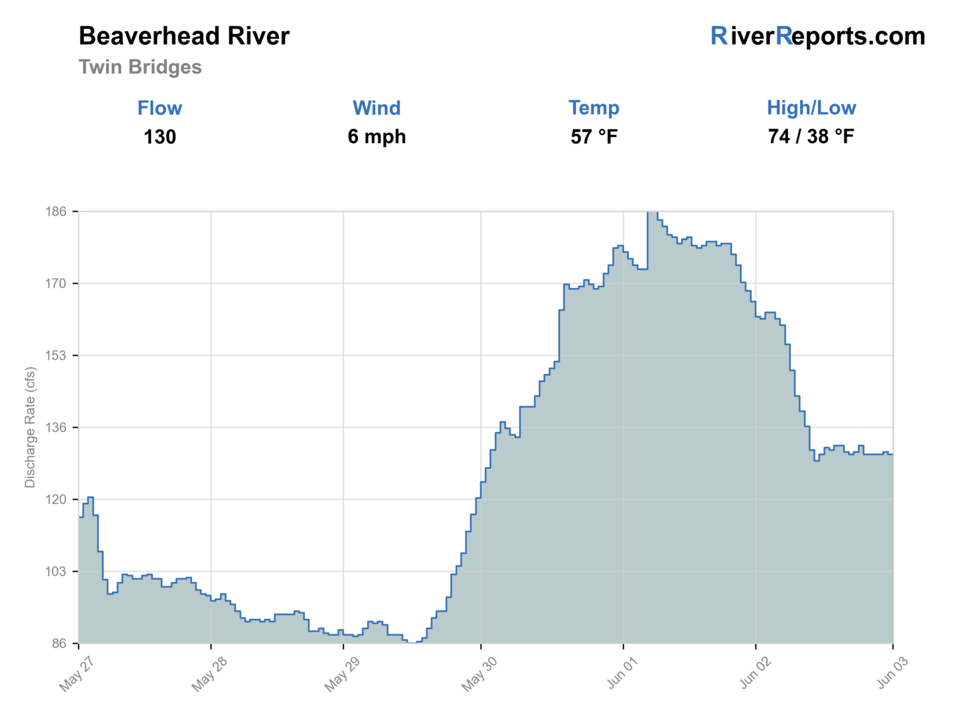
USGS data chart
Official USGS trend
Streamflow over the latest USGS reporting window.
Latest
130 cfs
Jun 3, 4 PM UTC
Weather
River weather report
Weather can change wading safety, road access, water temperature, hatches, and the best time of day to fish.
Live forecast loads as you reach this section
This keeps the report fast while still using the official National Weather Service forecast point.
Hatches and flies
Hatch chart and fly picks
Spring
Midges, BWOs, early caddis
Zebra midge, BWO emerger, caddis pupa, soft hackle
Early summer
PMDs, caddis, yellow sallies
PMD cripple, sparkle caddis, pheasant tail, yellow sally
Summer
Tricos, caddis, terrestrials
Trico spinner, hopper-dropper, ant, caddis emerger
Fall
BWOs, midges, streamer windows
Parachute BWO, zebra midge, olive bugger, sculpin
Lower-river nymphs
Perdigon, pheasant tail, zebra midge, scud
The river still has enough shape to reward careful drift control around weeds and current edges.
Terrestrials and dry-dropper tools
Hopper, ant, beetle, caddis dry
Summer banks and side seams give fish reason to slide up early or late.
Low-light streamers
Olive leech, mini sculpin, bugger
Cloud cover, shoulder seasons, or a little color make the lower river more forgiving.
Tactics
How to fish it
Start with the Twin Bridges gauge trend, then decide whether the lower river still has enough clarity and depth transitions to justify a float.
Fish the best banks, seams, and weed lines thoroughly instead of covering miles of flat-looking lower valley water.
Use named public sites and bridge corridors for entry and shuttle discipline rather than assuming every roadside opening is fair game.
If the lower river feels warm, flat, and overexposed by late morning, believe that signal and move upstream.
Rigging
Rod, leader, and setup notes
A 4- to 6-weight rod with a flexible nymph leader covers most lower Beaverhead days.
Carry 4X through 6X tippet because the river can still fish technically when the water looks generous.
A second setup for low-light streamers is useful when cloud cover or shoulder-season color creates a better move-the-fish window.
A thermometer and wind layer matter because lower-valley conditions can deteriorate fast in summer weather.
Access
Access and planning notes
Twin Bridges gauge check
Primary lower-river decisionWade / float / trail
Gauge / float
When to pick it
Start here when the lower Beaverhead trend decides whether the river is worth a float at all.
Caution
The gauge does not settle heat, irrigation color, or wind in the lower valley.
Pennington Bridge anchor
Named public accessWade / float / trail
Bridge access / short wade / launch
When to pick it
Use it when you want a defensible public starting point instead of guessing at roadside pullouts and private banks.
Caution
Bridge access still does not solve every shuttle, parking, or field-edge boundary question on the lower river.
Short lower-river float
Condition-based float planWade / float / trail
Launch / drift / takeout
When to pick it
Pick this when the flow still carries enough shape for a clean drift and the wind and heat forecast stay reasonable.
Caution
Do not force a float just because the river is open if the lower valley has already gone flat, muddy, or too warm.
Pennington Bridge is the strongest named public-access reference for this Twin Bridges-focused page. Start there instead of assuming informal pull-outs are legal.
Montana stream-access rights matter once you are lawfully on the water, but they do not create parking, launch, or bank-entry rights on private ground.
This page should not be confused with the upper Beaverhead canyon below Clark Canyon Dam or with the middle Dillon reach upstream.
Regulations
Check before fishing
Check Montana's current fishing regulations, Beaverhead recreation restrictions, and any active closure or temperature notices before you fish. The lower Beaverhead can change fast with heat and irrigation demand.
Primary base
Twin Bridges or Dillon
Best day style
Float-first lower-river planning with selective wading from named public access and bridge-adjacent legal entries
Check first
RiverReports trend, USGS 06018500, Montana regulations and restrictions, and Twin Bridges weather
Safety
Warm lower-valley afternoons, irrigation flow shifts, windy float days, and strict private-land access discipline
Gear
Helpful gear for this water
4- to 6-weight rod
Covers nymph rigs, short dry-dropper work, and compact streamer fishing.
Thermometer
Important for deciding whether the lower reach still deserves a trout day.
Wind and sun layer
The lower valley can get bright and breezy quickly, especially on float days.
Good launch and wading footwear
Useful around muddy approaches, weedy edges, and lower-river banks.
Nearby water
Other water to research
Backup logic
Dirty or pushy water
Move upstream or to another river as soon as lower-river color or current wipes out the seams and weed-edge definition you need for trout water.
Heat
Fish only cool windows and pivot quickly if the lower valley loses trout-safe handling conditions.
Wind or crowding
Shorten the float, pick a cleaner access window, or move to a different river instead of forcing a blown-out or crowded lower-river lane.
Access or shuttle issue
Use only confirmed public access and pivot if bridge parking, shuttle timing, or private-bank details stay uncertain.
Beaverhead River at Dillon
A more technical middle-river option if Twin Bridges feels too warm or too flat.
Big Hole River
A larger freestone backup if you want colder, less weed-driven current.
Jefferson River
The downstream headwaters pivot once you want bigger-water planning and different access structure.
FAQ
Fast answers
Is Beaverhead River at Twin Bridges fishable today?
Beaverhead River at Twin Bridges looks very fishable right now. The live score is 96/100, based on current flow, weather, public alerts, and the report's planning context. Recheck the linked gauge and forecast before leaving because conditions can change quickly after rain, heat, access changes, or flow swings.
What flow is best for Beaverhead River at Twin Bridges?
Use RiverReports and USGS 06018500 near Twin Bridges together. Stable moderate lower-river flow with decent clarity is the best signal; muddy irrigation water, heavy wind, or hot flat water should move the day.
When should I skip Beaverhead River at Twin Bridges?
Skip or pivot when lower-valley heat, muddy water, wind, or current restrictions strip away trout-safe shape, or when your launch, shuttle, or parking plan is not clearly public.
Is Beaverhead River at Twin Bridges safe to wade right now?
The fishability score is not a wading guarantee. Wade only where your chosen access has safe edges, clear footing, legal entry, and no forced crossings; high, rising, stained, or storm-affected water should be treated conservatively.
What should I check first on the Beaverhead at Twin Bridges?
Check RiverReports, USGS 06018500 near Twin Bridges, and current Montana regulations or restrictions before deciding on a float or a short wade.
Is this the same as the upper Beaverhead tailwater?
No. Twin Bridges is lower-river Beaverhead water with more irrigation, warmer valley influence, and stronger float logic than the tighter upper tailwater.
Where is the clearest public starting point?
Pennington Bridge Fishing Access Site is the clearest named FWP public-access reference for this reach, but you should still confirm current site status and your shuttle plan before launch.
Sources
Source set for this report
Reviewed 2026-05-31