Missouri / Midwest
Eleven Point River
A practical Eleven Point planning page built around the river's warmwater upper float water, coldwater Greer-to-Turner trout reach, and the official access points that actually define a good day.
Image: Generated regional planning image for Eleven Point River / BlueStreamFly generated; not an exact location photo / BlueStreamFlyFishability now: Eleven Point River fishability today
GreatData confidence: High96/100
Fishable now because the live gauge is stable, weather is usable, and no public alert is active.
Flow observed
4:30 PM UTC
Weather observed
5:00 PM UTC
Score calculated
5:24 PM UTC
Why this rating
Flow
Weather
Public alerts
Next 6-12 hours
Hold
Stable live data supports staying with the plan, but recheck the gauge and forecast before leaving.
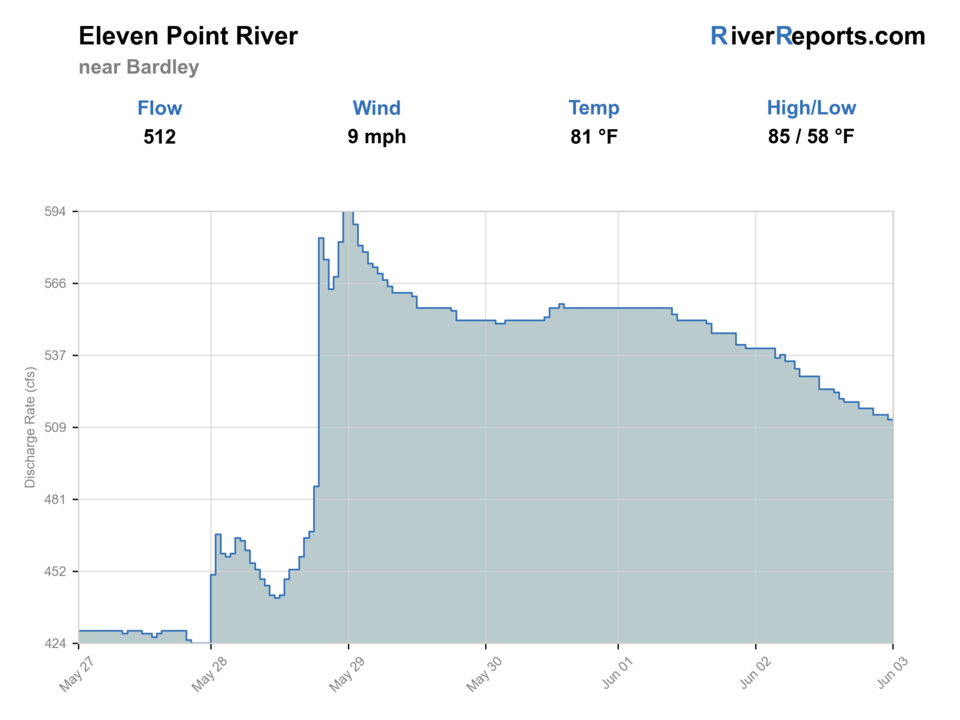
USGS flow
508 cfs
Current trend: flow stable, so weather, temperature, and access checks drive the next change.
More planning details: flies, flow bands, and live source checks
Fish it today
Start here
Pick one section before you start, fish one access well, and let the level check tell you whether to stay in trout water or commit to a fuller float.
Best flow clue
Enough flow to float the upper river cleanly or moderate clear conditions that leave the Greer-to-Turner trout seams readable without turning every public access into fast pushy water.
Skip trigger
Skip when the upper river is too low to float without repeated dragging, when the middle river is overcrowded, or when fast-rising weather makes a long shuttle feel reckless.
Flow decision bands
Floatable healthy level
Stable Bardley flow with enough water for shoals is the best signal for upper-river smallmouth and mixed-float plans.
Clear trout-section flow
Moderate clear flow supports Greer-to-Turner trout plans when the rule set and access choice match the section.
Low summer drag
Low water can make upper floats inefficient and should push the day toward shorter trout or access-based sessions.
Recent rain rise
Fast rises or storm color should shorten the plan, especially on long floats between access points.
USGS flow
508 cfs
Current trend: flow stable, so weather, temperature, and access checks drive the next change.
Live USGS flow
508 cfs / stable
Live NWS forecast
76F / Sunny
Water temperature not verified
Heat guidance uses weather and river type unless an official water-temperature value is available.
No NWS alert flag
No active NWS alert was returned for this forecast point.
RiverReports is the quick trend check, backed by USGS 07071500 near Bardley for official streamflow context.
Missouri's special waterbody regulations split the river into Blue Ribbon trout water from Greer Spring Branch to Turner Mill and White Ribbon trout water downstream from Turner Mill.
The Missouri annual prospects report points anglers to Thomasville, Cane Bluff, Greer, Turner Mill, Whitten, and Riverton as the main public access anchors.
Mark Twain National Forest manages the Eleven Point National Wild and Scenic River corridor with official vehicle accesses, float camps, and river-use rules including the 25-horsepower limit.
Editorial review
How this report is maintained
This report uses official regulation, flow, weather, access, and public-land sources first, then adds practical planning guidance for fly anglers.
Byline
BlueStreamFly editorial desk
Reviewed by
BlueStreamFly source review
Maintained by
BlueStreamFly
Last material review
2026-06-02
Report confidence
Good confidence
89/100
Good confidence: RiverReports, USGS 07071500 near Bardley, Missouri Department of Conservation Eleven Point rules and prospects, Mark Twain National Forest access guidance, Turner Mill North access, weather coverage, generated media disclosure, and route-specific Ozark float-versus-trout guidance support the page. Confidence is moderated by section choice, long float logistics, summer recreation traffic, rain-driven rises, and Blue Ribbon versus White Ribbon rule differences.
Regulations
Missouri Department of Conservation Eleven Point special-regulation sources support Blue Ribbon, White Ribbon, and warmwater rule checks.
Access
Mark Twain National Forest and Turner Mill sources support the main access plan, while shuttle timing and lower-river access choice remain trip-specific.
Flow and weather
RiverReports, USGS 07071500 near Bardley, and the National Weather Service point support live flow and weather decisions.
Fishing usefulness
The page now separates upper warmwater floats, Greer-to-Turner trout water, White Ribbon lower water, low-flow drag, storm-rise safety, access timing, and Ozark backups.
Fishability dashboard and source review
2026-06-02 / material content or source review
RiverReports and USGS 07071500 Bardley flow, Missouri Department of Conservation Eleven Point regulations and prospects, Mark Twain National Forest Eleven Point access guidance, Turner Mill North access, National Weather Service data, and route-specific warmwater-versus-trout section guidance were checked before updating the current-fishability decision layer.
2026-06-02
Updated the Missouri Eleven Point River to the current fishability standard with Ozark trend bands, access cards, backup cues, stable fishability SEO, and confidence signals.
2026-05-26
Published a new Eleven Point River report with separate float-versus-trout planning, official access anchors, and current trout-rule guidance.
Angler planning edge
Local details that change the plan
Best for
Ozark anglers who want one page that separates bass float water from trout water, Moderate-flow trout planning around Greer and Turner, Spring and fall mixed-species trips with honest access planning
Wade or float
Mostly a float river above and below the main trout nodes, but Greer and Turner are realistic short-session wade anchors when the goal is focused trout water instead of mileage.
Best flows
Enough flow to float the upper river cleanly or moderate clear conditions that leave the Greer-to-Turner trout seams readable without turning every public access into fast pushy water.
When to skip
Skip when the upper river is too low to float without repeated dragging, when the middle river is overcrowded, or when fast-rising weather makes a long shuttle feel reckless.
Local plan
Pick one section before you start, fish one access well, and let the level check tell you whether to stay in trout water or commit to a fuller float.
Pressure
Pressure stacks up around the best-known summer accesses and holiday floats, so weekday or shoulder-hour plans usually fish cleaner than midday weekend laps.
Access nuance
The river gives you real public access, but those named sites define the day more than random roadside optimism. Launch and take-out choices matter as much as fly choice.
Backup water
If the Eleven Point is too thin, too crowded, or too warm in the wrong section, pivot to a bigger Ozark tailwater or a more straightforward float river rather than forcing it.
About the river
Setting, character, and why it fishes the way it does.
The Eleven Point is one of the Ozarks' most varied river systems because Greer Spring dramatically changes both the water temperature and the fishery profile.
Above Greer it behaves like classic rocky Ozark smallmouth water with riffles, shoals, and long float miles that fish best when levels stay honest.
Below Greer the river turns colder and more trout-focused, especially through the Blue Ribbon section to Turner Mill and the stocked White Ribbon water below.
Target species
Rainbow trout
The core coldwater target from Greer through Turner Mill and downstream stocked sections.
Brown trout
Less common than rainbows but possible in the managed trout water.
Smallmouth bass
A major target on the warmer upper river and still relevant below Greer at the right times.
Goggle-eye
A dependable Ozark river fish in the rocky upper reaches and float water.
Walleye
A lower-river possibility, especially around deeper current seams and cooler-season windows.
Reading the water
Higher spring float levels
Best for covering the upper river from Thomasville toward Greer without dragging boats over riffles.
Moderate clear trout flow
Ideal for the Greer-to-Turner Blue Ribbon stretch and the stocked White Ribbon water below.
Low summer water
Usually pushes you toward shorter trout-focused sessions or selective upper-river wading instead of long floats.
Heavy recreational traffic
Fish early, choose less obvious access transitions, or shift to a weekday plan.
Best seasons
Spring
Best blend of floatable upper-river water and active smallmouth, with trout water still cool and comfortable.
Early summer
Strong for mixed trout and bass planning before heat and traffic squeeze the easiest accesses.
Summer
Best for early trout sessions and careful float timing rather than all-day blind coverage.
Fall
A good reset for both trout and lower-river predator fishing when crowds thin and temperatures stabilize.
Preferred flow source
Eleven Point River near Bardley
RiverReports is the preferred chart source when coverage exists. When a matching USGS gauge exists, keep it open as the official backstop for station data and current hydrograph context.
USGS data chart
Official USGS trend
Streamflow over the latest USGS reporting window.
Latest
508 cfs
Jun 3, 4 PM UTC
Weather
River weather report
Weather can change wading safety, road access, water temperature, hatches, and the best time of day to fish.
Live forecast loads as you reach this section
This keeps the report fast while still using the official National Weather Service forecast point.
Hatches and flies
Hatch chart and fly picks
Spring
Midges, caddis, and early mayflies
Zebra midge, caddis pupa, pheasant tail, Adams
Late spring to early summer
Caddis, PMDs, and attractor terrestrial starts
Elk hair caddis, PMD emerger, yellow stimulator
Summer
Caddis, beetles, ants, and hopper windows
Foam ant, beetle, hopper-dropper, caddis dry
Fall
BWOs and streamer windows
Parachute BWO, olive bugger, soft hackle
Trout nymphs
Pheasant tail, hare's ear, zebra midge, caddis pupa
The Greer and Turner trout sections are clear enough to fish classic seams and slots.
Ozark bass tools
Craw-colored streamer, woolly bugger, jig nymph, foam hopper
You are treating the upper river as a warmwater float instead of a trout day.
Dry-dropper setup
Stimulator, caddis dry, ant, tungsten dropper
Moderate summer flow leaves enough edge water to fish one compact rig efficiently.
Tactics
How to fish it
Choose the river version before you leave the truck: upper-river float water, Blue Ribbon trout water, or White Ribbon stocked water.
On trout-focused days, fish the Greer and Turner accesses well instead of trying to sample every visible turnout.
On upper-river float days, make sure levels are high enough to avoid constant dragging before committing to Thomasville or Cane Bluff mileage.
Respect the lure and harvest restrictions in the trout reaches because the bass-friendly habits that work above Greer are not legal everywhere below it.
Rigging
Rod, leader, and setup notes
A 4- to 6-weight floating-line setup covers nearly every trout, bass, and mixed-float need on the Eleven Point.
Carry 3X through 5X for trout water and short streamer leaders for upper-river bass seams.
If you plan to split the day between warmwater and trout reaches, rig separate leaders instead of forcing one compromise setup.
Bring a simple indicator or dry-dropper trout rig plus one small streamer or bugger rod to stay flexible.
Access
Access and planning notes
Greer Crossing
Trout-section decision pointWade / float / trail
Forest Service access / wade / launch
When to pick it
Start here when you want to choose between cold trout water and a broader float plan.
Caution
Blue Ribbon rules downstream of Greer are different from warmwater habits above it.
Turner Mill North
Blue Ribbon exit and scoutWade / float / trail
Day-use access / short session
When to pick it
Use it when the Greer-to-Turner trout reach is the focus or you need a defined public scout.
Caution
Day-use access and traffic can concentrate anglers during good windows.
Whitten and Riverton
Lower-river anchorsWade / float / trail
Public access / float planning
When to pick it
Pick them when the plan shifts to White Ribbon water or a longer downstream float.
Caution
Long float mileage and section-specific rules need to be settled before launch.
The official access pattern matters on this river. Greer, Turner, Whitten, and Riverton are the safest anchors for a clean legal day.
Turner Mill North is day use only, while Turner Mill South supports primitive camping and launch planning.
Float mileage is real here, so decide your shuttle and section before committing to a long upper-river launch.
Regulations
Check before fishing
Use Missouri's Eleven Point special regulations page every trip. The Blue Ribbon reach from Greer Spring Branch to Turner Mill is artificial-only with a one-trout daily limit and an 18-inch minimum; the White Ribbon reach downstream has different trout harvest rules, and upper-river bass and goggle-eye limits still apply.
Primary base
Alton or Winona
Best day style
Mostly float-oriented with short wade sessions at named public accesses and the trout-management reaches
Check first
RiverReports trend, USGS 07071500, Missouri special regulations, and the Mark Twain National Forest access plan
Safety
Fast rises after rain, long float mileage, mixed boat traffic, slippery shoals, and warm-season crowding at the obvious launches
Gear
Helpful gear for this water
4- to 6-weight rod
Enough range for trout rigs, small streamers, and upper-river warmwater work.
Wading staff
Useful at slick shoals, Greer-area entries, and uneven Turner Mill approaches.
Shuttle and dry-bag system
Important because the river fishes best when your launch and take-out are planned cleanly.
Printed or offline regulations copy
Helpful because the trout sections and warmwater reaches do not share the same lure and harvest rules.
Nearby water
Other water to research
Backup logic
Upper river too low
Shorten to Greer or Turner trout water, or choose Current River for a more established coldwater plan.
Summer crowding
Fish early, choose weekday access timing, or move to less obvious water.
Storm rise
Avoid long floats until the river stabilizes and clarity returns.
Rule confusion
Separate warmwater and trout reaches before rigging; do not carry upper-river assumptions into Blue Ribbon water.
Current River
A larger Ozark trout and float benchmark when you want a more established coldwater corridor.
Black River
A southern Missouri and Arkansas fallback if you need a different warmwater or mixed-species plan.
White River
A stronger backup for tailwater-style trout planning if the Eleven Point is too low or crowded.
FAQ
Fast answers
Is Eleven Point River fishable today?
Eleven Point River looks very fishable right now. The live score is 96/100, based on current flow, weather, public alerts, and the report's planning context. Recheck the linked gauge and forecast before leaving because conditions can change quickly after rain, heat, access changes, or flow swings.
What flow is best for Eleven Point River?
Enough flow to float the upper river cleanly or moderate clear conditions that leave the Greer-to-Turner trout seams readable without turning every public access into fast pushy water.
When should I skip Eleven Point River?
Skip when the upper river is too low to float without repeated dragging, when the middle river is overcrowded, or when fast-rising weather makes a long shuttle feel reckless.
Is Eleven Point River safe to wade right now?
The fishability score is not a wading guarantee. Wade only where your chosen access has safe edges, clear footing, legal entry, and no forced crossings; high, rising, stained, or storm-affected water should be treated conservatively.
What should I check first on the Eleven Point River?
Start with RiverReports and USGS 07071500, then decide whether you are planning an upper-river float or a trout-focused Greer-to-Turner day and confirm the matching Missouri rules.
Is the Eleven Point better for floating or wading?
Both work, but they fit different sections. The upper river is more float-driven, while Greer and Turner are often better for focused wading or short launch-to-access trout planning.
When should I skip the Eleven Point?
Skip it when upper-river levels are too thin to float cleanly, when trout water is overwhelmed by summer traffic, or when recent rain has the river rising too quickly to plan safely.
Sources
Source set for this report
Reviewed 2026-06-02