Michigan / Midwest
Muskegon River
A Muskegon River report for Croton Dam flows, steelhead, trout, salmon, smallmouth, boat and bank access, hatches, flies, weather, and safety.
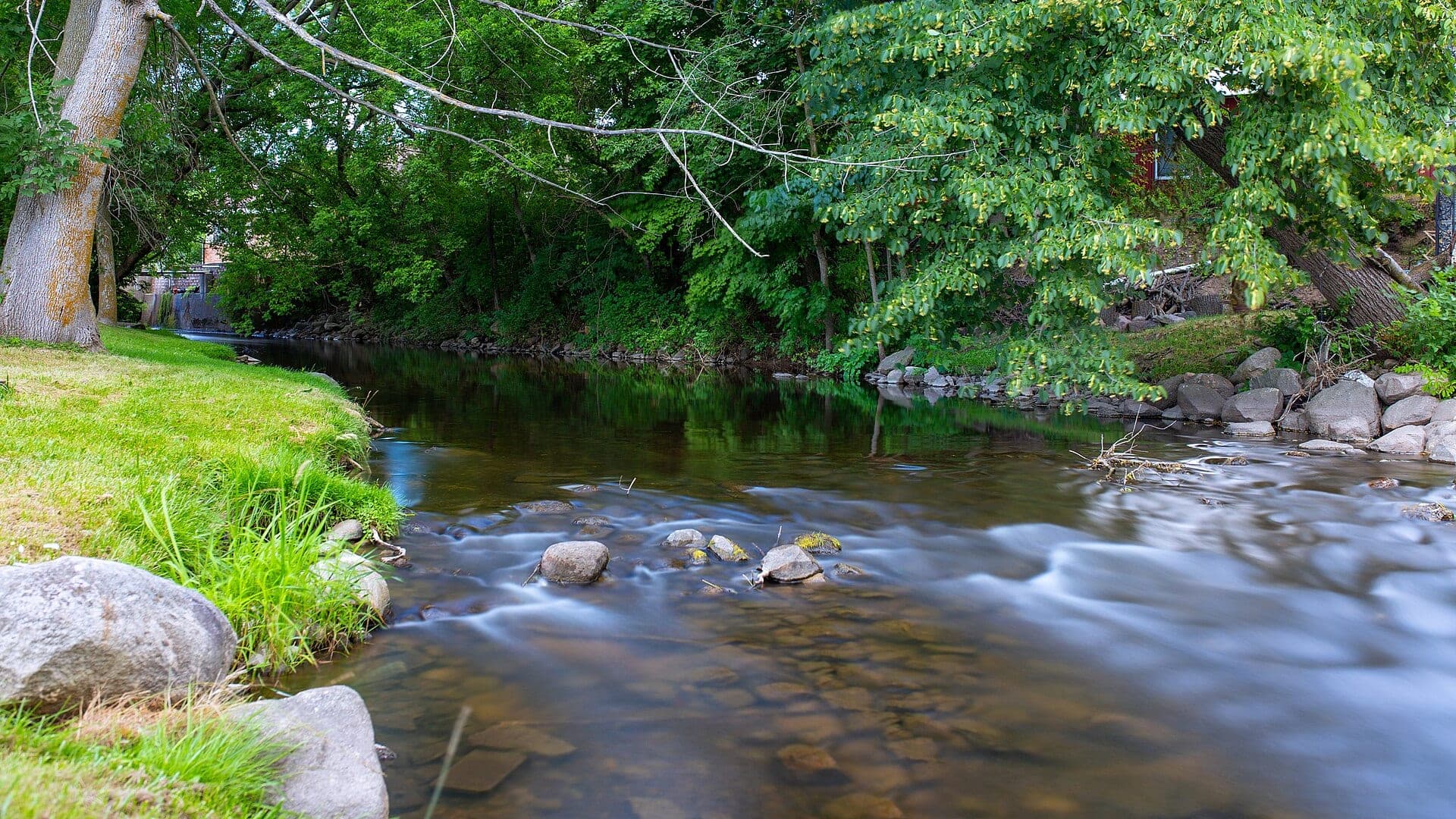
Image: Middle Branch of the Muskegon River in Marion, Michigan / CC BY-SA 4.0 / Phillip HofmeisterFishability now: Muskegon River fishability today
GreatData confidence: High96/100
Fishable now because Croton gauge is stable, weather is usable, and no public alert is active.
Flow observed
5:00 PM UTC
Weather observed
5:00 PM UTC
Score calculated
5:25 PM UTC
Why this rating
Flow
Water temperature
Public alerts
Next 6-12 hours
Hold
Stable live data supports staying with the plan, but recheck the gauge and forecast before leaving.
USGS flow
1,770 cfs
Current trend: flow stable, so weather, temperature, and access checks drive the next change.
More planning details: flies, flow bands, and live source checks
Fish it today
Start here
Start at the Croton flow read, then decide whether the day is trout, steelhead, salmon, or warmwater-focused. Pick one river mode before loading the fly boxes.
Best flow clue
Use RiverReports and USGS 04121970 at Croton together. Stable releases are easiest for reading seams and soft edges; fast or changing dam-influenced water should move the plan toward boats, protected banks, or another day.
Skip trigger
Skip or narrow the plan when releases make wading unsafe, when temperature or handling stress is poor for trout, when salmon or steelhead crowds compress the access, or when launch and take-out logistics are not settled.
Flow decision bands
Low but fishable
Lower stable releases can fish from banks, soft edges, or boats, but big-river wading should stay conservative.
Best Croton window
Stable Croton flow with clear enough water and a settled species plan gives the best trout, steelhead, salmon, or smallmouth signal.
Pushy or unsafe
Fast or changing dam-influenced water should move the plan to boats, protected banks, or another river.
Seasonal pressure caution
A good flow can still be a poor day when salmon or steelhead crowds compress launches, runs, and bank access.
USGS flow
1,770 cfs
Current trend: flow stable, so weather, temperature, and access checks drive the next change.
Live USGS flow
1,770 cfs / stable
Live NWS forecast
79F / Mostly Sunny
Live water temperature
63F from USGS
No NWS alert flag
No active NWS alert was returned for this forecast point.
RiverReports and USGS Croton provide the preferred flow context.
Steelhead and salmon seasons can be busy, so plan access and etiquette before arriving.
Resident trout, smallmouth, and warmwater fishing can be better choices outside migratory windows.
Treat dam-influenced flow changes and boat traffic as safety issues.
Editorial review
How this report is maintained
This Muskegon River report is maintained from RiverReports and USGS Croton flow data, Michigan regulation and fisheries-unit sources, fish-consumption guidance, weather, media-credit, and practical tailwater trip-planning sources.
Byline
BlueStreamFly editorial team
Reviewed by
BlueStreamFly source review
Maintained by
Mountain Brook Run LLC
Last material review
2026-05-31
Report confidence
High confidence
91/100
High confidence: RiverReports, USGS 04121970, Michigan regulation, fisheries-unit context, weather, consumption guidance, and media support are in place. Confidence is moderated by Croton releases, boat logistics, seasonal crowding, and temperature-sensitive trout handling.
Regulations
Michigan fishing regulations support current species, method, and reach checks.
Access
Fisheries-unit and river context support planning, while exact launches, bank ownership, and boat logistics still require trip-specific checks.
Flow and weather
RiverReports, USGS 04121970, chart support, and the National Weather Service point are attached to the route.
Fishing usefulness
The page now separates Croton releases, boat versus bank plans, migratory pressure, warmwater pivots, access logistics, and Pere Marquette or Kalamazoo backups.
Fishability dashboard and source review
2026-05-31 / material content or source review
RiverReports Muskegon River at Croton, USGS 04121970, Michigan regulations, Central Lake Michigan fisheries access notes, Eat Safe Fish guidance, and the National Weather Service point were checked before updating the current fishability guidance.
2026-05-31
Updated Muskegon River with Croton release guidance, boat and bank access cards, seasonal pressure cautions, backup cues, stable fishability SEO, and confidence signals.
2026-05-28
Added Croton tailwater trip fit, wade-versus-boat framing, dam and temperature skip cues, access nuance, pressure timing, backup-water suggestions, editorial review signals, and a page-specific report-confidence meter after source review.
2026-05-25
Initial source-reviewed report published with flows, weather, hatches, flies, tactics, access, regulations, and FAQs.
Angler planning edge
Local details that change the plan
Best for
Anglers planning the Croton tailwater and lower Muskegon for trout, steelhead, salmon, and smallmouth windows, Boat or guided-style days where dam release, Croton flow, and access timing shape the plan, Large-river nymph, streamer, swung-fly, egg, caddis, and warmwater tactics when conditions match the season, Trips that need a bigger west Michigan alternative to the Little Manistee or Pere Marquette
Wade or float
Treat the Muskegon as a big-river report where boat access is often the cleanest plan and wading should be conservative. Croton flow, bank access, boat traffic, and dam-influenced current decide how much water is practical.
Best flows
Use RiverReports and USGS 04121970 at Croton together. Stable releases are easiest for reading seams and soft edges; fast or changing dam-influenced water should move the plan toward boats, protected banks, or another day.
When to skip
Skip or narrow the plan when releases make wading unsafe, when temperature or handling stress is poor for trout, when salmon or steelhead crowds compress the access, or when launch and take-out logistics are not settled.
Local plan
Start at the Croton flow read, then decide whether the day is trout, steelhead, salmon, or warmwater-focused. Pick one river mode before loading the fly boxes.
Pressure
Popular runs below Croton can feel busy during salmon and steelhead windows. Early starts, boat etiquette, and moving away from obvious access can matter as much as pattern choice.
Access nuance
The fisheries-unit source and flow data support planning, but the lower Muskegon still needs exact launch, parking, private-bank, and local rule checks before a float or bank session.
Backup water
If the Muskegon is too high, crowded, or temperature-stressed, compare the Pere Marquette for more defined fly-water identity, the Little Manistee for a smaller tributary plan, or the Kalamazoo for warmwater fishing.
About the river
Setting, character, and why it fishes the way it does.
The Muskegon is one of Michigan's largest west-side rivers and is shaped by a series of dams, including Croton and Hardy. Below Croton, anglers get a big-river mix of trout, steelhead, salmon, and warmwater species.
This is not small-stream fly fishing. Wading can be limited, boats are common, and water changes can affect where fish hold and where anglers can stand safely.
A useful report needs to pair hatch and fly advice with flow, boat access, regulation, and crowd planning.
Target species
Steelhead
A major spring and fall target below Croton.
Brown trout
Present in tailwater and connected coldwater habitat.
Chinook salmon
A seasonal fall target with rules and crowding to manage.
Smallmouth bass
A strong warmwater option, especially as lower river temperatures rise.
Reading the water
Stable medium flow
Fish seams, gravel edges, and soft slots with nymphs, streamers, or swung flies.
High flow
Use banks and boat-based plans; avoid risky wading.
Clear low flow
Use lighter presentations and more distance on pressured fish.
Warm summer
Shift toward smallmouth or early/late trout-safe windows.
Best seasons
Spring
Steelhead, high-water windows, and coldwater nymphing drive the plan.
Summer
Smallmouth, trout-safe mornings, and terrestrial or baitfish work can be useful.
Fall
Salmon and steelhead draw pressure; streamer and nymph tactics both matter.
Winter
Cold, slower steelhead windows are possible with careful access and weather checks.
Preferred flow source
Muskegon River at Croton
RiverReports is the preferred chart source when coverage exists. When a matching USGS gauge exists, keep it open as the official backstop for station data and current hydrograph context.
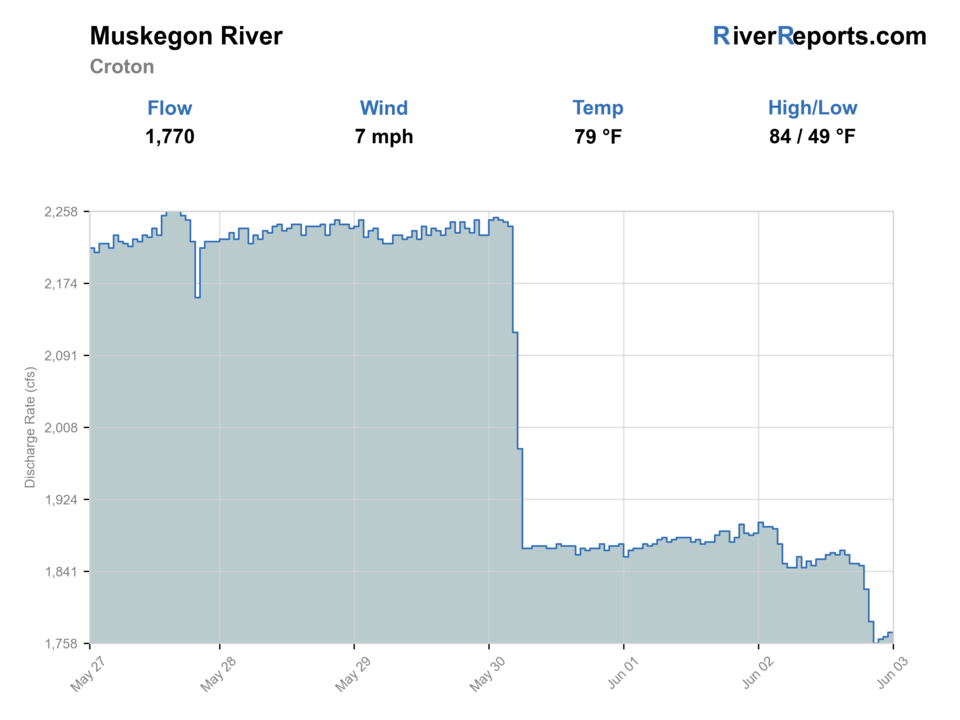
USGS data chart
Official USGS trend
Streamflow over the latest USGS reporting window.
Latest
1,770 cfs
Jun 3, 5 PM UTC
Weather
River weather report
Weather can change wading safety, road access, water temperature, hatches, and the best time of day to fish.
Live forecast loads as you reach this section
This keeps the report fast while still using the official National Weather Service forecast point.
Hatches and flies
Hatch chart and fly picks
March to April
Steelhead movement, midges, black stones, early olives
Stonefly nymph, egg pattern where legal, alevin, BWO nymph, leech
May to June
Caddis, sulphurs, brown drakes, baitfish
Caddis dry, sulphur emerger, Brown Drake spinner, small sculpin
July to August
Terrestrials, caddis, small mayflies, warmwater baitfish
Foam ant, beetle, hopper-dropper, small streamer, crayfish
September to November
Salmon and steelhead movement, BWOs, October caddis
Stonefly nymph, egg where legal, leech, sculpin, October caddis
Steelhead nymphs
Stonefly, hex nymph, caddis larva, egg pattern where legal
Use in cold water, travel lanes, and holding slots during spring or fall movement.
Trout dries
Caddis, Sulphur, Brown Drake, Isonychia, terrestrial
Use on resident trout when hatches or low-light surface feeding set up.
Streamers
Sculpin, leech, baitfish, small intruder, black bugger
Use during stained water, salmon/steelhead windows, or when browns hunt structure.
Warmwater backup
Crayfish, popper, Clouser, slider
Use on warmer lower reaches when bass are the better target than trout.
Tactics
How to fish it
Use the Croton flow to decide whether wading, bank fishing, or boat fishing is realistic.
In steelhead windows, cover soft edges, buckets, and tailouts before stepping into heavy current.
Swing streamers or baitfish patterns through slower edges when fish are moving.
For summer smallmouth, fish poppers and crayfish around rocks, shade, and current seams.
Respect boat lanes and do not anchor or wade in a way that blocks safe passage.
Rigging
Rod, leader, and setup notes
A 7-weight or 8-weight is best for steelhead, salmon-season work, and sink tips.
A 6-weight covers smallmouth and lighter streamer days.
Carry indicators, split shot, sink tips, and floating lines so you can adjust by flow.
Use strong tippet and land fish quickly in big water.
A personal flotation plan matters if fishing from a boat or near high water.
Access
Access and planning notes
Croton flow check
Primary release decisionWade / float / trail
Gauge / boat / bank / cautious wade
When to pick it
Start here when release stability decides whether the river is fishable by boat, bank, or limited wading.
Caution
Changing releases can make big water unsafe before it looks different.
Lower Muskegon launches
Boat-first planningWade / float / trail
Boat / ramp / shuttle
When to pick it
Use this when the river is fishable but too large or pushy for comfortable wading.
Caution
Launch, take-out, private-bank, and boat-traffic details need current confirmation.
Seasonal runs and soft edges
Migratory or trout planWade / float / trail
Bank / wade edge / boat lane
When to pick it
Pick these when species timing, pressure, and rules match the water.
Caution
Redds, crowding, and handling stress can override a strong score.
The river is large enough that boat traffic changes the fishing plan.
High water below Croton can make familiar banks unsafe. Do not wade by habit.
Michigan rules and special reach language should be checked before planning around trout, salmon, or steelhead.
Regulations
Check before fishing
Michigan fishing regulations control species seasons, methods, size limits, and harvest. Check the exact Muskegon reach before fishing, especially during salmon and steelhead seasons.
Primary base
Newaygo, Croton, or Muskegon
Best day style
Tailwater bank, boat, drift, and public access below Croton
Check first
Croton flow, dam/generation changes, Michigan rules, and boat access
Safety
Dam-influenced flow, cold water, boats, spring high water, and crowded steelhead runs
Gear
Helpful gear for this water
6-weight or 7-weight rod
Covers resident trout, larger streamers, and light steelhead work.
8-weight rod
Better for heavy sink tips, wind, salmon, and fresh steelhead.
Wading staff
Michigan sand, logs, clay banks, and high spring water deserve caution.
Regulation copy
Carry the current Michigan rules because methods and reach boundaries can change by section.
Nearby water
Other water to research
Backup logic
High water
Use a boat-supported plan or compare Pere Marquette, Little Manistee, or Kalamazoo conditions.
Heat
Protect trout and steelhead in stressful temperatures; shift to smallmouth or another day when needed.
Storms or stain
Wait for Croton trend and visibility to settle before committing to seams or bank work.
Access issue
Use confirmed launches, parks, or legal banks only; pivot if private-bank or take-out details are unclear.
Pere Marquette River
A scenic trout, salmon, and steelhead river with famous fly-only water.
Little Manistee River
A smaller migratory-fish river with weir-specific planning.
Kalamazoo River
A warmwater smallmouth alternative when trout and steelhead are not the plan.
FAQ
Fast answers
Is Muskegon River fishable today?
Muskegon River looks very fishable right now. The live score is 96/100, based on current flow, weather, public alerts, and the report's planning context. Recheck the linked gauge and forecast before leaving because conditions can change quickly after rain, heat, access changes, or flow swings.
What flow is best for Muskegon River?
Use RiverReports and USGS 04121970 at Croton together. Stable releases are easiest for reading seams and soft edges; fast or changing dam-influenced water should move the plan toward boats, protected banks, or another day.
When should I skip Muskegon River?
Skip or narrow the plan when releases make wading unsafe, when temperature or handling stress is poor for trout, when salmon or steelhead crowds compress the access, or when launch and take-out logistics are not settled.
Is Muskegon River safe to wade right now?
The fishability score is not a wading guarantee. Wade only where your chosen access has safe edges, clear footing, legal entry, and no forced crossings; high, rising, stained, or storm-affected water should be treated conservatively.
What should I check first before fishing the Muskegon River?
Check the Croton flow, weather, boat access, and Michigan regulations before choosing wade or float water.
Are there special regulations on the Muskegon River?
Yes. Trout, salmon, and steelhead rules can vary by species and reach.
Is the Muskegon River a good fly-fishing river?
Yes, but only if you match the reach, season, water temperature, and target species. This page separates trout, migratory, and warmwater plans where that matters.
What flies should I bring for the Muskegon River?
Bring the hatch-chart flies, a few confidence nymphs, and a backup streamer or warmwater box so you can adjust to flow, clarity, and temperature.
How should I plan access for the Muskegon River?
Access is good in places, but the river is big, boat-heavy, and dam-influenced, so plan the exact reach.
Sources
Source set for this report
Reviewed 2026-05-31