Maine / Northeast
North Maine Woods Rivers
A regional North Maine Woods report for remote brook trout and salmon planning, road permits, gauges, special laws, access, flies, and safety.
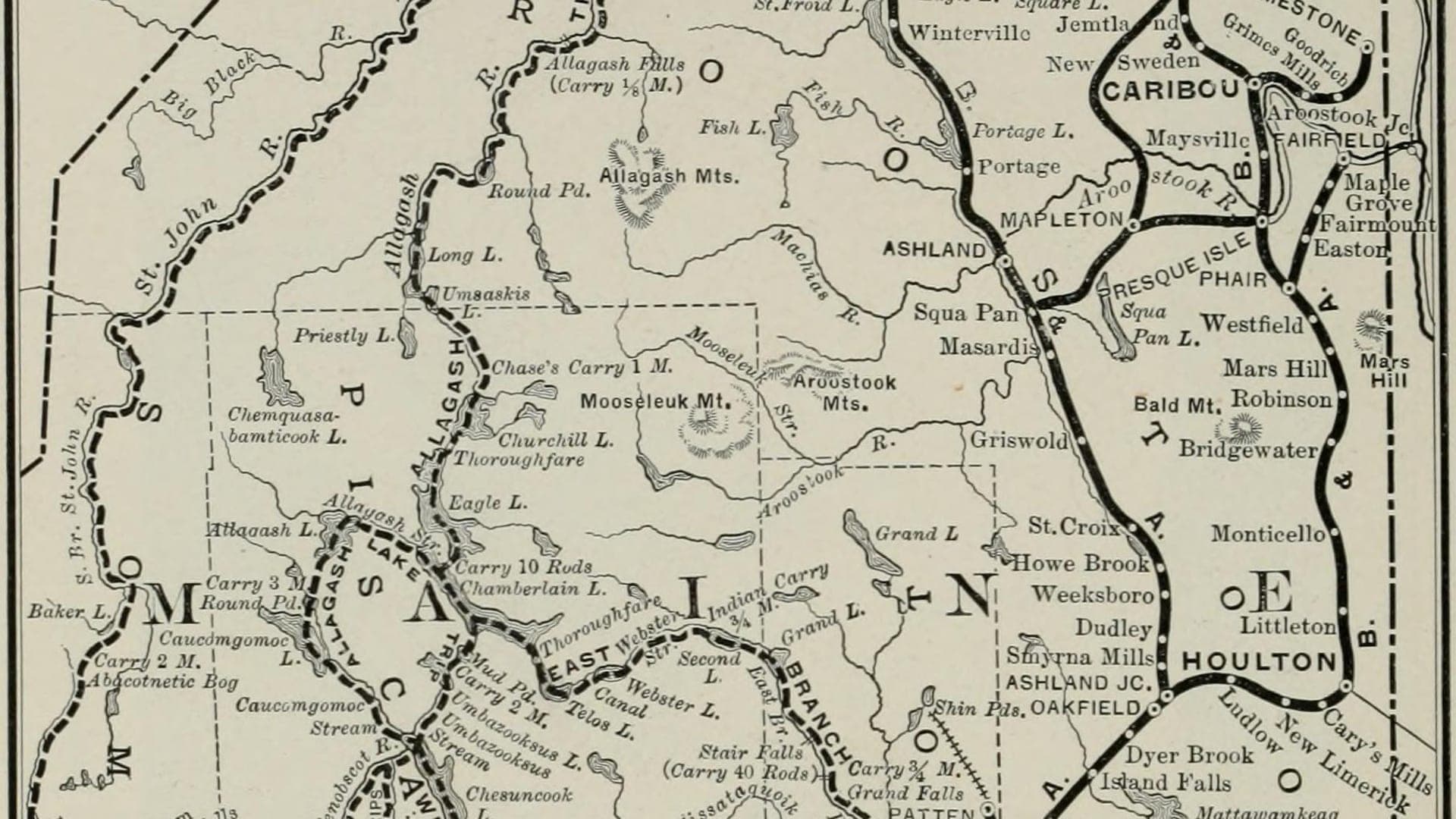
Image: In the Maine woods (1917) (14758546484) / No restrictions / Bangor and Aroostook Railroad CompanyFishability now: North Maine Woods Rivers fishability today
UnknownData confidence: Medium44/100
Check live sources first because flow has been checked, weather is usable, and no public alert is active.
Flow observed
Not returned
Weather observed
5:00 PM UTC
Score calculated
5:26 PM UTC
Why this rating
Flow
Weather
Public alerts
Next 6-12 hours
Hold
Wait for a better live check before committing the drive or choosing a wading plan.
Flow check
No live chart
Current trend: previous-score comparison will become more useful after repeated live checks.
More planning details: flies, flow bands, and live source checks
Fish it today
Start here
Pick the river first, then confirm Maine special laws, North Maine Woods fees and rules, checkpoint hours, road condition, gauge trend, weather, and the nearest realistic backup before packing flies.
Best flow clue
Use the source list as a gauge-selection menu. The Allagash, St. John, and Penobscot-side waters can move differently, so pair the chosen river's gauge with rain, road, and canoe-route conditions.
Skip trigger
Skip or shorten the trip when the exact waterbody rule is unclear, checkpoint or camping logistics are unresolved, roads are washed out, water is high enough to make crossings unsafe, or warm low water threatens trout handling.
Flow decision bands
Exact river chosen first
This page is regional, so fishability starts by choosing the specific Allagash, St. John, Aroostook, Penobscot-side, or small-stream plan.
Best remote planning window
Matched gauge trend, open roads, checkpoint logistics, mild weather, and checked special laws make the region most useful.
Wrong gauge or road uncertainty
If the gauge does not match the actual water, or road/fee/camping logistics are unresolved, treat the trip as not ready.
Warm, high, or remote-safety caution
High crossings, low warm trout water, storms, logging traffic, or no realistic exit plan should push the day to a focused backup.
Flow check
No live chart
Current trend: previous-score comparison will become more useful after repeated live checks.
No structured live flow
Use the linked flow and access sources before deciding.
Live NWS forecast
78F / Sunny
Water temperature not verified
Heat guidance uses weather and river type unless an official water-temperature value is available.
No NWS alert flag
No active NWS alert was returned for this forecast point.
Use Maine IFW special laws by exact waterbody; do not generalize rules across the region.
Use North Maine Woods fee and rule pages before driving private-road systems.
For flows, choose the relevant USGS or RiverReports gauge for the Allagash, St. John, Aroostook, or Penobscot-side water.
Build a backup plan because remote roads, washouts, heat, and high water can change the trip.
Editorial review
How this report is maintained
This report is maintained from current regulation, access, flow, weather, and public planning sources so anglers can make better trip decisions than a raw gauge or generic overview would allow.
Byline
BlueStreamFly editorial team
Reviewed by
BlueStreamFly source review
Maintained by
Mountain Brook Run LLC
Last material review
2026-06-02
Report confidence
Good confidence
80/100
Good confidence: Maine 2026 laws, North Maine Woods access sources, USGS and RiverReports gauge examples, weather data, and source-reviewed regional guidance support the page. Confidence is moderated because no single gauge, access rule, or fishery condition can describe every river in the region.
Regulations
Maine 2026 laws and special-law tools provide the correct legal-check path, but anglers must check the exact named water.
Access
North Maine Woods fee and FAQ sources support checkpoint, road, camping, and private-road planning.
Flow and weather
USGS Allagash and St. John gauges plus RiverReports Penobscot context support regional gauge selection, not one route-wide live score.
Fishing usefulness
The page now separates exact-water choice, matching the right gauge, checkpoints, logging roads, special laws, remote safety, temperature restraint, and backup-water decisions.
Fishability dashboard and source review
2026-06-02 / material content or source review
Maine 2026 fishing laws and special-law tools, North Maine Woods fee and FAQ sources, USGS Allagash and St. John gauge examples, RiverReports Penobscot North Branch context, National Weather Service point data, and source-reviewed regional guidance were checked before updating the current-fishability decision layer.
2026-06-02
Updated North Maine Woods Rivers to the current fishability-page standard with regional gauge-selection bands, checkpoint access cards, exact-water backup cues, stable fishability SEO, and confidence signals.
2026-05-29
Added North Maine Woods trip-fit guidance, regional gauge-selection framing, checkpoint and road nuance, exact-water regulation reminders, remote-safety planning, backup-water suggestions, editorial review signals, and a page-specific report-confidence meter after source review.
2026-05-24
Initial source-reviewed report published with flows, weather, hatches, flies, tactics, access, regulations, and FAQs.
Angler planning edge
Local details that change the plan
Best for
Anglers building a remote North Maine Woods trout or salmon trip around a specific river instead of one generic regional plan, Canoe, camp, and logging-road trips where checkpoint rules, fees, road status, and special laws are checked before travel, Brook trout, landlocked salmon, and remote-stream days where water temperature and backup access matter as much as fly choice, Experienced travelers who can match the exact water to the correct Maine rule, gauge, weather point, and road system
Wade or float
Treat this as a regional planning report, not a single wade-versus-float recommendation. The correct choice depends on the exact Allagash, St. John, Aroostook, Penobscot-side, or smaller stream plan.
Best flows
Use the source list as a gauge-selection menu. The Allagash, St. John, and Penobscot-side waters can move differently, so pair the chosen river's gauge with rain, road, and canoe-route conditions.
When to skip
Skip or shorten the trip when the exact waterbody rule is unclear, checkpoint or camping logistics are unresolved, roads are washed out, water is high enough to make crossings unsafe, or warm low water threatens trout handling.
Local plan
Pick the river first, then confirm Maine special laws, North Maine Woods fees and rules, checkpoint hours, road condition, gauge trend, weather, and the nearest realistic backup before packing flies.
Pressure
Pressure is usually less dense than roadside fisheries, but it concentrates around famous canoe routes, camps, and easier road access. Remote water still needs a second plan because one closure or washout can end the day.
Access nuance
North Maine Woods access depends on private-road systems, checkpoints, fee rules, camping limits, and active logging traffic. A blue line on a map is not enough permission or safety information.
Backup water
If a North Maine Woods route is blocked by roads, high water, heat, or logistics, compare the East Outlet Kennebec, Rapid River, or Magalloway River where the planning sources are more focused.
About the river
Setting, character, and why it fishes the way it does.
North Maine Woods is a large private-road and working-forest region with many coldwater rivers, streams, ponds, and canoe routes rather than one single reportable river.
The fishing draw is remote brook trout, landlocked salmon, cold tributaries, big woods scenery, and multi-day travel. The tradeoff is logistics: checkpoints, fees, road etiquette, fuel range, weather, and emergency planning.
This page is built as a planning hub so anglers do not mistake one Allagash, St. John, Aroostook, or Penobscot rule for another. Exact waterbody research is part of the trip.
Target species
Brook trout
The core native trout target in many cold tributaries, streams, and ponds.
Landlocked salmon
Relevant in selected river and lake-connected systems where rules allow.
Lake trout and whitefish
More relevant to connected lake systems; check the exact waterbody rule.
Warmwater or non-target fish
Species mix varies by water, so use IFW waterbody-specific sources.
Reading the water
Cold stable water
Best for dry-dropper fishing, small streamers, and covering pocket water carefully.
High water
Skip unsafe crossings and use larger river gauges before committing to a remote road.
Low warm water
Fish early, use a thermometer, and stop targeting trout when handling risk rises.
Remote tributaries
Move quietly, keep fish wet, and do not crowd fragile small-stream holding water.
Best seasons
Late spring
Road access, runoff, and blackfly timing matter as much as fly selection.
June
Often the most flexible brook trout and salmon window when water is cool and roads are workable.
Summer
Focus on cold mornings, shaded tributaries, and temperature checks.
Fall
Check September special laws, closures, and remote travel conditions before planning.
Flow
North Maine Woods regional gauge selection
No single flow chart can represent this regional page. Use the source list to choose the gauge for the exact Allagash, St. John, Aroostook, or Penobscot-side water you will fish.
Official water source
USGS Allagash River near Allagash and regional gauge examples
Use this as one official gauge example, then match the final plan to the exact river, road system, and special-law water before driving into remote country.
Open official sourceWeather
River weather report
Weather can change wading safety, road access, water temperature, hatches, and the best time of day to fish.
Live forecast loads as you reach this section
This keeps the report fast while still using the official National Weather Service forecast point.
Hatches and flies
Hatch chart and fly picks
April to May
Midges, early black stones, BWOs, smelt or baitfish movement
Zebra midge, black stonefly nymph, BWO emerger, soft hackle, smelt streamer
Late May to June
Caddis, mayflies, stoneflies, early terrestrials
Elk hair caddis, X-caddis, March Brown, golden stone nymph, pheasant tail
July to August
Caddis, small mayflies, ants, beetles, hoppers
Stimulator, foam ant, beetle, small caddis, tungsten dropper
September
BWOs, caddis, streamer and landlocked salmon windows
BWO dry, soft hackle, October caddis, small leech, feather-wing streamer
Dry-dropper
Stimulator, chubby, caddis dry, pheasant tail, hare's ear
Use for pocket water, banks, and mixed-depth riffles.
Technical dries
BWO, Sulphur, Hendrickson, comparadun, CDC emerger
Use during clear-water hatch windows and slower pools.
Small streamers
Woolly bugger, sculpin, leech, crayfish
Use after rain, in deeper buckets, or for smallmouth windows.
Warmwater flies
Clouser, crayfish, popper, slider
Use when the river shifts to bass or other warmwater species.
Tactics
How to fish it
Pick the exact river or stream first, then build the legal and flow plan around it.
Carry attractor dries, small nymphs, and compact streamers rather than overloading for one hatch.
Fish upstream, stay low, and avoid walking through likely holding water on small streams.
Use bigger flies or streamers only where the water, season, and fish size justify it.
Leave time to turn around if roads deteriorate or water becomes unsafe.
Rigging
Rod, leader, and setup notes
A 3-weight or 4-weight covers small brook trout water.
A 5-weight or 6-weight is better for bigger river salmon, wind, and streamers.
Pack spare leaders, extra tippet, a wading staff, and a repair kit.
Use barbless hooks where required and keep release tools easy to reach.
Carry offline maps because service can disappear quickly.
Access
Access and planning notes
North Maine Woods checkpoints
Trip permission and logisticsWade / float / trail
Private-road system / fees / camping
When to pick it
Start here when the route depends on gates, fees, camping, and logging-road travel.
Caution
Rules, hours, road status, and active logging traffic shape the fishing decision.
Allagash and St. John gauge examples
Regional flow matchingWade / float / trail
USGS / river selection
When to pick it
Use these only after matching the gauge to the exact river and reach.
Caution
A regional gauge cannot describe every remote stream in the North Maine Woods.
Penobscot-side and smaller waters
Backup and reach selectionWade / float / trail
RiverReports / map / rule check
When to pick it
Pick this when a focused Penobscot-side route is more practical than broad exploration.
Caution
Each named water needs its own special-law and access check.
Expect logging trucks, rough roads, limited fuel, limited service, and long response times.
Do not park in a way that blocks roads, landowner operations, gates, bridges, or launches.
Use current North Maine Woods pages and Maine IFW special laws rather than old forum directions.
Regulations
Check before fishing
This page cannot summarize one regulation for the whole North Maine Woods. Maine IFW special laws must be checked by exact waterbody, reach, method, and season.
Primary base
Ashland, Millinocket, Allagash, or a permitted North Maine Woods checkpoint
Best day style
Remote logging-road, checkpoint, canoe, and backcountry planning
Check first
North Maine Woods fees/rules, road status, Maine special laws, weather, and exact waterbody
Safety
No cell service assumptions, logging trucks, long drives, cold water, and limited rescue access
Gear
Helpful gear for this water
Repair kit
Carry spare leaders, a headlamp, map, first aid, and tire tools.
Satellite backup
Do not assume cell service on logging roads or remote carries.
Wading staff
Helpful on boulder water, cold tailwaters, and sudden releases.
Thermometer
Protect coldwater fish during warm, low, or slow conditions.
Nearby water
Other water to research
Backup logic
Road or checkpoint issue
Choose East Outlet Kennebec, Rapid River, or Magalloway where the access question is more focused.
High water
Match another exact water and gauge rather than guessing across the region.
Warm trout conditions
Fish only cooler windows or avoid stressing brook trout and salmon.
Rule uncertainty
Use Maine IFW special laws for the exact named water before fishing.
East Outlet Kennebec River
A more focused tailwater option with SafeWaters release planning.
Magalloway River
A western Maine border river with release and special-law planning.
Rapid River
A remote fly-only brook trout and salmon river with serious access logistics.
FAQ
Fast answers
Is North Maine Woods Rivers fishable today?
North Maine Woods Rivers needs a live-condition check before you commit. The live score is 44/100, based on current flow, weather, public alerts, and the report's planning context. Recheck the linked gauge and forecast before leaving because conditions can change quickly after rain, heat, access changes, or flow swings.
What flow is best for North Maine Woods Rivers?
Use the source list as a gauge-selection menu. The Allagash, St. John, and Penobscot-side waters can move differently, so pair the chosen river's gauge with rain, road, and canoe-route conditions.
When should I skip North Maine Woods Rivers?
Skip or shorten the trip when the exact waterbody rule is unclear, checkpoint or camping logistics are unresolved, roads are washed out, water is high enough to make crossings unsafe, or warm low water threatens trout handling.
Is North Maine Woods Rivers safe to wade right now?
The fishability score is not a wading guarantee. Wade only where your chosen access has safe edges, clear footing, legal entry, and no forced crossings; high, rising, stained, or storm-affected water should be treated conservatively.
What should I check first before fishing North Maine Woods rivers?
Pick the exact water first, then check the relevant USGS or RiverReports gauge, weather, road status, and checkpoint rules.
Are there special regulations on North Maine Woods rivers?
Yes, but the rules vary by exact waterbody. Maine IFW special laws are required reading.
Is North Maine Woods rivers easy to access?
No. Access is remote and depends on private-road rules, checkpoints, fees, weather, and road condition.
What flies should I bring for North Maine Woods rivers?
Bring the hatch chart flies, a few confidence nymphs or baitfish patterns, and a backup selection for high, low, clear, stained, cold, or warm conditions.
Sources
Source set for this report
Reviewed 2026-06-02