Idaho / West
Teton River
A valley-wide Teton River planning page for anglers who need to connect Driggs-area trout water, lower-valley access, and the main-stem rule set before committing to a float or long wade day.
Image: Generated regional planning image for Teton River / BlueStreamFly generated; not exact location / BlueStreamFlyFishability now: Teton River fishability today
GreatData confidence: High96/100
Fishable now because the live gauge is falling, weather is mild, and no public alert is active.
Flow observed
3:15 PM UTC
Weather observed
4:00 PM UTC
Score calculated
4:20 PM UTC
Why this rating
Flow
Weather
Public alerts
Next 6-12 hours
Improving / hold
A falling gauge and usable weather should keep the next 6-12 hours in play unless tributaries stain or heat builds.
USGS flow
1,300 cfs
Current trend: flow falling, rating likely holding strong unless weather or clarity changes.
More planning details: flies, flow bands, and live source checks
Fish it today
Start here
Compare the St. Anthony and Driggs gauges, choose one reach family for the day, launch from a named bridge access, and plan to quit before the river warms out.
Best flow clue
Stable moderate valley flows that keep side channels connected, banks defined, and enough water over meadow shelves to drift a dry-dropper or nymph rig cleanly.
Skip trigger
Skip when hot weather, weeds, or low late-summer water flatten the river, or when wind is strong enough that you cannot control a boat or a long leader.
Flow decision bands
Stable meadow flow
Stable St. Anthony flow, with Driggs context when upper water matters, is the best sign that side channels and cutbanks still have shape.
Low and clear
Low clear water can fish early, but it demands stealth, cooler temperatures, and careful cutthroat handling.
Weedy or warm valley water
Warm late-summer water, weeds, or thin side channels should shorten the day or move the trip elsewhere.
Wind or private-bank limit
Open-valley wind and private banks can make a good graph hard to turn into a good fishing day.
USGS flow
1,300 cfs
Current trend: flow falling, rating likely holding strong unless weather or clarity changes.
Live USGS flow
1,290 cfs / falling about 28%
Live NWS forecast
61F / Sunny
Water temperature not verified
Heat guidance uses weather and river type unless an official water-temperature value is available.
No NWS alert flag
No active NWS alert was returned for this forecast point.
Idaho Fish and Game lists the Teton as a recommended fishing water and the current rules allow no harvest of cutthroat trout plus unlimited harvest of rainbow trout and trout hybrids on the main stem.
Use RiverReports first, then back the trip with USGS 13055000 near St. Anthony and, for upper-basin context, USGS 13052200 above South Leigh Creek near Driggs.
Official access anchors are Bates Bridge, Harrops Bridge, Teton Dam, and the Upper Snake access guide's Rainey Bridge and Cache Bridge entries.
The IDFG 2021 Teton drainage survey notes low-flow and warm-water stress still matter here, so the better plan is to fish the coldest useful window instead of forcing the valley through the afternoon.
Editorial review
How this report is maintained
This report uses official regulation, flow, weather, access, and public-land sources first, then adds practical planning guidance for fly anglers.
Byline
BlueStreamFly editorial desk
Reviewed by
BlueStreamFly source review
Maintained by
BlueStreamFly
Last material review
2026-06-02
Report confidence
High confidence
90/100
High confidence: RiverReports, USGS 13055000 St. Anthony flow, USGS 13052200 Driggs context, Idaho Fish and Game Teton rules, named IDFG access sites, the Upper Snake access guide, Teton drainage background, weather coverage, generated media disclosure, and route-specific valley guidance support the page. Confidence is moderated by valley wind, weeds, warm water, private banks, and upper-versus-lower reach differences.
Regulations
Idaho Fish and Game Teton River sources support current cutthroat no-harvest and tributary-closure checks.
Access
IDFG Bates, Harrops, Teton Dam, and Upper Snake access-guide sources support public bridge and ramp planning, while private banks still need discipline.
Flow and weather
RiverReports, USGS 13055000 near St. Anthony, USGS 13052200 near Driggs, and the National Weather Service point support live flow and weather decisions.
Fishing usefulness
The page now separates main-stem and Driggs gauge context, cutthroat handling, bridge access, valley wind, weeds, warm-water stops, and Snake-system backups.
Fishability dashboard and source review
2026-06-02 / material content or source review
RiverReports, USGS 13055000 St. Anthony flow, USGS 13052200 Driggs context, Idaho Fish and Game Teton rules, named IDFG access sites, the Upper Snake access guide, Teton drainage survey context, National Weather Service data, and route-specific valley wind and temperature guidance were checked before updating the current-fishability decision layer.
2026-06-02
Updated the Teton River to the current fishability standard with dual-gauge trend bands, valley access cards, backup cues, stable fishability SEO, and confidence signals.
2026-05-26
Published a new main-stem Teton River report with full-river access planning, dual-gauge context, and cutthroat-focused timing guidance.
Angler planning edge
Local details that change the plan
Best for
Cutthroat-focused float or long-wade days, Early and late valley sessions, Anglers who will move reach by reach instead of treating the whole basin as one pool
Wade or float
Do both, but do them selectively. Wade when low water or wind make the valley fish small, and float only when depth, weeds, and access all line up.
Best flows
Stable moderate valley flows that keep side channels connected, banks defined, and enough water over meadow shelves to drift a dry-dropper or nymph rig cleanly.
When to skip
Skip when hot weather, weeds, or low late-summer water flatten the river, or when wind is strong enough that you cannot control a boat or a long leader.
Local plan
Compare the St. Anthony and Driggs gauges, choose one reach family for the day, launch from a named bridge access, and plan to quit before the river warms out.
Pressure
Pressure is manageable compared with Idaho's marquee rivers, but the best bridge accesses still collect anglers quickly when flows and hatches line up.
Access nuance
This is a bridge-and-ramp access river inside a private valley, so do not assume every promising bank is public or that every float has an easy mid-day exit.
Backup water
If the Teton turns too windy, weedy, or warm, pivot to Henry's Fork, the South Fork of the Snake, or an upper-valley half day on the Driggs reach after checking current conditions.
About the river
Setting, character, and why it fishes the way it does.
The Idaho Teton drains the west slope of the Teton Range, then spreads across a broad agricultural valley before joining the Henrys Fork system near St. Anthony. That geography gives it more weather and flow personality than the road map suggests.
Upper reaches around Driggs hold the classic meadow feel many anglers picture first, but the lower river matters too because it carries the valley's rule set, access pattern, and warm-season reality. The generic page works best when you need a full-river decision, not just an upper-river snapshot.
Idaho Fish and Game's long-term survey work makes one thing clear: the Teton still supports native Yellowstone cutthroat, but flow, temperature, and species balance all affect how responsibly this fishery should be approached.
Target species
Yellowstone cutthroat trout
The signature native fish here and the main reason this page pushes careful handling and no-harvest messaging.
Rainbow trout
Present throughout the drainage and subject to unlimited harvest on the main-stem Teton under current IDFG rules.
Cutbow trout
Hybrid fish show up in the valley and are part of the management conversation on this river.
Brook trout
Common enough in portions of the basin that they can shape mixed-bag days, especially upstream.
Mountain whitefish
A good indicator that you found depth and steady drift when trout are not rising.
Reading the water
Stable moderate valley flow
Best for float-style coverage, meadow-bank nymphing, and dry-dropper fishing where side channels still have life.
Low clear summer flow
Fish early, fish lighter, and focus on undercut banks or deeper meadow bends instead of broad shallow glides.
Windy open-valley conditions
Expect reduced dry-fly control and tougher rowing or wading visibility; simplify the day around protected bends.
Warm or weedy late-summer afternoons
Carry a thermometer and end the trip when the river stops feeling like cutthroat water.
Best seasons
Late spring
Strong once runoff drops enough to reveal stable seams and legal tributary closures no longer shape the plan.
Early summer
Often the easiest blend of floatable current, cutthroat activity, and dry-dropper visibility.
Mid summer
Still possible in the right flow window, but temperature, weeds, and afternoon wind make discipline important.
Fall
A strong reset when cooler nights bring better water temperatures and steadier meadow fishing windows.
Preferred flow source
Teton River near St. Anthony
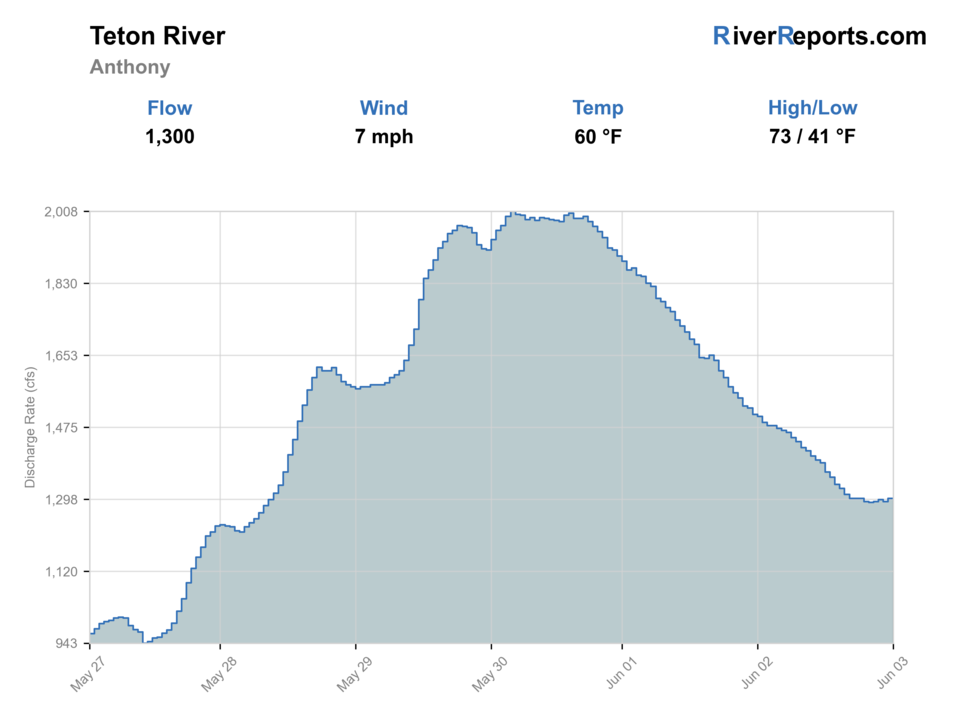
RiverReports is the preferred chart source when coverage exists. When a matching USGS gauge exists, keep it open as the official backstop for station data and current hydrograph context.
USGS data chart
Official USGS trend
Streamflow over the latest USGS reporting window.
Latest
1,300 cfs
Jun 3, 4 PM UTC
Weather
River weather report
Weather can change wading safety, road access, water temperature, hatches, and the best time of day to fish.
Live forecast loads as you reach this section
This keeps the report fast while still using the official National Weather Service forecast point.
Hatches and flies
Hatch chart and fly picks
Spring
Midges, BWOs, and early caddis
Zebra midge, BWO emerger, soft hackle, caddis pupa
Early summer
PMDs, caddis, yellow sallies, and attractor dry windows
PMD cripple, elk hair caddis, yellow stimulator, pheasant tail
Summer
Terrestrials, caddis, and hopper windows
Foam ant, hopper, beetle, small dropper nymph
Fall
BWOs, midges, and small streamers
Parachute BWO, RS2, zebra midge, olive bugger
Meadow nymphs
Pheasant tail, hare's ear, perdigon, zebra midge, caddis pupa
The default on deeper banks and faster troughs when fish are not looking up.
Dry-dropper
Stimulator, chubby, hopper, ant, compact tungsten nymph
Best when summer bank grass and stable current make covering water more efficient.
Technical dries
PMD, BWO, caddis, spinner, ant
Useful on calmer slicks or evening rises when the wind finally backs off.
Light streamers
Mini sculpin, olive bugger, leech
Most useful during cloud cover, shoulder-season chop, or on the lower river with a little color.
Tactics
How to fish it
Use the lower St. Anthony gauge to decide whether the river still has enough shape for a full-day main-stem plan, then choose access accordingly.
Cover the meadow banks, undercuts, and deeper outside bends before you start blind-casting the broad center current.
When wind builds, shorten the session and fish the most protected bend, side seam, or bridge-access reach instead of fighting the whole valley.
If the upper Driggs gauge and lower St. Anthony gauge disagree sharply, narrow the trip to one reach and fish it like a separate river.
Rigging
Rod, leader, and setup notes
A 4- to 6-weight floating-line setup covers most Teton River scenarios.
Carry 4X through 6X tippet because this river swings between hopper banks and clear technical slicks.
A compact indicator rig, a dry-dropper leader, and one small streamer setup are enough for most days.
A thermometer and good sun-wind layers are as important as extra fly boxes on this open valley water.
Access
Access and planning notes
Bates Bridge
Upper public anchorWade / float / trail
IDFG access / wade / small craft
When to pick it
Start here when upper-valley flow and wind make a focused bridge session realistic.
Caution
Bridge access does not make every meadow bank between crossings public.
Harrops Bridge
Middle-valley accessWade / float / trail
IDFG access / ramp / wade edge
When to pick it
Use it when the full-river plan needs a named public bridge and current flow supports movement.
Caution
Low water, weeds, and wind can shrink the useful float or wade window.
Teton Dam and lower river
St. Anthony-side checkWade / float / trail
IDFG access / lower basin
When to pick it
Pick it when lower-valley flow and access match the day better than upper meadow water.
Caution
Lower water can warm and private frontage still shapes the actual plan.
The Teton has real public access, but the river is still a private-land valley system, so bridge launches and named access sites matter.
Upper-river bridge sites fish differently from the lower valley. Pick the reach that matches the day's flows rather than assuming the whole river is interchangeable.
Boat access does not automatically mean easy floating in every condition. Low water, grass, and wind can shrink the practical float window quickly.
Regulations
Check before fishing
Idaho Fish and Game's current Teton River rules allow no harvest of cutthroat trout and no limit on rainbow trout or trout hybrids on the main stem. Tributaries follow separate restrictions, including a June 1 through June 30 fishing closure.
Primary base
Driggs or Tetonia for upper-river plans; St. Anthony or Rexburg for lower-river scouting and backup options
Best day style
Walk-wade and small-craft planning built around Idaho Fish and Game bridge launches, long meadow banks, and a flow-first valley approach
Check first
RiverReports trend, USGS 13055000 near St. Anthony, USGS 13052200 near Driggs, IDFG current Teton rules, and daily wind/temperature
Safety
Open-valley wind, warm water, deep undercut meadow banks, sudden weed buildup, and private-property boundaries
Gear
Helpful gear for this water
4- to 6-weight rod
A flexible range for hopper banks, indicator nymphing, and small streamer work.
Thermometer
Important because the river can feel fishable long after midday water temperatures say otherwise.
Wind-ready shell and glasses
The valley is wide open and glare plus gusts can change the day fast.
Boots with solid mud and grass traction
Bridge accesses and meadow banks can be slick even when the river looks gentle.
Nearby water
Other water to research
Backup logic
Low or warm water
Fish early near the coolest useful reach, then move to Henry's Fork or the South Fork Snake.
Wind
Shorten to protected bends, use bridge reaches, or move to a less exposed fishery.
Weeds
Fish cleaner channels or choose a larger tailwater instead of grinding fouled drifts.
Access uncertainty
Stay with IDFG bridge and ramp access instead of crossing private meadow banks.
Teton River at Driggs
A more upper-valley version of the same drainage when you want the South Leigh gauge to drive the whole day.
Henry's Fork of the Snake River
A more famous and often steadier option when you want more defined hatches and classic float infrastructure.
South Fork of the Snake River
A larger tailwater-style backup when Teton valley wind or low water pushes you elsewhere.
FAQ
Fast answers
Is Teton River fishable today?
Teton River looks very fishable right now. The live score is 96/100, based on current flow, weather, public alerts, and the report's planning context. Recheck the linked gauge and forecast before leaving because conditions can change quickly after rain, heat, access changes, or flow swings.
What flow is best for Teton River?
Stable moderate valley flows that keep side channels connected, banks defined, and enough water over meadow shelves to drift a dry-dropper or nymph rig cleanly.
When should I skip Teton River?
Skip when hot weather, weeds, or low late-summer water flatten the river, or when wind is strong enough that you cannot control a boat or a long leader.
Is Teton River safe to wade right now?
The fishability score is not a wading guarantee. Wade only where your chosen access has safe edges, clear footing, legal entry, and no forced crossings; high, rising, stained, or storm-affected water should be treated conservatively.
What is the most useful Teton River gauge?
For this full-river page, start with RiverReports and USGS 13055000 near St. Anthony, then compare it to USGS 13052200 near Driggs if you are choosing between upper and lower valley water.
Can I keep cutthroat trout on the Teton River?
No. Current Idaho Fish and Game rules say there is no harvest of cutthroat trout on the main-stem Teton River.
When should I skip the Teton River?
Skip when the valley is running hot, low, or weedy enough to flatten the trout water, or when all-day wind will keep you from fishing the meadow seams cleanly.
Sources
Source set for this report
Reviewed 2026-06-02