California / West
Feather River
A lower Feather River report focused on Oroville-area access, hatchery boundaries, steelhead and salmon rule checks, shad, and flow planning.
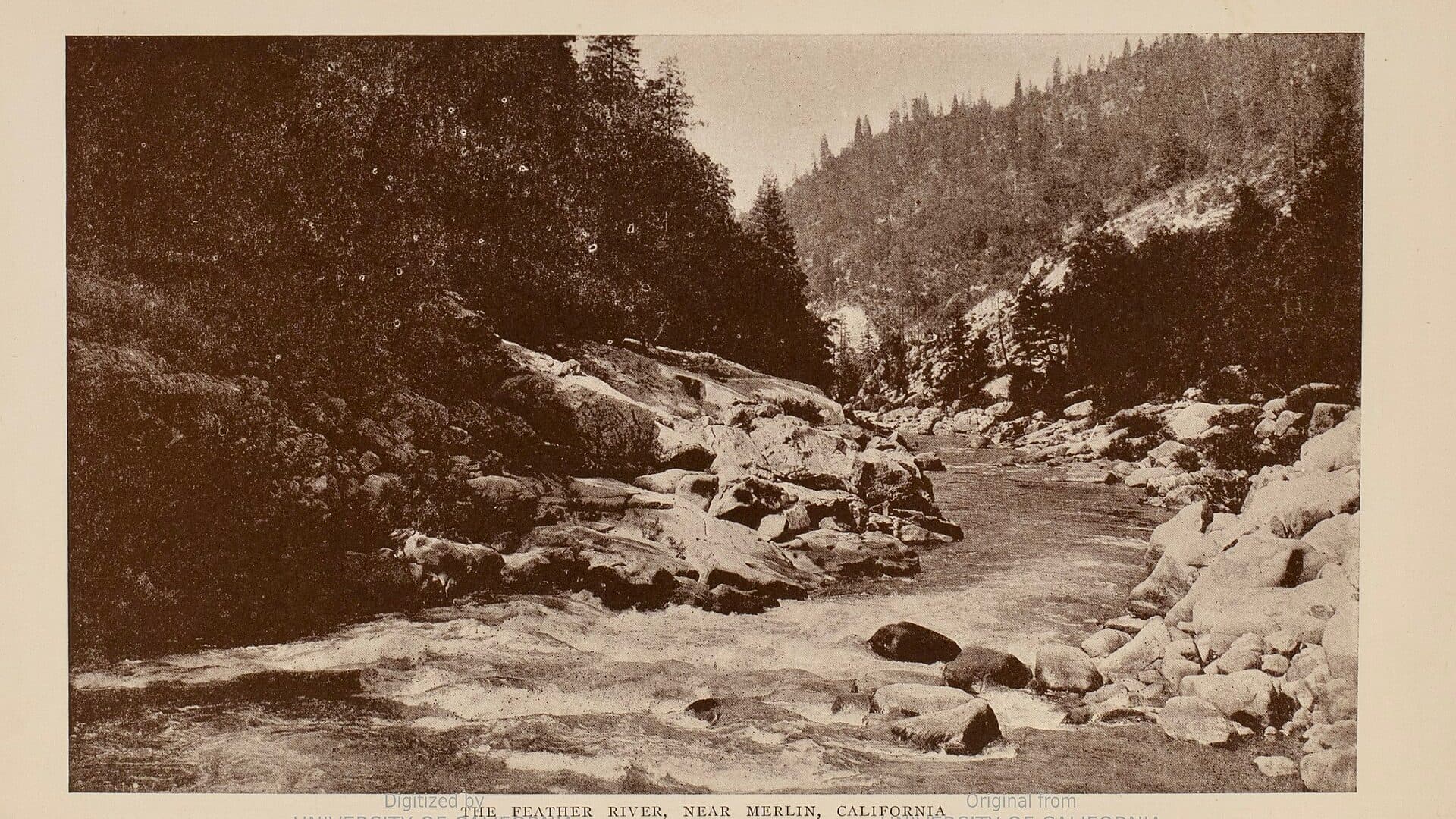
Image: Feather River near Merlin, California circa 1916 / Public domain / SandersFishability now: Feather River fishability today
UnknownData confidence: High44/100
Check live sources first because flow has been checked, weather is mild, and no public alert is active.
Flow observed
Not returned
Weather observed
4:00 PM UTC
Score calculated
4:20 PM UTC
Why this rating
Flow
Weather
Public alerts
Next 6-12 hours
Hold
Wait for a better live check before committing the drive or choosing a wading plan.
USGS flow
Check gauge
Current trend: previous-score comparison will become more useful after repeated live checks.
More planning details: flies, flow bands, and live source checks
Fish it today
Start here
Build the day around one lower-river objective: shad lanes, steelhead-style riffles, or lower-river striper structure. Start near the Oroville wildlife-area and hatchery corridor only after confirming the current rule boundary, then decide whether you are making a short wade plan or a longer downstream coverage day.
Best flow clue
Use the Oroville gauge as lower-river trend context, not as permission by itself. The better fly-fishing windows are the ones where releases are steady enough to let you fish edges and travel lanes safely; if release changes or local conditions make the river pushy, shift to bank-oriented water or skip it.
Skip trigger
Skip the trip when you cannot identify the exact legal reach, when hatchery-boundary or salmon-season rules are unclear, when releases make edge access unsafe, or when the day you really want is a small-stream trout trip rather than a big lower-river plan.
Flow decision bands
Low but fishable
Lower stable flows can support bank, riffle, and swing plans when the legal reach and species timing are clear.
Best lower-river window
Stable Oroville flow, mild weather, and current CDFW rule status are the best signal for steelhead, shad, or striper plans.
Pushy or unsafe
High or rising releases should move the plan away from crossings and toward banks, boats, or another river.
Hatchery or salmon-rule risk
Current CDFW boundaries and salmonid rules can override otherwise good-looking conditions.
USGS flow
Check gauge
Current trend: previous-score comparison will become more useful after repeated live checks.
No current flow value
The source loaded, but did not return streamflow or gauge height.
Live NWS forecast
71F / Sunny
Water temperature not verified
Heat guidance uses weather and river type unless an official water-temperature value is available.
No NWS alert flag
No active NWS alert was returned for this forecast point.
Check CDFW's current Central Valley and freshwater regulations before fishing.
Know the Fish Barrier Dam and hatchery-area closures before casting.
Use USGS and CNRFC context for flow, but confirm local release and access conditions.
For fly anglers, the lower river is a different plan from the North Fork or Middle Fork canyon waters.
Editorial review
How this report is maintained
This lower Feather River report is maintained from current regulation, hatchery, access, flow, weather, and safety sources so anglers can plan the right reach instead of relying on stale generalizations.
Byline
BlueStreamFly editorial team
Reviewed by
BlueStreamFly source review
Maintained by
Mountain Brook Run LLC
Last material review
2026-05-31
Report confidence
Good confidence
89/100
Good confidence: USGS Oroville flow, CNRFC context, CDFW Oroville Wildlife Area access, hatchery information, CDFW rule sources, OEHHA advisory material, and weather data support the page. Confidence is moderated by hatchery-zone details, annual salmonid rules, broad lower-river scope, and boat/access pressure.
Regulations
CDFW freshwater, salmonid, and hatchery context support the legal-check path.
Access
CDFW Oroville Wildlife Area and hatchery sources support public planning, while exact closures and bank choices still need current confirmation.
Flow and weather
USGS 11407000, CNRFC Feather context, and the National Weather Service point are attached to the route.
Fishing usefulness
The page now separates lower-river flow, hatchery boundaries, target-species timing, advisories, and backup choices.
Fishability dashboard and source review
2026-05-31 / material content or source review
USGS Oroville flow, CNRFC Feather River context, CDFW Oroville Wildlife Area access, Feather River Hatchery information, CDFW freshwater and salmon-rule sources, OEHHA advisory material, and the National Weather Service point were checked before updating the current-fishability decision layer.
2026-05-31
Updated Feather River to the current fishability-page standard with lower-river flow guidance, hatchery/access cards, backup cues, stable fishability SEO, and confidence signals.
2026-05-28
Added lower-river trip-fit guidance, wade-versus-boat framing, rule-sensitive skip cues, access nuance around hatchery and wildlife-area water, pressure timing, backup-water planning, and a page-specific report-confidence meter after source review.
2026-05-24
Initial source-reviewed report published with lower-river flows, access, regulation checks, species coverage, tactics, and FAQs.
Angler planning edge
Local details that change the plan
Best for
Lower-river fly anglers targeting shad, steelhead-style water, or seasonal striper windows, Trips where the exact reach and current rule set are chosen before the first cast, Boat-assisted or edge-wading days on a large Central Valley river, Anglers who want Oroville-area public access and hatchery context instead of remote canyon trout water
Wade or float
Treat the lower Feather as a mixed wade-or-boat plan. Stable lower flows can open edge wading and riffle access, but the broader lower river often fishes more efficiently from a boat or from targeted bank stops than from trying to cover everything on foot.
Best flows
Use the Oroville gauge as lower-river trend context, not as permission by itself. The better fly-fishing windows are the ones where releases are steady enough to let you fish edges and travel lanes safely; if release changes or local conditions make the river pushy, shift to bank-oriented water or skip it.
When to skip
Skip the trip when you cannot identify the exact legal reach, when hatchery-boundary or salmon-season rules are unclear, when releases make edge access unsafe, or when the day you really want is a small-stream trout trip rather than a big lower-river plan.
Local plan
Build the day around one lower-river objective: shad lanes, steelhead-style riffles, or lower-river striper structure. Start near the Oroville wildlife-area and hatchery corridor only after confirming the current rule boundary, then decide whether you are making a short wade plan or a longer downstream coverage day.
Pressure
The easiest hatchery-adjacent and wildlife-area stops get crowded fastest during salmon, steelhead, and spring shad windows. Midweek trips and lower-expectation warm-season hours usually spread people out better than fighting for the most obvious pullout.
Access nuance
The lower Feather looks open in places, but hatchery boundaries, wildlife-area rules, levee roads, and seasonal closures matter more than the satellite view. Use the Feather River and Oroville wildlife-area information plus current CDFW reach rules before assuming a bar, side channel, or trail is fishable public water.
Backup water
If lower Feather flows, closures, or crowding are wrong, pivot to the Lower Yuba for a more trout-focused tailwater day or to the American for another Central Valley river where urban access may fit the plan better.
About the river
Setting, character, and why it fishes the way it does.
The Feather River drains a large Sierra and Central Valley watershed and includes very different lower-river, North Fork, Middle Fork, and upper-canyon fishing contexts.
The lower Feather below Oroville is shaped by dam operations, hatchery management, anadromous fish, wildlife-area access, and annual CDFW rules.
CDFW and DWR hatchery work supports spring-run and fall-run Chinook salmon and steelhead management in the river corridor.
Because salmon seasons and hatchery-boundary rules can change annually, this page emphasizes source checking and reach selection rather than a one-size-fits-all report.
Target species
Steelhead and hatchery trout
A key fly-fishing focus in legal lower-river windows, with current rules and report-card requirements to verify.
Chinook salmon
Managed under annual regulations and hatchery context. Do not assume open harvest without checking CDFW.
American shad
A practical fly target in late spring and early summer when runs and flows line up.
Striped bass and warmwater species
Relevant in lower-river and connected-water planning, especially outside cool salmonid windows.
Reading the water
Stable lower flow
Look for legal riffles, swing water, shad lanes, and wadeable edges with careful boundary checks.
Higher release
Focus on bank safety, boat plans, side channels, and avoiding unsafe crossings.
Salmon-season context
Fishing ethics and rules become more sensitive. Verify the current year rules and avoid snagging behavior.
Warm season
Shad, stripers, and lower-river tactics may be more practical than trout or steelhead-style fishing.
Best seasons
Winter
Steelhead context depends on current rules, flows, and hatchery-boundary restrictions.
Spring
Shad and steelhead-style tactics can overlap with changing flows and regulation updates.
Summer
Shad, stripers, and warmwater tactics can matter, while salmonid stress and rules need care.
Fall
Salmon and steelhead context is rule-sensitive. Confirm CDFW annual season updates before fishing.
USGS flow
Feather River at Oroville
This is the fallback for rivers that are not covered by RiverReports. Use the official USGS monitoring page for the live hydrograph, station metadata, and current water trend.
Open USGS gaugeUSGS data chart
Feather River at Oroville
Streamflow over the latest USGS reporting window.
Weather
River weather report
Weather can change wading safety, road access, water temperature, hatches, and the best time of day to fish.
Live forecast loads as you reach this section
This keeps the report fast while still using the official National Weather Service forecast point.
Hatches and flies
Hatch chart and fly picks
Winter
Midges, small mayflies, eggs and alevin context
Egg, stonefly nymph, prince, copper john, small intruder
Spring
Caddis, mayflies, shad migration
Caddis pupa, soft hackle, shad dart, BWO, small streamer
Summer
Caddis, terrestrials, baitfish movement
Shad fly, clouser, caddis, hopper, crayfish pattern
Fall
Sparse mayflies and baitfish movement
Streamer, egg, stonefly, BWO, soft hackle
Steelhead
Egg, stonefly, copper john, prince, soft hackle, small intruder
Use only in legal steelhead water with current CDFW rules checked.
Shad
Shad dart, comet, pink wet fly, chartreuse fly
Use during spring and early summer travel lanes.
Stripers
Clouser, deceiver, baitfish, gurglers
Use in lower-river structure, low light, and baitfish movement.
Trout-style nymphs
Pheasant tail, hare's ear, caddis pupa, zebra midge
Use in legal riffle and tailout water when salmonid fishing is open.
Tactics
How to fish it
Choose lower Feather, North Fork, or Middle Fork context before reading any fly recommendation.
For this lower-river page, start with hatchery boundaries and current annual regulations.
Swing flies through legal riffle and tailout water when flows are stable.
For shad, find travel lanes and adjust fly depth until you touch fish.
For stripers, fish structure and low-light baitfish water with stronger tackle.
Avoid snagging behavior and give spawning or staging salmonids wide space.
Rigging
Rod, leader, and setup notes
A 9-foot 6-weight is a practical lower Feather all-around rod.
Use a 7-weight or 8-weight for stripers, heavier tips, and windy shad evenings.
Carry floating line, sink tips, indicators, and swing leaders.
Use tippet appropriate to species: light enough for nymphs, strong enough for shad or stripers.
Bring report cards and licenses required by current CDFW rules.
Access
Access and planning notes
Oroville Wildlife Area
Primary public access frameWade / float / trail
Bank / wade / boat scout
When to pick it
Start here when flow, rules, and public access all support the target species.
Caution
Wildlife-area access does not remove hatchery or seasonal rule checks.
Feather River Hatchery orbit
Boundary and run-timing checkWade / float / trail
Regulation / access boundary
When to pick it
Use it when fishing near Oroville and current hatchery-zone rules are central.
Caution
Posted closures and current CDFW rules decide where you can fish.
Lower river runs
Shad, steelhead, or striper pivotWade / float / trail
Bank / boat / swing lanes
When to pick it
Pick lower water when the species target and flow support a safer plan.
Caution
Boat traffic, advisories, and rule changes need current checks.
CDFW lower Feather rules vary by bridge, dam, hatchery, boat ramp, and season.
Annual salmon rules can change and can close or alter otherwise familiar reaches.
CNRFC and USGS flow data provide context, but local release and access conditions still matter.
OEHHA fish-consumption advisories should be checked if harvest is part of the plan.
Do not use one lower-river report to plan North Fork or Middle Fork canyon fishing without separate source checks.
Regulations
Check before fishing
Verify CDFW's current lower Feather River regulations before fishing. Reach boundaries around Fish Barrier Dam, Table Mountain bicycle bridge, hatchery areas, salmon rules, trout/steelhead rules, and annual updates can materially change the plan.
Primary base
Oroville, California
Best day style
Lower-river access with complex reach rules
Check first
CDFW annual rules, hatchery closures, flow, and access
Safety
Dam releases, closed reaches, salmon updates, fish-consumption advisories
Gear
Helpful gear for this water
6-weight or 7-weight rod
Covers steelhead-style, shad, and general lower-river fly fishing.
Sink tips
Useful for swinging, shad, and streamer work at changing flows.
Report card and rule notes
Keep license and report-card requirements ready before targeting anadromous fish.
Stronger striper leader
Bring separate leaders for baitfish patterns and heavier lower-river fish.
Nearby water
Other water to research
Backup logic
High water
Avoid risky wading and compare American River or colder Sierra trout water.
Heat
Shift away from salmonid stress and consider shad, stripers, or a cooler river.
Storms or turbidity
Use USGS/CNRFC trend plus visibility before committing to a long swing or drift.
Access issue
Use official wildlife-area or hatchery-boundary guidance rather than guessing at banks.
American River
Another Central Valley anadromous river with hatchery-zone and annual rule checks.
North Yuba River at Goodyears Bar
A Sierra freestone trout option with a very different access and flow profile.
Fall River
A northern California spring-creek option when you want technical trout instead of anadromous water.
FAQ
Fast answers
Is Feather River fishable today?
Feather River needs a live-condition check before you commit. The live score is 44/100, based on current flow, weather, public alerts, and the report's planning context. Recheck the linked gauge and forecast before leaving because conditions can change quickly after rain, heat, access changes, or flow swings.
What flow is best for Feather River?
Use the Oroville gauge as lower-river trend context, not as permission by itself. The better fly-fishing windows are the ones where releases are steady enough to let you fish edges and travel lanes safely; if release changes or local conditions make the river pushy, shift to bank-oriented water or skip it.
When should I skip Feather River?
Skip the trip when you cannot identify the exact legal reach, when hatchery-boundary or salmon-season rules are unclear, when releases make edge access unsafe, or when the day you really want is a small-stream trout trip rather than a big lower-river plan.
Is Feather River safe to wade right now?
The fishability score is not a wading guarantee. Wade only where your chosen access has safe edges, clear footing, legal entry, and no forced crossings; high, rising, stained, or storm-affected water should be treated conservatively.
Which Feather River section does this report cover?
It focuses on the lower Feather around Oroville. The North Fork and Middle Fork need separate access and regulation checks.
Can I fish near the Feather River Hatchery?
Only where current CDFW rules and posted boundaries allow it. Some hatchery-adjacent reaches are closed.
What flies should I bring?
Bring steelhead nymphs and swing flies, shad flies, caddis and mayfly patterns, eggs, and striper streamers.
Are salmon rules current here?
This page links current CDFW sources, but salmon rules can change annually or in-season. Confirm before fishing.
Sources
Source set for this report
Reviewed 2026-05-31