Tennessee / Southeast
Little Pigeon River
A Little Pigeon report that separates West Prong trout and lower-river smallmouth context, with USGS flow, rules, weather, and access cautions.
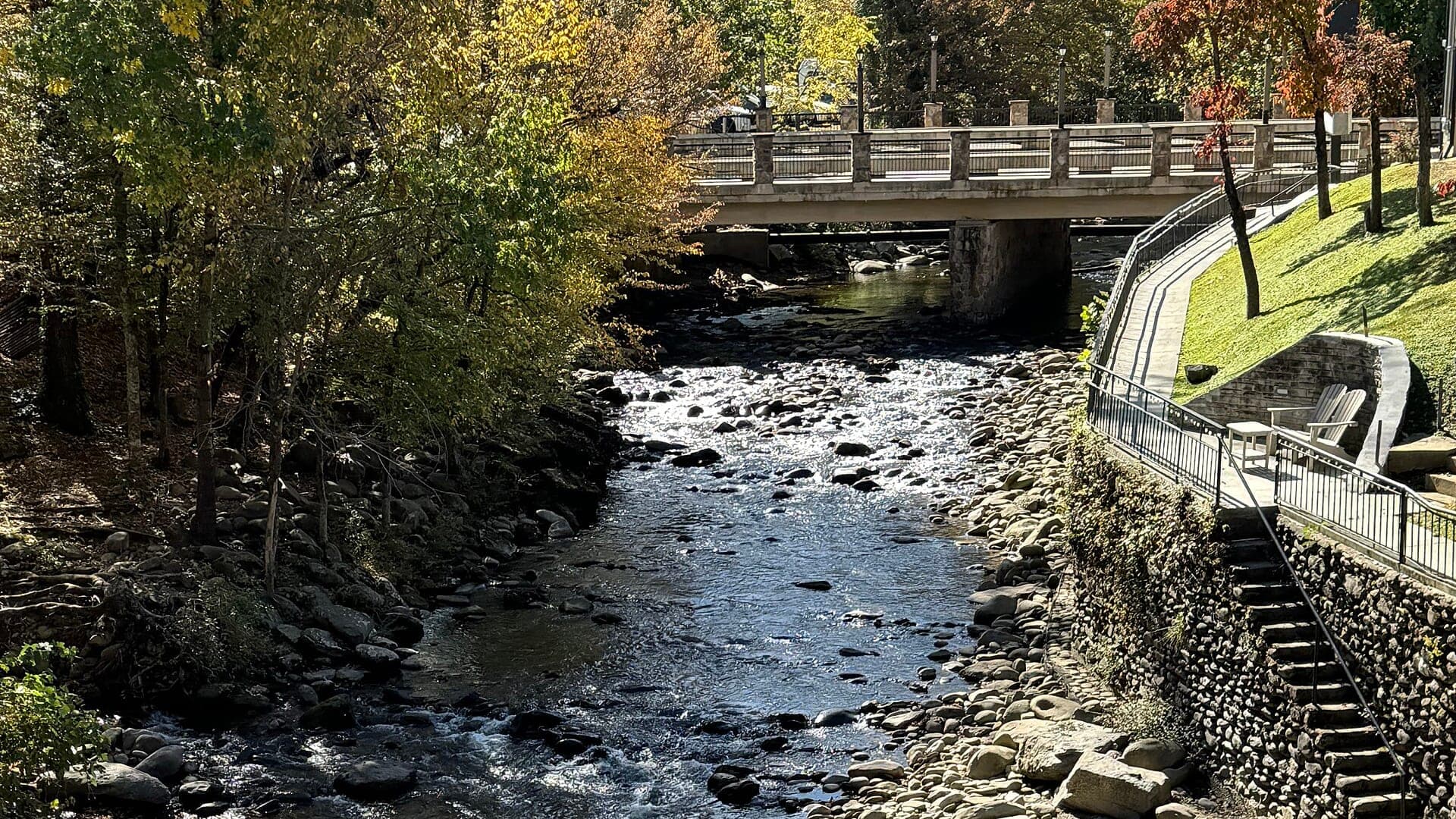
Image: Little Pigeon River - October 2023 - Sarah Stierch 01 / CC BY 4.0 / MissvainFishability now: Little Pigeon River fishability today
GreatData confidence: High91/100
Fishable now because Sevierville gauge is falling, weather is usable, and no public alert is active.
Flow observed
4:30 PM UTC
Weather observed
5:00 PM UTC
Score calculated
5:26 PM UTC
Why this rating
Flow
Weather
Public alerts
Next 6-12 hours
Improving / hold
A falling gauge and usable weather should keep the next 6-12 hours in play unless tributaries stain or heat builds.
USGS flow
419 cfs
Current trend: flow falling, rating likely holding strong unless weather or clarity changes.
More planning details: flies, flow bands, and live source checks
Fish it today
Start here
Start with the reach, then check NPS rules, TWRA exceptions, the Sevierville gauge, weather, and one legal access choice. Fish dry-droppers in mountain water, small streamers after safe rain bumps, and poppers or crayfish lower down.
Best flow clue
Use USGS 03470000 at Sevierville for lower/mainstem trend and safety context. It does not replace checking West Prong, park-prong, town-water, or storm conditions in the exact reach.
Skip trigger
Skip or pivot when Smokies storms are building, the lower river is rising or stained, trout water is too warm, tourist or private-bank access is unclear, or the current NPS and TWRA rule context has not been checked.
Flow decision bands
Reach first, then flow
The Little Pigeon fishes differently as park trout water, town water, and lower smallmouth water, so choose the reach before reading the gauge.
Best safe trend
Stable or slowly falling Sevierville flow with mild weather is the strongest lower/mainstem signal, but park-prong conditions still need local checks.
Storm rise or stain
Smokies thunderstorms, fast rises, stain, or unsafe crossings should shorten the plan or move it elsewhere.
Warm, crowded, or access-sensitive
Warm trout water, tourist traffic, private banks, or unclear NPS and TWRA rule context can make the day weaker than the gauge suggests.
USGS flow
419 cfs
Current trend: flow falling, rating likely holding strong unless weather or clarity changes.
Live USGS flow
419 cfs / falling about 17%
Live NWS forecast
76F / Sunny
Water temperature not verified
Heat guidance uses weather and river type unless an official water-temperature value is available.
No NWS alert flag
No active NWS alert was returned for this forecast point.
Use NPS and TWRA rules before fishing the West Prong or Gatlinburg-area water.
Lower mainstem tactics shift toward smallmouth, streamers, and warmwater patterns.
Summer storms can raise pocket water quickly and stain the lower river.
Tourist corridors and private land make access planning more important than a simple map pin.
Editorial review
How this report is maintained
This Little Pigeon River report is maintained from Tennessee Wildlife Resources Agency regulations and exception sources, Great Smoky Mountains National Park fishing rules, USGS Sevierville flow data, weather, media-credit, and Smokies-to-mainstem trout and smallmouth planning sources.
Byline
BlueStreamFly editorial team
Reviewed by
BlueStreamFly source review
Maintained by
Mountain Brook Run LLC
Last material review
2026-06-01
Report confidence
Good confidence
84/100
Good confidence: TWRA regulations and exceptions, Great Smoky Mountains National Park fishing rules, USGS Sevierville flow, weather coverage, image credit, and route-specific reach-selection guidance support the page. Confidence is moderated by reach complexity, limited explicit public-access sources outside park rules, town-water variation, private banks, tourist traffic, and storm response.
Regulations
TWRA regulations, TWRA exceptions, and Great Smoky Mountains National Park fishing rules support the current rule-check path.
Access
NPS and TWRA sources support the legal framework, but exact town access, private banks, parking, and local ordinances need current confirmation.
Flow and weather
USGS 03470000 at Sevierville and the National Weather Service point support lower/mainstem trend and weather context, but the gauge does not describe every park prong or town reach.
Fishing usefulness
The page now separates park trout, town-water rules, lower smallmouth, gauge limits, storm decisions, pressure, and backup-water choices.
Fishability dashboard and source review
2026-06-01 / material content or source review
TWRA fishing regulations and exceptions, Great Smoky Mountains National Park fishing rules, USGS 03470000 at Sevierville, the National Weather Service point, and image credit were checked before updating the current-fishability decision layer.
2026-06-01
Updated Little Pigeon River to the current fishability-page standard with Sevierville trend bands, reach-selection access cards, backup cues, stable fishability SEO, and confidence signals.
2026-05-28
Added reach-selection guidance for Smokies trout, town-water rules, and lower-river smallmouth, clarified Sevierville gauge limits, added access and tourist-corridor cautions, backup-water suggestions, editorial review signals, and a page-specific report-confidence meter after source review.
2026-05-25
Initial source-reviewed report published with flow, weather, hatches, flies, tactics, access, regulations, and FAQs.
Angler planning edge
Local details that change the plan
Best for
Smokies and Sevierville-area anglers deciding whether the Little Pigeon plan should be park trout, Gatlinburg-area rules, or lower-river smallmouth, Dry-dropper, small nymph, streamer, popper, and crayfish-pattern days where reach choice matters more than one generic river setup, Trips where NPS rules, TWRA exceptions, town access, storms, temperature, and private banks all need current checks, Anglers comparing Little Pigeon River with Little River, Tellico River, or Watauga River before choosing an East Tennessee plan
Wade or float
Treat the Little Pigeon as multiple fisheries. Park and West Prong water are not the same plan as lower Sevierville smallmouth water, so choose the reach before using the gauge or fly box.
Best flows
Use USGS 03470000 at Sevierville for lower/mainstem trend and safety context. It does not replace checking West Prong, park-prong, town-water, or storm conditions in the exact reach.
When to skip
Skip or pivot when Smokies storms are building, the lower river is rising or stained, trout water is too warm, tourist or private-bank access is unclear, or the current NPS and TWRA rule context has not been checked.
Local plan
Start with the reach, then check NPS rules, TWRA exceptions, the Sevierville gauge, weather, and one legal access choice. Fish dry-droppers in mountain water, small streamers after safe rain bumps, and poppers or crayfish lower down.
Pressure
Pressure and access friction follow tourist corridors, easy roadside water, and town events. A quieter legal reach and a backup plan usually beat pushing through crowded banks.
Access nuance
NPS and TWRA sources support the legal framework, but town ordinances, private banks, parking, and exact public access still need current confirmation.
Backup water
If Little Pigeon water is high, crowded, too warm, or access-limited, compare Little River for Smokies trout context, Tellico River for another mountain trout option, or Watauga River for a tailwater alternative.
About the river
Setting, character, and why it fishes the way it does.
The Little Pigeon drains the Smokies and moves through some of Tennessee's busiest mountain towns. That creates a mix of wild trout context, stocked or regulated town water, and lower smallmouth opportunities.
This page keeps the Sevierville USGS gauge tied to the lower/mainstem plan while still explaining why West Prong and park rules matter. That is more useful than pretending one gauge or rule controls every branch.
A good day starts with the reach: park trout, Gatlinburg rules, or lower smallmouth water. Then check flow, weather, temperature, and legal access before choosing flies.
Target species
Rainbow trout
Important in Smokies, West Prong, and managed town-water context.
Brown trout
Possible in larger pools and cooler trout reaches.
Brook trout
A higher-elevation Smokies context fish; check NPS rules and protect native water.
Smallmouth bass
More relevant in lower Little Pigeon mainstem and warmer water.
Reading the water
Clear mountain flow
Use dry-droppers, small nymphs, and short accurate casts.
Rain bump
Be careful with swift rises; streamers can work when color is safe.
Lower warmwater
Fish poppers, crayfish, and baitfish patterns around ledges and shade.
Hot weather
Check temperature and switch away from trout if water is stressful.
Best seasons
Spring
Mayflies, caddis, stones, and active trout make the mountain reaches appealing.
Summer
Early trout windows and lower-river smallmouth can both matter.
Fall
Cooler weather, lower crowds, and clear flows can improve trout fishing.
Winter
Slow nymphing works where trout water stays legal and accessible.
USGS flow
Little Pigeon River at Sevierville
This is the fallback for rivers that are not covered by RiverReports. Use the official USGS monitoring page for the live hydrograph, station metadata, and current water trend.
Open USGS gaugeUSGS data chart
Little Pigeon River at Sevierville
Streamflow over the latest USGS reporting window.
Latest
419 cfs
Jun 3, 4 PM UTC
Weather
River weather report
Weather can change wading safety, road access, water temperature, hatches, and the best time of day to fish.
Live forecast loads as you reach this section
This keeps the report fast while still using the official National Weather Service forecast point.
Hatches and flies
Hatch chart and fly picks
March to April
Quill Gordons, Blue Quills, little black stones, caddis, and early mayflies
Parachute Adams, Blue Quill, black stonefly nymph, caddis pupa, hare's ear
May to June
Yellow sallies, sulphurs, Light Cahills, caddis, and pocket-water dries
Yellow Sally, sulphur dry, Light Cahill, elk hair caddis, dry-dropper
July to September
Terrestrials, small yellow stones, beetles, ants, and low-water attractors
Foam ant, beetle, yellow stimulator, small hopper, green weenie
October to February
BWOs, midges, small stones, and slow nymphing in cold pocket water
BWO emerger, zebra midge, stonefly nymph, soft hackle, small pheasant tail
Dry-dropper
Parachute Adams, yellow stimulator, elk hair caddis, green weenie, small pheasant tail
Use in pocket water when fish are opportunistic but still need a nymph below.
Small dries
Blue Quill, BWO, Light Cahill, Yellow Sally, ant, beetle
Use during clear water, visible hatches, and low-pressure wild trout windows.
Small streamers
Olive bugger, black bugger, micro sculpin, small baitfish
Use after rain, in deeper plunge pools, or when smallmouth are in lower reaches.
Tactics
How to fish it
Choose trout or smallmouth water before rigging.
Use short dry-dropper casts in pocket water instead of long false casts.
Fish streamers after rain only when water is safe and visibility is useful.
Use poppers and crayfish around lower-river ledges in warm stable water.
Watch private land and town rules carefully before stepping off public access.
Rigging
Rod, leader, and setup notes
A 3 or 4-weight fits Smokies trout water; a 6-weight fits lower smallmouth.
Carry 5X and 6X for trout, plus 0X to 2X for bass streamers.
Short leaders help in tight pocket water.
A thermometer helps decide whether trout fishing is responsible.
Access
Access and planning notes
Sevierville gauge
Lower/mainstem trendWade / float / trail
USGS gauge / mixed fishery
When to pick it
Start here for lower river trend and safety context before deciding trout or smallmouth.
Caution
It does not describe every park prong, West Prong reach, town reach, or local storm cell.
Smokies and park-prong water
Trout reach choiceWade / float / trail
NPS / wade
When to pick it
Use it when park rules, cold water, and dry-dropper trout tactics are the plan.
Caution
Confirm NPS rules, road or trail status, storms, and warm-water stress.
Town and lower river
Access and target splitWade / float / trail
Wade / bank / smallmouth
When to pick it
Pick this when the day is more about legal access, lower-river trend, and smallmouth or mixed-water tactics.
Caution
Private banks, town ordinances, parking, and tourist pressure need current confirmation.
The Sevierville gauge is not a full substitute for West Prong or park-prong conditions.
Private banks, town ordinances, and tourist traffic can limit practical access.
Storms in the Smokies can change flow and clarity quickly.
Regulations
Check before fishing
Check TWRA exceptions, Gatlinburg trout rules, and Great Smoky Mountains National Park rules for the exact Little Pigeon reach before fishing.
Primary base
Gatlinburg, Pigeon Forge, Sevierville, or Townsend
Best day style
Mixed mountain trout, city trout rules, lower smallmouth water, and private-bank awareness
Check first
TWRA exceptions, Gatlinburg trout rules, NPS rules, USGS flow, weather, and temperature
Safety
Storm rises, tourist traffic, private access, swift pocket water, and summer heat
Gear
Helpful gear for this water
Three or four-weight rod
A short light rod fits pocket water and brushy Smokies reaches.
Dry-dropper leaders
Carry 5X and 6X for small wild trout and clear water.
Rubber-soled or felt legal boots
Check current park and state rules, then clean boots between waters.
Thermometer
Lower-elevation water can warm quickly in summer.
Small pack
Keep rain gear, water, and a simple fly box ready for roadside hiking.
Nearby water
Other water to research
Backup logic
Storms or high water
Compare Little River, Tellico River, or Watauga River rather than forcing fast Smokies runoff.
Warm trout water
Switch to smallmouth water where appropriate or choose a colder trout option.
Tourist or access pressure
Move to a quieter legal reach or another East Tennessee stream.
Rule uncertainty
Check NPS and TWRA context for the exact reach before fishing.
Little River
A nearby Smokies wild trout benchmark.
Clinch River
A cold tailwater option when mountain streams are high or warm.
Hiwassee River
A larger Tennessee trout tailwater with generation planning.
FAQ
Fast answers
Is Little Pigeon River fishable today?
Little Pigeon River looks very fishable right now. The live score is 91/100, based on current flow, weather, public alerts, and the report's planning context. Recheck the linked gauge and forecast before leaving because conditions can change quickly after rain, heat, access changes, or flow swings.
What flow is best for Little Pigeon River?
Use USGS 03470000 at Sevierville for lower/mainstem trend and safety context. It does not replace checking West Prong, park-prong, town-water, or storm conditions in the exact reach.
When should I skip Little Pigeon River?
Skip or pivot when Smokies storms are building, the lower river is rising or stained, trout water is too warm, tourist or private-bank access is unclear, or the current NPS and TWRA rule context has not been checked.
Is Little Pigeon River safe to wade right now?
The fishability score is not a wading guarantee. Wade only where your chosen access has safe edges, clear footing, legal entry, and no forced crossings; high, rising, stained, or storm-affected water should be treated conservatively.
What should I check first before fishing Little Pigeon River?
Check TWRA and NPS rules, USGS 03470000 for mainstem trend, weather, access, and water temperature.
Where should a first-time visitor start on Little Pigeon River?
Pick the reach first: West Prong or park trout water, Gatlinburg rules, or lower Sevierville smallmouth water.
Can I wade Little Pigeon River?
Yes in many places at safe flows, but storm rises and private access make caution important.
What flies should I bring for Little Pigeon River?
Bring the seasonal fly box, then adjust size, weight, and color to water level, clarity, temperature, and fishing pressure.
Sources
Source set for this report
Reviewed 2026-06-01