Oregon / West
Wood River
A Wood River report for brown trout, redband handling, small-boat access, RiverReports flow, hatches, and Klamath Basin planning.
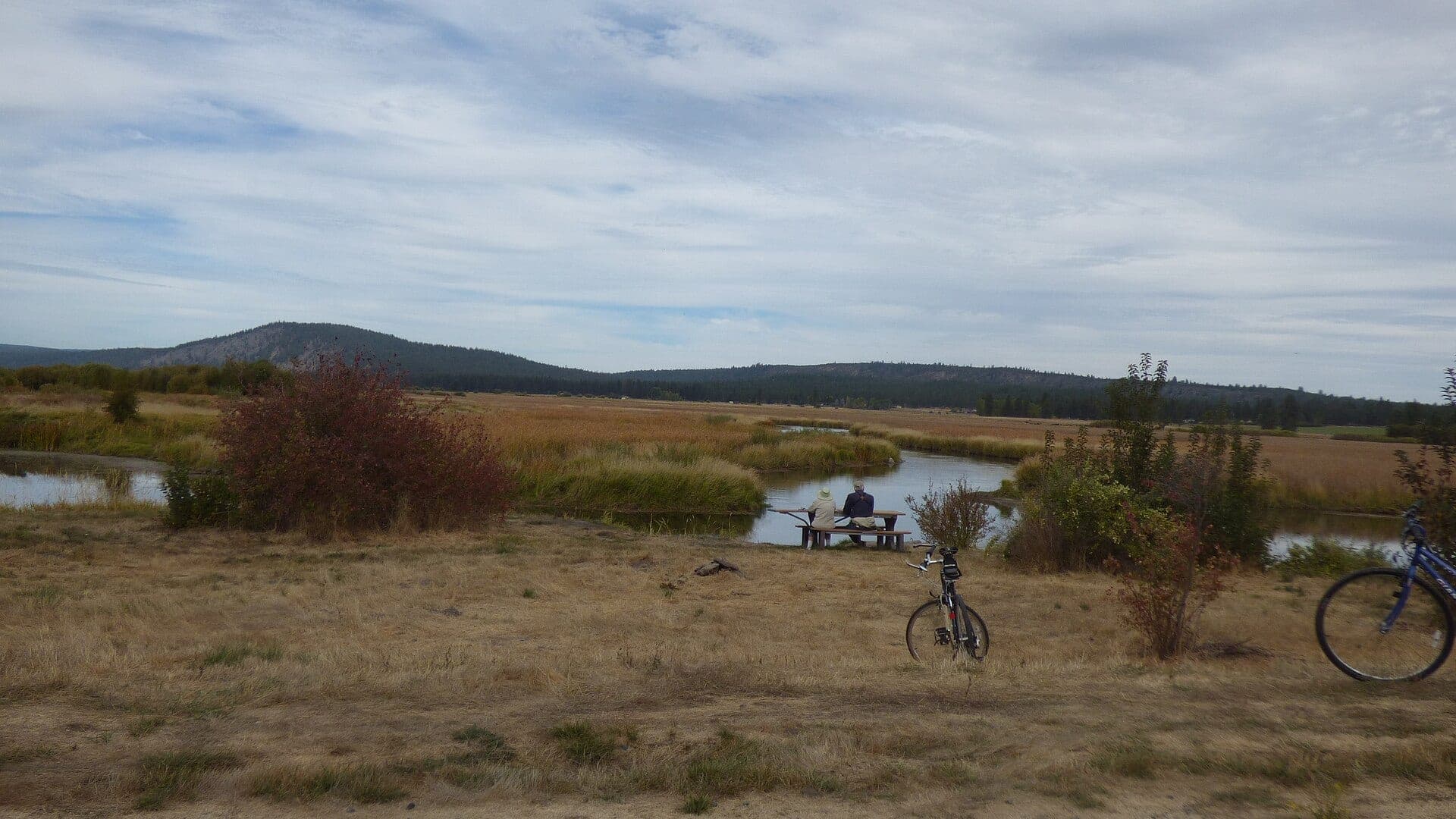
Image: Birds and birding at Wood River Wetland, southern Oregon (21382362534) / Public domain / Bureau of Land Management Oregon and WashingtonFishability now: Wood River fishability today
CautionData confidence: High66/100
Cautious now because the live gauge is rising, weather is mild, and a public alert may affect the plan.
Flow observed
4:40 PM UTC
Weather observed
5:00 PM UTC
Score calculated
5:24 PM UTC
Why this rating
Flow
Water temperature
Public alert
Next 6-12 hours
Watch
Recheck within the next few hours; rising water or active weather can change clarity and wading quickly.
USGS flow
344 cfs
Current trend: flow rising, rating can drop quickly if clarity or wading safety deteriorates.
More planning details: flies, flow bands, and live source checks
Fish it today
Start here
Start with the Wood River gauge, ODFW Southeast Zone updates, BLM Wood River Wetland information, and USFS day-use details. Decide whether the day is bridge, wetland, bank, or small-boat oriented before rigging.
Best flow clue
Use RiverReports and USGS 11504115 together. Stable, cool flow with manageable wind is best; low clear water, poor boat clearance, or warm conditions should make the plan slower, shorter, or move it elsewhere.
Skip trigger
Skip or pivot when access signs are unclear, wind makes boat control poor, flows or bridge clearance do not fit the plan, water is too warm for trout handling, or current Oregon rules have not been confirmed.
Flow decision bands
Stable and cool
Stable Wood River flow with cool weather is the best fit for a careful trout plan around bridges, wetland access, or a small-boat setup.
Best bridge and wetland window
A steady RiverReports and USGS trend with manageable wind is the cleanest signal for a precise Klamath Basin trout day.
Low clear or poor clearance
Low clear water, poor bridge clearance, or limited boat control should shrink the plan to careful banks, a short scout, or another river.
Wind or warm-water caution
The Wood becomes a weak call when wind controls the boat, warm water limits trout handling, or access signs are unclear.
USGS flow
344 cfs
Current trend: flow rising, rating can drop quickly if clarity or wading safety deteriorates.
Live USGS flow
434 cfs / rising about 17%
Live NWS forecast
60F / Mostly Sunny
Live water temperature
54F from USGS
Active public alerts
Frost Advisory issued June 3 at 4:55AM PDT until June 4 at 8:00AM PDT by NWS Medford OR
RiverReports coverage is verified, with USGS 11504115 as the official gauge source.
Below Weed Road and around BLM wetland access can be practical, but bank access is limited.
Brown trout tactics lean toward leeches, minnows, sculpins, crayfish, and careful low-light work.
Redband and bull trout sensitivity means quick handling and current ODFW rules matter.
Editorial review
How this report is maintained
This Wood River report is maintained from RiverReports and USGS Wood River flow data, Oregon sport-fishing regulations and updates, ODFW Southeast Zone information, BLM Wood River Wetland access, USFS Wood River Day Use information, weather, media-credit, and Klamath Basin spring-creek planning sources.
Byline
BlueStreamFly editorial team
Reviewed by
BlueStreamFly source review
Maintained by
Mountain Brook Run LLC
Last material review
2026-06-01
Report confidence
High confidence
90/100
High confidence: Oregon Southeast Zone sources, ODFW updates, BLM and USFS access anchors, RiverReports plus USGS Wood River flow support, weather coverage, and route-specific Klamath Basin trout guidance support the page. Confidence is moderated by limited bank access, private edges, wind, bridge clearance, and boat logistics.
Regulations
Oregon Southeast Zone regulations, updates, and ODFW Southeast Zone context support the current rule-check path.
Access
BLM Wood River Wetland and USFS Wood River Day Use sources provide strong public access anchors for trip planning.
Flow and weather
RiverReports Wood River, USGS 11504115, and the National Weather Service point provide strong live planning support for flow, wind, and warm-weather decisions.
Fishing usefulness
The page now separates flow trend, bridge and boat logistics, wetland and day-use access, wind skips, trout-handling caution, and nearby backup choices.
Fishability dashboard and source review
2026-06-01 / material content or source review
RiverReports Wood River, USGS 11504115, Oregon Southeast Zone regulations and updates, ODFW Southeast Zone fishing information, BLM Wood River Wetland access, USFS Wood River Day Use information, the National Weather Service point, and image credit were checked before updating the current-fishability decision layer.
2026-06-01
Updated Wood River to the current fishability-page standard with Klamath Basin flow bands, access cards, backup cues, stable fishability SEO, and confidence signals.
2026-05-28
Added Klamath Basin small-river trip fit, boat and bridge planning, brown-trout and redband handling guidance, wetland and day-use access nuance, backup-water suggestions, editorial review signals, and a page-specific report-confidence meter after source review.
2026-05-25
Initial source-reviewed report published with flows, weather, hatches, flies, tactics, access, regulations, and FAQs.
Angler planning edge
Local details that change the plan
Best for
Klamath Basin anglers planning Wood River brown trout, redband trout, bridge, wetland, and small-boat days around flow and legal access, Trips where BLM wetland access, USFS day-use information, boat clearance, wind, and Oregon rule checks matter before flies, Low-light streamer, clear-water nymph, and careful bank or boat presentations on a small spring-influenced river, Anglers comparing Wood River with Williamson River, Upper Klamath River, or Owyhee River before choosing an eastern Oregon plan
Wade or float
Treat the Wood River as small, precise, access-limited water. Some wading can work, but bridges, wetland access, small boats, private edges, and fish-handling concerns should shape the day first.
Best flows
Use RiverReports and USGS 11504115 together. Stable, cool flow with manageable wind is best; low clear water, poor boat clearance, or warm conditions should make the plan slower, shorter, or move it elsewhere.
When to skip
Skip or pivot when access signs are unclear, wind makes boat control poor, flows or bridge clearance do not fit the plan, water is too warm for trout handling, or current Oregon rules have not been confirmed.
Local plan
Start with the Wood River gauge, ODFW Southeast Zone updates, BLM Wood River Wetland information, and USFS day-use details. Decide whether the day is bridge, wetland, bank, or small-boat oriented before rigging.
Pressure
Pressure tends to collect around practical access rather than long public banks. A quiet boat or bridge plan and careful casting lanes usually matter more than covering distance.
Access nuance
BLM and USFS sources provide useful public anchors, but the river still has limited bank access, private edges, bridge constraints, and day-specific boat logistics.
Backup water
If Wood River is windy, access-limited, warm, or too low for the intended setup, compare Williamson River for another Klamath Basin trout plan, Upper Klamath River for a broader southern Oregon option, or the Owyhee River for tailwater timing.
About the river
Setting, character, and why it fishes the way it does.
The Wood River is a Klamath Basin spring-fed system that feeds toward Agency Lake and Upper Klamath Lake. It is smaller and more intimate than the nearby Williamson or Klamath, but access can be more technical.
For fly anglers, the draw is a mix of brown trout, redband trout, and cold-water habitat where small changes in light, wind, and approach can matter. This is not a place for loud bank traffic or casual trespass.
The practical page goal is to help anglers decide whether they have the right access plan, boat setup, and handling mindset before making the drive.
Target species
Brown trout
A key Wood River target, especially with minnows, leeches, crayfish, and low-light streamer tactics.
Redband/rainbow trout
Handle carefully and follow current redband rules.
Brook trout and bull trout
Reach-dependent; bull trout require especially careful identification and release.
Reading the water
Clear stable water
Use stealth, small nymphs, leeches, and sight-fishing angles instead of heavy disturbance.
Wind
Fish protected banks, heavier nymphs, and small streamers when dry-fly accuracy fades.
Low light
Give browns a reason to move with leeches, sculpins, and baitfish patterns near cover.
Warm afternoons
Check temperature and shorten handling; nearby spring influence does not remove stress risk.
Best seasons
Spring
Legal opener windows and fresh access checks matter most.
Early summer
Caddis, stones, and baitfish-style tactics can all matter.
Late summer
Low-light and temperature-aware fishing are the safer plan.
Fall
Cooling water can improve brown trout streamer confidence.
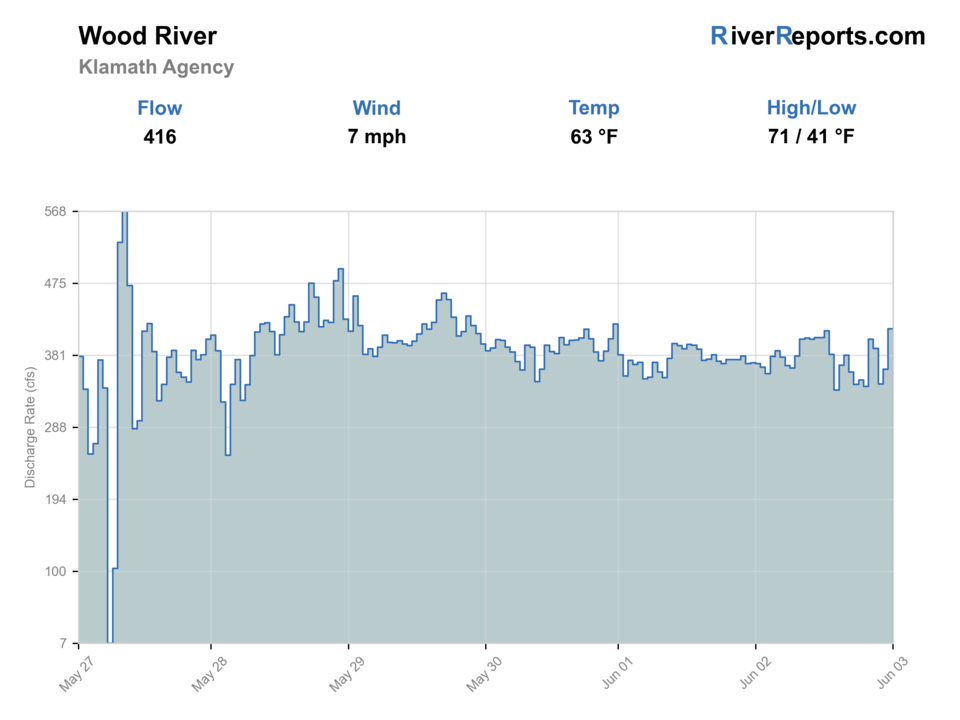
Preferred flow source
Wood River near Klamath Agency
RiverReports is the preferred chart source when coverage exists. When a matching USGS gauge exists, keep it open as the official backstop for station data and current hydrograph context.
USGS data chart
Official USGS trend
Streamflow over the latest USGS reporting window.
Latest
434 cfs
Jun 3, 4 PM UTC
Weather
River weather report
Weather can change wading safety, road access, water temperature, hatches, and the best time of day to fish.
Live forecast loads as you reach this section
This keeps the report fast while still using the official National Weather Service forecast point.
Hatches and flies
Hatch chart and fly picks
April to June
Salmonflies, golden stones, caddis, midges, and spring mayflies
Stonefly dry, golden stone nymph, caddis pupa, BWO emerger, soft hackle
July to August
Caddis, terrestrials, leeches, baitfish, and early or late cool-water windows
Elk hair caddis, ant, beetle, leech, sculpin, small baitfish streamer
September to October
Cooling water, October caddis, BWOs, midges, and streamer windows
October caddis, BWO emerger, zebra midge, leech, small sculpin
Winter and closures
Limited legal opportunity by reach, cold water, and slow presentations
Midge, small stonefly nymph, leech, soft hackle, small streamer
Nymphs
Perdigon, pheasant tail, hare's ear, zebra midge, stonefly
Use in riffles, buckets, and pocket water before fish commit to the surface.
Dries
BWO, caddis, sulphur, PMD, ant, beetle, small hopper
Use during visible hatches, spinner falls, or clear low-water sight fishing.
Streamers
Sculpin, leech, olive bugger, crayfish, small baitfish
Use on bumps in flow, cloudy days, and deeper banks with cover.
Tactics
How to fish it
Scout access first; the best fly box does not help if the bank or bridge plan is wrong.
Fish leeches, sculpins, and baitfish patterns around deeper edges and undercut cover.
Use light nymphs and emergers in clear water where trout are feeding but not chasing.
Keep casts short and accurate around weeds, banks, and boat lanes.
Identify fish before handling and release sensitive trout quickly.
Rigging
Rod, leader, and setup notes
A 5-weight with floating line covers most nymph, dry, and light streamer fishing.
A short sink-tip or weighted streamer setup helps in deeper brown trout lanes.
Carry 4X to 6X for clear-water trout and stronger 3X or 4X for larger streamers.
Bring forceps and a rubber net because quick release is central to this fishery.
Access
Access and planning notes
Wood River gauge and bridge check
Primary trout decisionWade / float / trail
Gauge / bridge / small-boat check
When to pick it
Start here when flow, bridge clearance, and boat control decide whether the plan is realistic.
Caution
A good trend does not remove wind, private-edge, parking, or safe launch decisions.
BLM Wood River Wetland
Public wetland anchorWade / float / trail
Wetland / bank / small craft
When to pick it
Use it when a supported public access framework matters more than guessing around limited banks.
Caution
Wetland access still needs current road, wind, water-level, and legal-boundary checks.
USFS Wood River Day Use
Day-use access contextWade / float / trail
Day-use / bank / bridge plan
When to pick it
Pick it when the day is built around known day-use access instead of a broad river search.
Caution
Confirm parking, signs, and private edges before treating nearby water as open-ended access.
Expect limited public bank access and plan around legal entry, boat logistics, and posted land.
Low bridges and small-water travel can limit boat choices.
Do not treat the Wood as an Upper Klamath Lake page; this is a specific small-river plan.
Regulations
Check before fishing
Check ODFW Southeast Zone rules and updates for open dates, redband handling, bull trout sensitivity, and any reach-specific restrictions before fishing.
Primary base
Fort Klamath, Chiloquin, or Klamath Falls
Best day style
Small-boat, bridge, day-use, wetland, and limited bank access
Check first
ODFW Southeast Zone rules, RiverReports/USGS flow, boat clearance, wind, and access signs
Safety
Limited bank access, low bridges, cold spring water, bull trout handling, and boat logistics
Gear
Helpful gear for this water
Four or five-weight rod
Covers most dry-fly, nymph, and dry-dropper work.
Six-weight or streamer rod
Useful for wind, higher water, and larger flies.
Thermometer
Use it before catch-and-release trout fishing in warm weather.
Wading staff
Helpful on slick bedrock, pocket water, and pushy tailwater edges.
Barbless-hook box
Speeds handling on wild trout and special-regulation water.
Nearby water
Other water to research
Backup logic
Wind
Shorten to protected banks or compare Williamson River instead of fighting poor boat control.
Warm water
Fish only the coolest window or move to a colder trout option such as the Metolius.
Access or clearance issue
Use a confirmed BLM or USFS access point, or choose another Klamath Basin river rather than forcing a questionable entry.
Low clear pressure
Slow down, fish fewer lanes, or pivot to the Williamson or Upper Klamath if the Wood is too exposed.
Williamson River
A nearby Klamath Basin redband option with more famous lake-run trout timing.
Upper Klamath River
A bigger, more powerful redband river plan near Keno.
Metolius River
A separate Oregon spring-creek benchmark for technical trout fishing.
FAQ
Fast answers
Is Wood River fishable today?
Wood River is a cautious call right now. The live score is 66/100, based on current flow, weather, public alerts, and the report's planning context. Recheck the linked gauge and forecast before leaving because conditions can change quickly after rain, heat, access changes, or flow swings.
What flow is best for Wood River?
Use RiverReports and USGS 11504115 together. Stable, cool flow with manageable wind is best; low clear water, poor boat clearance, or warm conditions should make the plan slower, shorter, or move it elsewhere.
When should I skip Wood River?
Skip or pivot when access signs are unclear, wind makes boat control poor, flows or bridge clearance do not fit the plan, water is too warm for trout handling, or current Oregon rules have not been confirmed.
Is Wood River safe to wade right now?
The fishability score is not a wading guarantee. Wade only where your chosen access has safe edges, clear footing, legal entry, and no forced crossings; high, rising, stained, or storm-affected water should be treated conservatively.
What should I check first before fishing the Wood River?
Check ODFW rules, RiverReports, USGS 11504115, wind, boat access, and water temperature.
Where should a first-time visitor start on the Wood River?
Start with Weed Road, BLM Wood River Wetland, and USFS day-use information, then confirm legal access on site.
Can I wade the Wood River?
Some wading is possible, but much of the practical fishing depends on legal bank access and small-boat logistics.
What flies should I bring for the Wood River?
Bring the seasonal fly box, a few confidence nymphs or streamers, and enough tippet to change when flow, clarity, temperature, or pressure changes.
Sources
Source set for this report
Reviewed 2026-06-01