New York / Northeast
Chautauqua Creek
A Westfield-area Chautauqua Creek report for Lake Erie steelhead, public fishing rights, flow, special regulations, fly choices, and safety.
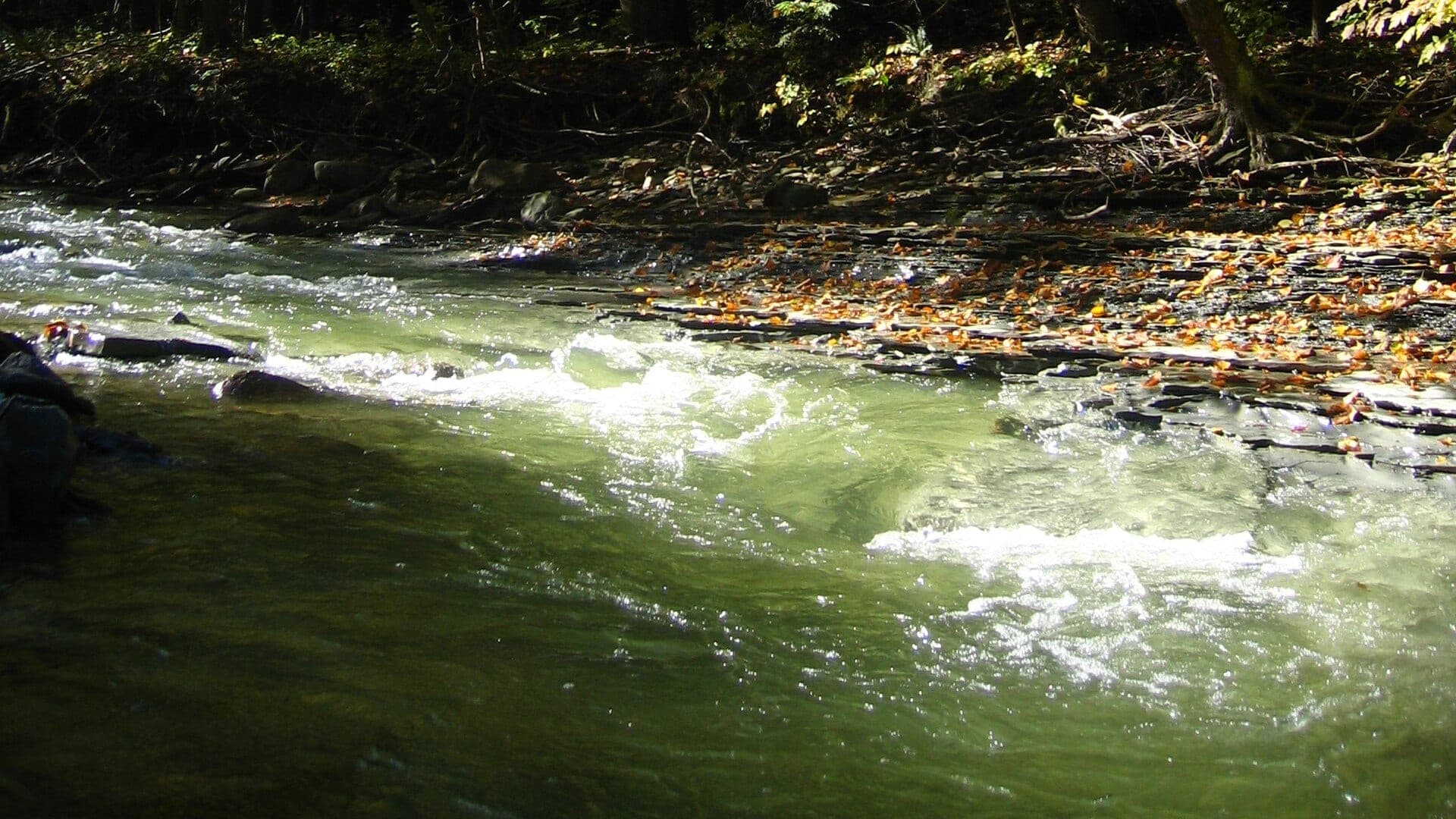
Image: Chautauqua Creek / Public domain / Oceangod8 ( talk ) ( Uploads )Fishability now: Chautauqua Creek fishability today
GreatData confidence: High96/100
Fishable now because the live gauge is falling, weather is usable, and no public alert is active.
Flow observed
5:00 PM UTC
Weather observed
5:00 PM UTC
Score calculated
5:26 PM UTC
Why this rating
Flow
Weather
Public alerts
Next 6-12 hours
Improving / hold
A falling gauge and usable weather should keep the next 6-12 hours in play unless tributaries stain or heat builds.
USGS flow
15 cfs
Current trend: flow falling, rating likely holding strong unless weather or clarity changes.
More planning details: flies, flow bands, and live source checks
Fish it today
Start here
Start with the Westfield gauge and the DEC public fishing rights map. Pick one legal access zone, watch clarity, and fish softer seams, tailouts, and travel lanes before moving to a backup tributary.
Best flow clue
Use RiverReports and USGS 04213319 below Westfield together. Dropping water with improving visibility is the cleanest steelhead window; sharp rises, brown water, shelf ice, or pushy shale runs should move the plan later.
Skip trigger
Skip or pivot when storms have the creek rising, visibility is poor, ice makes footing unsafe, public fishing rights are unclear for the reach, or current Great Lakes tributary rules have not been confirmed.
Flow decision bands
Low and clear
Low clear Chautauqua water can still fish, but softer presentations, lighter tippet, and careful travel-lane coverage matter more than trying to force fast water.
Best dropping and clearing window
Dropping Westfield flow with improving visibility is the cleanest signal for eggs, nymphs, small streamers, and a compact steelhead session.
High, stained, or unsafe
Hard rain, brown water, shelf ice, or current that turns the shale banks sketchy should move the day off the creek instead of forcing a bad tributary call.
Crowd or boundary pressure
A fishable graph still becomes a poor trip when the public-rights corridor is crowded or the exact legal bank is unclear.
USGS flow
15 cfs
Current trend: flow falling, rating likely holding strong unless weather or clarity changes.
Live USGS flow
15 cfs / falling about 16%
Live NWS forecast
74F / Sunny
Water temperature not verified
Heat guidance uses weather and river type unless an official water-temperature value is available.
No NWS alert flag
No active NWS alert was returned for this forecast point.
Use the Westfield gauge before expecting enough water for fish movement.
Know the South Gale Street to water-intake catch-and-release section before fishing.
Fish small and natural when the creek is low and clear.
After rain, wait for safe flows and enough visibility before entering the gorge.
Editorial review
How this report is maintained
This Chautauqua Creek report is maintained from RiverReports and USGS Westfield flow data, New York Great Lakes tributary regulations, DEC public fishing rights mapping, western New York steelhead stream context, weather, media-credit, and Lake Erie tributary planning sources.
Byline
BlueStreamFly editorial team
Reviewed by
BlueStreamFly source review
Maintained by
Mountain Brook Run LLC
Last material review
2026-05-31
Report confidence
High confidence
91/100
High confidence: RiverReports, USGS Westfield flow, New York Great Lakes tributary regulations, the DEC public fishing rights map, western New York steelhead guidance, public fishing rights, and weather support the page. Confidence is moderated by storm-driven stain, ice, crowding, and posted-bank details.
Regulations
New York Great Lakes tributary regulations support current method, season, and harvest-rule checks for the migratory reach.
Access
The DEC Chautauqua Creek public fishing rights map and public fishing rights guidance provide strong public-planning anchors, with exact boundaries still requiring care.
Flow and weather
RiverReports Chautauqua Creek below Westfield, USGS 04213319, and the National Weather Service point provide a strong live planning set.
Fishing usefulness
The page now separates visibility trends, steelhead timing, legal-access choice, crowd pressure, and backup-water decisions.
Fishability dashboard and source review
2026-05-31 / material content or source review
RiverReports Chautauqua Creek below Westfield, USGS 04213319, New York Great Lakes tributary regulations, the DEC Chautauqua Creek public fishing rights map, public fishing rights guidance, western New York steelhead stream information, and the National Weather Service point were checked before updating the current-fishability decision layer.
2026-05-31
Updated Chautauqua Creek to the current fishability-page standard with steelhead-aware flow bands, access cards, backup cues, stable fishability SEO, and confidence signals.
2026-05-28
Added Lake Erie tributary trip fit, flow and stain planning, steelhead timing, public-rights access nuance, storm and ice skip cues, backup-water suggestions, editorial review signals, and a page-specific report-confidence meter after source review.
2026-05-25
Initial source-reviewed report published with flows, weather, steelhead timing, flies, tactics, access, regulations, and FAQs.
Angler planning edge
Local details that change the plan
Best for
Lake Erie tributary anglers planning a smaller steelhead and trout creek around Westfield flow, recent rain, clarity, and public fishing rights, Trips where Great Lakes tributary rules, public-rights mapping, parking, crowding, and safe shale footing all matter, Nymph, egg-pattern, small streamer, and swing presentations when flows are dropping and visibility is improving, Anglers comparing Chautauqua Creek with Cattaraugus Creek when storms, pressure, or travel time change the best tributary option
Wade or float
Treat Chautauqua Creek as a wade-first Lake Erie tributary. It is smaller than Cattaraugus, so flow, stain, ice, posted banks, and crowd pressure should decide the reach before fly selection.
Best flows
Use RiverReports and USGS 04213319 below Westfield together. Dropping water with improving visibility is the cleanest steelhead window; sharp rises, brown water, shelf ice, or pushy shale runs should move the plan later.
When to skip
Skip or pivot when storms have the creek rising, visibility is poor, ice makes footing unsafe, public fishing rights are unclear for the reach, or current Great Lakes tributary rules have not been confirmed.
Local plan
Start with the Westfield gauge and the DEC public fishing rights map. Pick one legal access zone, watch clarity, and fish softer seams, tailouts, and travel lanes before moving to a backup tributary.
Pressure
Pressure can build quickly because the creek is compact. Early starts, legal parking, and moving away from the most visible pools usually matter more than repeated fly changes.
Access nuance
The DEC public fishing rights map is a strong planning anchor, but posted land, parking, bridge areas, and exact easement corridors still need current field confirmation.
Backup water
If Chautauqua Creek is blown out, crowded, icy, or too stained, compare Cattaraugus Creek for a larger Lake Erie tributary, the West Branch Ausable for Adirondack trout, or Esopus Creek for a Catskill mountain-water plan.
About the river
Setting, character, and why it fishes the way it does.
Chautauqua Creek is a Lake Erie tributary near Westfield that draws steelhead anglers in fall, winter, and spring. Its smaller size makes it more approachable than some big tribs, but also more sensitive to pressure and flow swings.
DEC public fishing rights and special regulation water are central to planning. The named catch-and-release section near South Gale Street and the Westfield intake dam should be checked before you rig.
A useful Chautauqua plan starts with water level and visibility. If conditions line up, egg/nymph rigs and small streamers can be productive. If they do not, the better choice is often to wait or choose a larger tributary.
Target species
Steelhead
Main migratory target from fall through spring when flows allow movement.
Brown trout
Possible in the Lake Erie tributary context and special regulation reach.
Smallmouth bass
A warmer-season lower creek option when steelhead are not present.
Resident trout
Possible in colder sections, but this page is focused on migratory water.
Reading the water
Fresh bump
Fish eggs, stones, and streamers as fish move into pools and runs.
Dropping clear
Use smaller natural flies and avoid crowding visible fish.
High or dirty
Wait for safer flows and better visibility before wading.
Winter cold
Fish slow pools carefully and watch for ice shelves.
Best seasons
Fall
Rain events bring early steelhead; smaller flies help after pressure builds.
Winter
Fishable windows depend on ice, flow, and safe access.
Spring
Drop-back steelhead and fresh pushes can overlap after runoff bumps.
Summer
Smallmouth and warmwater flies can be a better fit than trout or steelhead.
Preferred flow source
Chautauqua Creek below Westfield
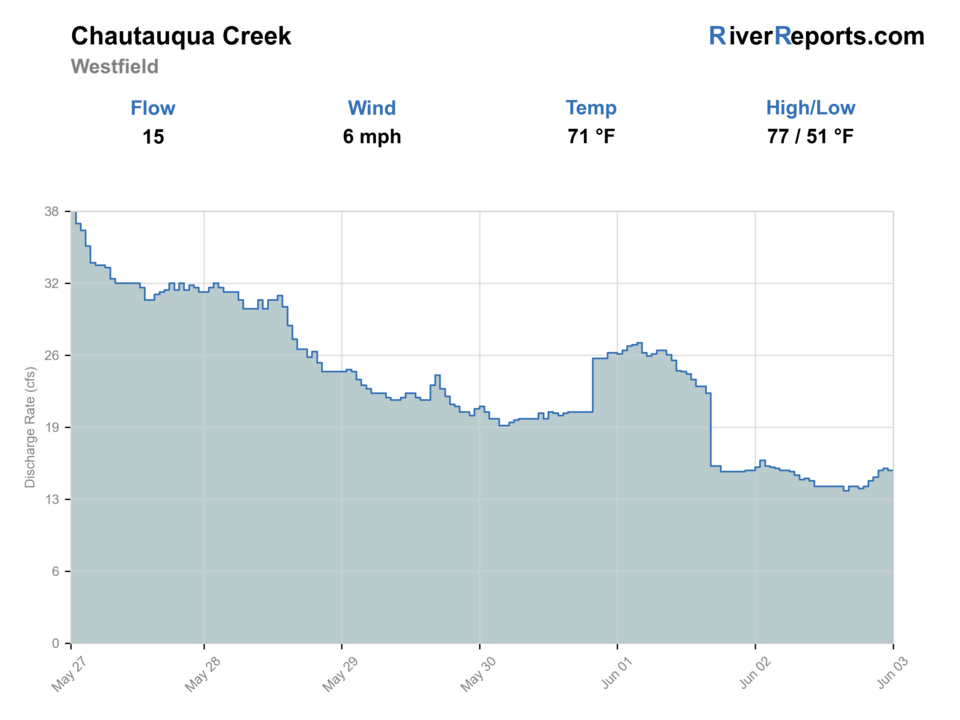
RiverReports is the preferred chart source when coverage exists. When a matching USGS gauge exists, keep it open as the official backstop for station data and current hydrograph context.
USGS data chart
Official USGS trend
Streamflow over the latest USGS reporting window.
Latest
15 cfs
Jun 3, 5 PM UTC
Weather
River weather report
Weather can change wading safety, road access, water temperature, hatches, and the best time of day to fish.
Live forecast loads as you reach this section
This keeps the report fast while still using the official National Weather Service forecast point.
Hatches and flies
Hatch chart and fly picks
September to October
Early steelhead pushes, salmon eggs, baitfish, and fall caddis
Egg pattern, sucker spawn, soft hackle, olive bugger, small streamer
November to March
Winter stoneflies, midges, eggs, and slow-water nymph food
Black stonefly, zebra midge, egg pattern, hare's ear, dead-drifted streamer
April to May
Drop-back steelhead, suckers, caddis, BWOs, and small baitfish
Egg pattern, caddis pupa, BWO emerger, soft hackle, Clouser
June to August
Smallmouth forage, crayfish, minnows, terrestrials, and warmwater bugs
Crayfish, Clouser, popper, slider, foam hopper
Eggs and nymphs
Sucker spawn, single egg, stonefly, hare's ear, caddis pupa
Use in normal to stained tributary flows with a natural dead drift.
Streamers
Woolly bugger, zonker, small intruder, Clouser, leech
Use when fish move, water has color, or you can swing broad tailouts.
Low-clear flies
Tiny egg, midge, pheasant tail, soft hackle, sparse streamer
Use when the creek is clear, low, cold, and fish have seen pressure.
Warmwater backup
Crayfish, popper, slider, baitfish streamer
Use outside steelhead season or in warmer lower-creek smallmouth water.
Tactics
How to fish it
Check the gauge and walk enough water to find fresh fish instead of crowding one pool.
Dead-drift small eggs, stoneflies, and nymphs in low clear water.
Use streamers when the creek has color and fish are moving.
Respect the catch-and-release section and use artificial lures where required.
Keep wades short in the gorge and avoid undercut banks after rain.
Rigging
Rod, leader, and setup notes
A 7-weight or 8-weight is standard for steelhead, but a lighter rod can work in low clear water.
Use 8 to 10 pound tippet for most steelhead nymphing, smaller only when fish demand it.
Carry sparse flies for low water and brighter eggs or streamers for stained water.
Use enough weight to tick bottom without dragging through every drift.
Bring studs or a wading staff for shale, ice, and clay banks.
Access
Access and planning notes
Westfield gauge corridor
Primary tributary decisionWade / float / trail
Gauge / wade scout
When to pick it
Start here when the flow and clarity trend decide whether Chautauqua is worth the drive at all.
Caution
A usable gauge does not remove shale footing, shelf ice, or posted-bank issues farther downstream.
DEC public fishing rights reaches
Defined steelhead accessWade / float / trail
Walk-and-wade
When to pick it
Use them when the creek is clearing and you want a mapped legal corridor instead of guessing at bridge pull-offs.
Caution
The creek is compact, so crowding and parking pressure can erase the value of a good flow window quickly.
Smaller roadside pocket plan
Short opportunistic sessionWade / float / trail
Scout / walk-and-wade
When to pick it
Pick this when you want a short legal session around one or two softer seams instead of trying to cover the whole creek.
Caution
Do not treat every roadside opening as public or safe just because the creek looks small.
DEC public fishing rights are not the same as open access everywhere; stay near signed corridors.
Gorge sections can be hazardous after storms or during freeze-thaw weather.
Small tributary etiquette matters because a few anglers can cover a lot of holding water.
Regulations
Check before fishing
NYSDEC Lake Erie tributary regulations apply, and Chautauqua Creek includes a named catch-and-release/artificial-lures section. Confirm current rules and boundaries before fishing.
Primary base
Westfield, Mayville, Dunkirk, or Erie
Best day style
Public fishing rights, village access, gorge water, and special catch-and-release reach
Check first
Westfield flow, Lake Erie tributary rules, C&R reach boundaries, clarity, and weather
Safety
Narrow gorge access, winter ice, fast flow changes, private land, and low-clear pressure
Gear
Helpful gear for this water
7-weight or 8-weight rod
Useful for steelhead, wind, split shot, and winter layers.
Floating line
Works for indicators, egg/nymph rigs, and most small-stream presentations.
Warm layers
Lake-effect weather and cold water make comfort and safety part of the plan.
Wading staff and studs
Shale, clay, and winter shelf ice can be slick.
Small fly box
Carry eggs, stones, soft hackles, and sparse low-water patterns.
Nearby water
Other water to research
Backup logic
High or muddy water
Wait for the creek to drop and clear or compare Cattaraugus Creek instead of forcing a blown-out Chautauqua day.
Ice or unsafe footing
Treat shelf ice and slick shale as full fishability limits and simplify the day elsewhere.
Crowding
Use another mapped legal corridor or another tributary instead of stacking into the first visible pool.
Access issue
Treat unclear public-rights boundaries as a stop signal before fishing.
Cattaraugus Creek
A larger Lake Erie tributary with more flow and access complexity.
Ausable River, West Branch
An Adirondack trout stream when you want freestone pocket water.
Delaware River, West Branch
A Catskill tailwater for technical dry-fly trout.
FAQ
Fast answers
Is Chautauqua Creek fishable today?
Chautauqua Creek looks very fishable right now. The live score is 96/100, based on current flow, weather, public alerts, and the report's planning context. Recheck the linked gauge and forecast before leaving because conditions can change quickly after rain, heat, access changes, or flow swings.
What flow is best for Chautauqua Creek?
Use RiverReports and USGS 04213319 below Westfield together. Dropping water with improving visibility is the cleanest steelhead window; sharp rises, brown water, shelf ice, or pushy shale runs should move the plan later.
When should I skip Chautauqua Creek?
Skip or pivot when storms have the creek rising, visibility is poor, ice makes footing unsafe, public fishing rights are unclear for the reach, or current Great Lakes tributary rules have not been confirmed.
Is Chautauqua Creek safe to wade right now?
The fishability score is not a wading guarantee. Wade only where your chosen access has safe edges, clear footing, legal entry, and no forced crossings; high, rising, stained, or storm-affected water should be treated conservatively.
What should I check first before fishing Chautauqua Creek?
Check the Westfield gauge, recent precipitation, water clarity, Lake Erie tributary rules, and the catch-and-release reach boundary.
Are there special regulations on Chautauqua Creek?
Yes. The creek has Lake Erie tributary rules and a named catch-and-release/artificial-only section.
What flies should I bring for Chautauqua Creek?
Bring the hatch-chart flies, a small nymph box, and a few streamers. Then adjust for water temperature, clarity, pressure, and the insects or baitfish you actually see.
Can I wade Chautauqua Creek?
Sometimes, but smaller creek flows, gorge access, and ice can change safety quickly.
Sources
Source set for this report
Reviewed 2026-05-31