
Michigan / Midwest
Jordan River
A Jordan River planning page built around cold northern Michigan trout water, Natural River access rules, and the difference between a good wade day and a blown-out drift.
Image: Generated regional planning image for Jordan River / BlueStreamFly generated; not exact location / BlueStreamFlyFishability now: Jordan River fishability today
GoodData confidence: High82/100
Fishable now because the live gauge is stable, weather is usable, and a public alert may affect the plan.
Flow observed
5:00 PM UTC
Weather observed
5:00 PM UTC
Score calculated
5:24 PM UTC
Why this rating
Flow
Weather
Public alert
Next 6-12 hours
Hold
Stable live data supports staying with the plan, but recheck the gauge and forecast before leaving.
USGS flow
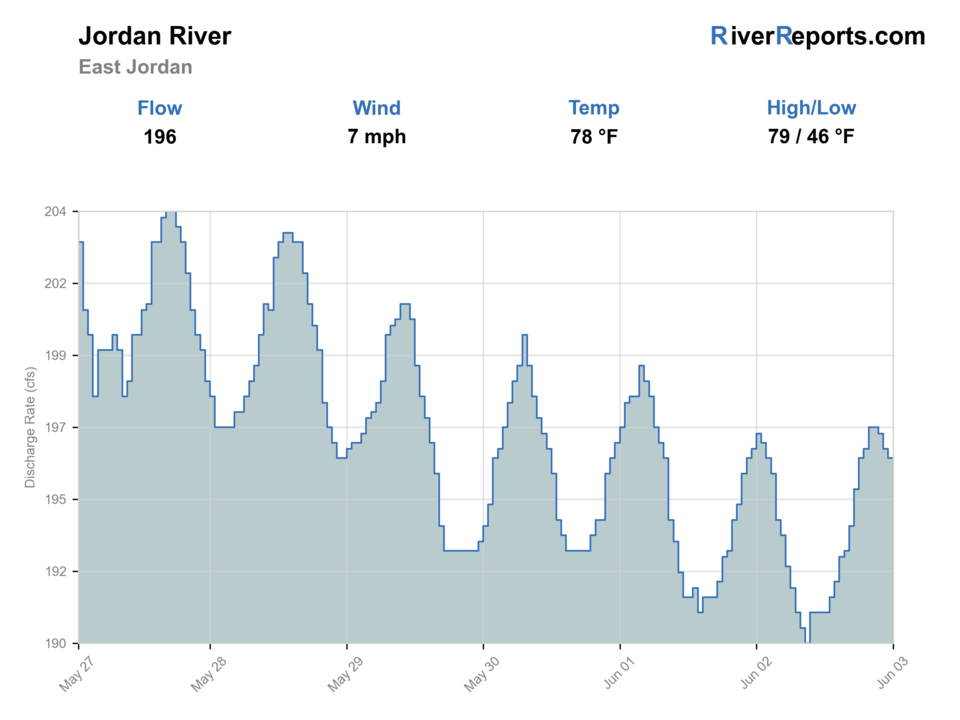
196 cfs
Current trend: flow stable, so weather, temperature, and access checks drive the next change.
More planning details: flies, flow bands, and live source checks
Fish it today
Start here
Pick one campground access and one backup stop, fish upstream or downstream with discipline, then reassess after a few quality bends instead of trying to see the whole river.
Best flow clue
Steady, readable flows where the wood lines are obvious and the river still has enough push to keep trout on outside bends, logjams, and undercut banks.
Skip trigger
Skip it when rain stains the water enough to hide wood and bank edges, or when summer crowding makes the small public access points feel like a lineup.
Flow decision bands
Stable clear cedar water
Stable or slowly falling East Jordan flow is the best sign that undercuts, wood, and short gravel runs can fish cleanly.
Rain-stained rise
Rising or stained water should push the day to softer inside bends only if wood and bottom still read clearly.
Low clear summer water
Low water can fish early, but wade less, lengthen leaders, and make the first cast count.
Crowded campground window
A technically fishable chart is less useful if the tight access corridor is already stacked with people.
USGS flow
196 cfs
Current trend: flow stable, so weather, temperature, and access checks drive the next change.
Live USGS flow
196 cfs / stable
Live NWS forecast
76F / Mostly Sunny
Water temperature not verified
Heat guidance uses weather and river type unless an official water-temperature value is available.
Active public alerts
Special Weather Statement issued June 3 at 4:48AM EDT by NWS Gaylord MI
RiverReports is the working chart, backed by USGS 04127800 near East Jordan for official flow context.
Michigan's Natural Rivers program identifies the Jordan as a protected corridor with strong public-land context and a narrow valley feel.
Michigan DNR lists Graves Crossing and Pinney Bridge as key state-forest campground access points on the Jordan.
The Michigan fishing regulations summary should be checked before every trip because tackle, harvest, and season rules can change by reach and date.
Editorial review
How this report is maintained
This report uses official regulation, flow, weather, access, and public-land sources first, then adds practical planning guidance for fly anglers.
Byline
BlueStreamFly editorial desk
Reviewed by
BlueStreamFly source review
Maintained by
BlueStreamFly
Last material review
2026-06-02
Report confidence
High confidence
90/100
High confidence: RiverReports, USGS 04127800 near East Jordan, Michigan regulations, Michigan Natural Rivers guidance, Graves Crossing and Pinney Bridge access, weather coverage, generated media disclosure, and route-specific Jordan trout guidance support the page. Confidence is moderated by rain stain, wood hazards, campground pressure, exact reach rules, and short-access crowding.
Regulations
Michigan inland fishing regulation sources support current trout-rule checks by reach.
Access
Michigan Natural Rivers and DNR campground sources support Graves Crossing, Pinney Bridge, and lower public-land planning.
Flow and weather
RiverReports, USGS 04127800 near East Jordan, and the National Weather Service point support live flow and weather decisions.
Fishing usefulness
The page now separates cedar-corridor flow, wood visibility, campground access pressure, low-water tactics, rain-stain skips, and Michigan backup waters.
Fishability dashboard and source review
2026-06-02 / material content or source review
RiverReports and USGS 04127800 East Jordan flow, Michigan inland fishing regulations, Michigan Natural Rivers guidance, Graves Crossing and Pinney Bridge access, National Weather Service data, and route-specific cedar-corridor trout guidance were checked before updating the current-fishability decision layer.
2026-06-02
Updated the Jordan River with cedar-corridor flow bands, campground access cards, backup cues, and confidence signals.
2026-05-26
Published a new Jordan River report with official flow context, Natural River access framing, campground launch guidance, and original trout-planning detail.
Angler planning edge
Local details that change the plan
Best for
Tight-quarters trout wading, Short canoe drifts, Cool-season and early-summer northern Michigan planning
Wade or float
Mostly wade, with a light canoe or very short float adding value between public access points. The river is too woody to assume a casual drift solves everything.
Best flows
Steady, readable flows where the wood lines are obvious and the river still has enough push to keep trout on outside bends, logjams, and undercut banks.
When to skip
Skip it when rain stains the water enough to hide wood and bank edges, or when summer crowding makes the small public access points feel like a lineup.
Local plan
Pick one campground access and one backup stop, fish upstream or downstream with discipline, then reassess after a few quality bends instead of trying to see the whole river.
Pressure
Pressure bunches around the cleanest campground entries. The quieter water is often one careful walk away, not a long drive away.
Access nuance
The best public access is straightforward, but the corridor stays narrow and parking can dictate your whole approach. Have a second stop ready before you leave the first lot.
Backup water
If the Jordan is muddy or overcrowded, switch to a larger nearby river where visibility and access recover faster instead of forcing a marginal cedar-corridor day.
About the river
Setting, character, and why it fishes the way it does.
The Jordan is a cold, wooded northern Michigan trout river with a tighter corridor and more wood than many first-time visitors expect.
Its best water is intimate but not tiny: undercut banks, rootwads, outside bends, and short gravel runs all matter more than long hero casts.
The Natural River designation and state-forest campground access keep the public-fishing plan realistic, but this is still a river that rewards clean positioning and modest expectations more than covering miles.
Target species
Brown trout
A core Jordan target in the deeper bends, wood, and lower-light windows.
Rainbow trout
Part of the coldwater mix and most visible when flows stay clear and stable.
Steelhead and salmon
Lower-river migratory fish can matter seasonally closer to the East Jordan end of the system.
Reading the water
Stable clear flow
The best all-around Jordan window for light nymphs, dry-dropper rigs, and short streamer swings around wood.
Rising or stained water
Fish slower banks and softer inside turns only if the river still has shape; otherwise wait it out.
Low summer water
Keep leaders longer, wade less, and fish the first cover carefully because the river gives fish fewer places to hide from pressure.
Cold shoulder-season flows
Stay subsurface longer and lean on slower banks, wood, and protected slots instead of waiting for obvious surface activity.
Best seasons
Spring
Good for coldwater trout days once runoff settles and the river regains visibility.
Early summer
Often the best balance of stable flow, bug activity, and manageable camping-access pressure.
Summer
Fish early and carefully when water stays cool enough and the campground corridor is not overcrowded.
Fall
A strong streamer-and-nymph window with lower light, better fish movement, and migratory interest downstream.
Preferred flow source
Jordan River
RiverReports is the preferred chart source when coverage exists. When a matching USGS gauge exists, keep it open as the official backstop for station data and current hydrograph context.
USGS data chart
Official USGS trend
Streamflow over the latest USGS reporting window.
Latest
196 cfs
Jun 3, 5 PM UTC
Weather
River weather report
Weather can change wading safety, road access, water temperature, hatches, and the best time of day to fish.
Live forecast loads as you reach this section
This keeps the report fast while still using the official National Weather Service forecast point.
Hatches and flies
Hatch chart and fly picks
Early spring
Midges and small mayflies
Zebra midge, pheasant tail, parachute Adams
Late spring
Caddis and Hendrickson-type mayflies
Elk hair caddis, soft hackle, comparadun
Summer
Caddis, small attractors, ants and beetles
X-caddis, foam ant, beetle, hopper-dropper
Fall
Light caddis, BWOs, streamer windows
BWO emerger, caddis pupa, olive bugger
Tight-corridor dries
Elk hair caddis, parachute Adams, ant, beetle
The river is clear enough to fish short accurate casts under overhanging cover.
Jordan nymphs
Pheasant tail, hare's ear, caddis pupa, small stonefly
Fish are glued to wood, undercut banks, or the first deep slot below a bend.
Wood-cover streamers
Olive bugger, black woolly bugger, slim sculpin
Light is low, water is tinted, or you need a broader profile near logjams and rootwads.
Tactics
How to fish it
Treat the Jordan like a close-quarters trout river: one careful approach and a short clean drift beat repeated long casts.
Fish the first bend, logjam, or undercut well before stepping deeper because the best fish often live close to the bank.
When campground access points feel busy, move to the next public-land segment instead of forcing a crowded run.
If the river colors up enough that you cannot read wood or bottom transitions, the better call is often to wait for recovery.
Rigging
Rod, leader, and setup notes
A 3- to 5-weight floating-line setup covers nearly every dry, nymph, and light streamer job on the Jordan.
Carry 4X through 6X because the river swings from woody protection to clearer flats quickly.
A short dry-dropper or small indicator rig is usually more efficient than long complex rigs in the tight corridor.
Rubber-soled wading boots with studs help on rooty, uneven entries and slick gravel landings.
Access
Access and planning notes
Graves Crossing
Primary upper startWade / float / trail
State forest campground / wade
When to pick it
Start here when flow and visibility support close-quarters trout fishing around wood.
Caution
The tight corridor magnifies pressure, so fish one bend carefully before moving.
Pinney Bridge
Middle-corridor accessWade / float / trail
Campground / wade / short drift
When to pick it
Use it when you want a defined public middle-river anchor and a second access option.
Caution
Rain can hide wood and footing faster than the river looks from the parking area.
Lower public-land reaches
Roomier fallbackWade / float / trail
Walk-wade / seasonal migratory context
When to pick it
Pick it when the campground reaches are too tight or crowded for a clean trout session.
Caution
Lower-river species timing and rules can differ from a simple resident-trout day.
The Jordan's public access is good by trout-river standards, but the corridor is still tight enough that a single parked group can define how fishable a stop feels.
Campground launches and public-land entries are the cleanest starting points. Respect posted private-land edges and narrow drive approaches.
This is a river where a canoe or light float can connect productive water, but many of the best trout situations are still short precise wading jobs.
Regulations
Check before fishing
Check the current Michigan inland fishing regulations summary and map layer before fishing because the Jordan can carry reach-specific trout tackle, season, and harvest rules.
Primary base
East Jordan, Bellaire, or Boyne City
Best day style
Mostly wade-friendly public-land stops plus short canoe drifts and campground launches
Check first
RiverReports trend, USGS 04127800, Michigan regulations map, and next-day weather
Safety
Cold water, wood everywhere, slick entries, narrow banks, and sudden loss of visibility after rain
Gear
Helpful gear for this water
Shorter 3- to 5-weight rod
Helps with tight-quarters casts under cedars and around wood.
Small dry-dropper box
A concise caddis, attractor, and light nymph selection covers most normal Jordan days.
Wading staff or compact staff
Useful when roots, mud, and hidden wood make simple entries less simple.
Rain shell and dry bag
Important because the corridor is wooded, weather shifts quickly, and drifts can stay damp all day.
Nearby water
Other water to research
Backup logic
Muddy wood lines
Wait for clarity or choose a larger Michigan river where visibility recovers sooner.
Crowded campground access
Move to the next public-land segment or switch to Boardman, Manistee, or Au Sable.
Low bright water
Fish low light, downsize, and avoid repeated wading through prime cover.
Rule uncertainty
Check the Michigan regulation map for the exact reach before changing tackle or harvest expectations.
Boardman River
A more road-connected northern Michigan trout option when you want a different style of public access.
Manistee River
A larger backup with broader float and salmon-steelhead options.
Au Sable River
A classic Michigan comparison when you want a more famous hatch and dry-fly program.
FAQ
Fast answers
Is Jordan River fishable today?
Jordan River looks fishable right now. The live score is 82/100, based on current flow, weather, public alerts, and the report's planning context. Recheck the linked gauge and forecast before leaving because conditions can change quickly after rain, heat, access changes, or flow swings.
What flow is best for Jordan River?
Steady, readable flows where the wood lines are obvious and the river still has enough push to keep trout on outside bends, logjams, and undercut banks.
When should I skip Jordan River?
Skip it when rain stains the water enough to hide wood and bank edges, or when summer crowding makes the small public access points feel like a lineup.
Is Jordan River safe to wade right now?
The fishability score is not a wading guarantee. Wade only where your chosen access has safe edges, clear footing, legal entry, and no forced crossings; high, rising, stained, or storm-affected water should be treated conservatively.
What should I check first before fishing the Jordan River?
Start with RiverReports and USGS 04127800 for the flow trend, then confirm the current Michigan trout regulations for the reach you plan to fish.
Is the Jordan River mostly a wade river or a float river?
Most anglers treat it as a wade-first river with the option for short canoe drifts between public access points.
When should I skip the Jordan?
Skip it when rain muddies the river enough that wood, seams, and bottom transitions stop reading clearly or when access points are crowded beyond reason.
Sources
Source set for this report
Reviewed 2026-06-02